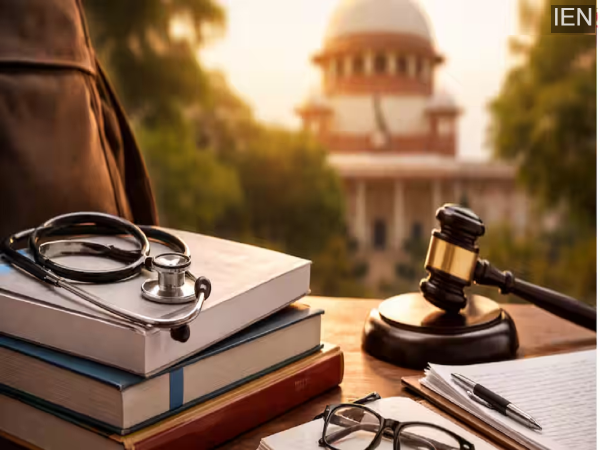
The son of a modest family from Jabalpur, who didn't give up after passing NEET and not getting a seat, learned how he reached the Supreme Court and fought for his dreams.
A boy from a modest home in Jabalpur, his world revolved around books, cricket, and dreams. Watching TV in the evenings, laughing with friends, and dreaming of becoming a doctor was a fairly ordinary life. But when, despite his hard-earned 530 marks, he didn't get a medical seat, his world seemed to come to a standstill. It would have been easy to give up, but he didn't. He decided that if the path was closed, he would create a new one. This decision led him to the country's highest court, where he presented his case with confidence, not faltering. His story isn't just about an admission, but about a courage that remains unbroken even in difficult circumstances.
Passed NEET, Still Didn't Get a Seat
Atharva passed the NEET exam twice and scored 530 marks. He was able to secure a spot in the Economically Weaker Section (EWS) quota. His family's financial situation wasn't very strong, so this quota was a ray of hope for him. But when the admission process for private medical colleges began, he discovered that there were no clear rules regarding EWS reservation in private colleges in the state. Despite his good marks, he couldn't get a seat. Imagine a student who has worked hard day and night, only to find their destination in sight, can only understand this pain.
Journey from the High Court to the Supreme Court
Instead of remaining silent, Atharva spoke out. He went to the Jabalpur High Court and presented his case in person. There, it was jokingly said, "You should become a lawyer, not a doctor." This resonated with him. But he didn't give up. He was determined to fight for his rights to the very end. His father practices law at home. During the lockdown, when courts were operating online, Atharva watched his father argue. He realized that solid facts, not just emotions, are crucial in court. He began studying law himself. He studied old judgments, understood the rules, and prepared a special leave petition in the Supreme Court. He corrected the errors pointed out by the Registry and finally filed the petition.
Ten-Minute Argument, Life-Decision
On the day of the hearing, he joined online. The court proceedings were about to end when he politely said, "Give me ten more minutes." He wasn't a prominent lawyer, just a 12th-grade student who wanted to become a doctor. The Supreme Court, invoking Article 142 of the Constitution of India, directed that eligible students from the EWS category be granted provisional MBBS admission. For Atharva, this wasn't just an order, it was a rebirth of his dream.
Atharva's father says that while he never studied law, he understood every process. His mother took on household responsibilities so that his son's studies wouldn't be affected. His school teachers also encouraged him. His confidence in English and his ability to speak clearly became his strengths in court.
-
Children's craft kits issued urgent recall due to asbestos risk

-
Winter Olympics LIVE: Games rocked by cheating claim as Clare Balding halts BBC coverage

-
Andrew faces fresh humiliation as embarrassing detail revealed about new home
-
'No ouster, only routine change': Minister Cherian clarifies Prem Kumar's exit from Kerala State Chalchitra Academy (Lead)
-
Lloyds and Halifax closing 84 UK branches in 2026 - full list