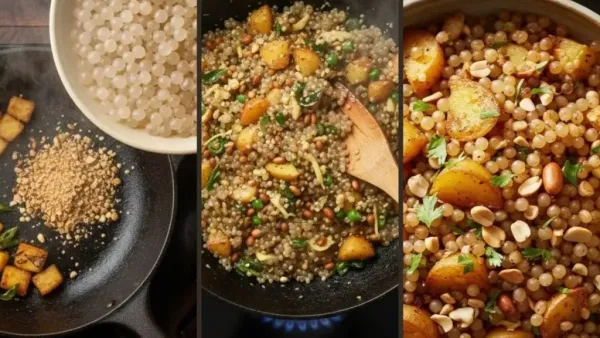
Sabudana Khichdi: Today we are going to make a dish that is light, tasty and very easy to make – Sabudana Khichdi! This is a very popular dish of Maharashtra which is often eaten during vrat or fasting. But its specialty is not only this, you can make it anytime for breakfast or as a light meal.
Sabudana Khichdi is not only delicious but also full of energy. It contains good amount of carbohydrates which provide you instant energy. Apart from this, it is also light on the stomach and easily digested. So, if you are looking for something that is both delicious and nutritious, then Sabudana Khichdi is the perfect choice for you.
There are many ways to make Sabudana Khichdi, and every household has its own specialty. Today we will learn a method which is very easy and which will make your Khichdi bright and tasty. There are some small tips and tricks in this which will make your Khichdi perfect. So, let’s begin without any further delay!

Sabudana Khichdi
Ingredients
- 1 cup Sago medium sized
- half cup Groundnut
- 1 medium sized Potato (boiled and cut into small pieces
- 2-3 Green chilly Finely chopped, you can add more or less as per your taste
- 1 inch piece Ginger grated or finely chopped
- 1 spoon Cumin
- 7-8 leaves Curry leaf
- 2 tablespoons ghee or oil Peanut oil or sunflower oil is best
- 1 big spoon lemon juice
- 2 tablespoons green coriander finely chopped, for garnish
- rock salt as per taste
- Salt as per taste
Instructions
Step 1: Washing the Sago
-
First of all, take sago in a big bowl and wash it thoroughly with water. You have to wash it 2-3 times until the water starts appearing clear. This helps in removing the starch, due to which the khichdi does not become sticky.
Step 2: Soaking the Sago
-
After washing the sago, add enough water to the bowl so that the sago is just submerged in 1 inch of water. Do not add more water than this, otherwise the sago will become very soft and sticky. Soak it for at least 4-5 hours or overnight.
If you are soaking it overnight, in the morning you will see that the sago has completely swelled and become soft. You can test this by picking up a grain and pressing it between your fingers, it should mash easily. If there is any excess water in it, remove it gently.

Step 3: Roasting the Peanuts
-
Take peanuts in a pan and dry roast them on medium flame. Keep stirring them continuously so that they fry evenly from all sides. When they turn light brown and fragrant, turn off the gas and let them cool.

Step 4: Coarsely Grind the Peanuts
-
When the peanuts cool down, put them in a mixer grinder and grind them coarsely. Keep in mind that do not make them a fine powder, but leave some crispness. This will give a nice texture to the khichdi.
Step 5: Heating the Oil or Ghee
-
Heat ghee or oil in a large kadai or pan. Using ghee further enhances the taste of khichdi. When the oil is hot, add cumin seeds and let it crackle.
Step 6: Roasting Green Chillies and Ginger
-
Once the cumin seeds crackle, add finely chopped green chillies and grated ginger (if using). Fry them for a few seconds until their raw smell goes away. If you are using curry leaves, add them at this time and fry till they become crisp.

Step 7: Adding Boiled Potatoes
-
Now add boiled and chopped potato pieces into the pan. Fry them on medium flame for 2-3 minutes, until they turn light golden. This will give the potatoes a nice flavor and a little crispiness.

Step 8: Adding Sago and Peanuts
-
Now add soaked sago and coarsely ground peanuts in the pan. Also add rock salt as per taste. Rock salt is especially consumed during fasts, but you can use any salt of your choice.

Step 9: Mix Well
-
Mix all the ingredients well. Make sure the sago and peanut mixture mixes evenly with the potatoes and spices. Cook it on medium flame for 5-7 minutes, keep stirring continuously.

Step 10: Cooking the Khichdi
-
While you are cooking the khichdi, you will notice that the sago will start to turn transparent. This means it is ripe. Cook it until all the sago grains become transparent. Be careful not to overcook it, otherwise it may become sticky.

Step 11: Add Lemon Juice and Coriander
-
When the khichdi is cooked, turn off the gas. Now add lemon juice and finely chopped green coriander to it.

Step 12: Serving
-
Mix everything well and serve hot! You can serve it with curd, mint chutney or just a cup of tea.

Notes
- Starch Washing: Always wash the sago thoroughly 2-3 times until the water appears clear. This removes excess starch, which prevents the khichdi from becoming sticky.
- Correct Roasting: Always fry the peanuts on medium flame until they turn light golden and a nice aroma starts coming from them. Under-roasted peanuts will taste raw and over-roasted peanuts can be bitter.
- Cook on medium flame: Always cook Sabudana Khichdi on medium flame. Cooking on high flame may cause the sago to stick or burn from the bottom, while on low flame it may become too soft.
- Lemon juice at the end: Always add lemon juice only after turning off the gas. This retains the fresh and sour taste of lemon. If you add it while cooking, its taste will be lost. Along with giving a spicy taste to the khichdi, lemon juice also prevents it from becoming sticky.
- Roasting Potatoes: After adding the boiled potato pieces, fry them until they become light golden. This gives them a delicious crust and they do not look soggy in khichdi.
The post Light, tasty and full of energy, make perfect Sabudana Khichdi at home appeared first on NewsUpdate.
-
Mumbai Metro 3 Extends Service Hours For High-Voltage India-England T20 World Cup Semi-Final At Wankhede; Check Timings

-
Rapido Officially Launches Zero-Commission Food Delivery App Ownly, Will Rival Zomato & Swiggy

-
'You Are A Potential Rapist...': Dhurandhar Fame Ayesha Khan Makes SHOCKING Revelation About Getting Rape Threats

-
The Kerala Story 2 Box Office Collection Day 5: Ulka, Aishwarya & Aditi Starrer Shows Jump On Tuesday, Collects ₹4 Crore

-
Yash Starrer Toxic Postponed To June Due To US-Iran Conflict; Won't Clash With Dhurandhar 2 On Eid 2026