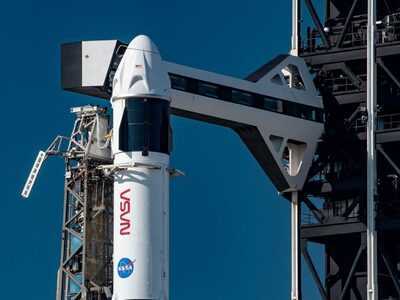
NASA’s SpaceX Crew-12 mission launched successfully on February 14, 2026, marking a significant step in human space exploration and scientific research aboard the International Space Station. At 5:15 a.m. EST, four astronauts and cosmonauts lifted off from Space Launch Complex 40 at Cape Canaveral Space Force Station in Florida aboard a SpaceX Falcon 9 rocket carrying a Dragon spacecraft. The crew, consisting of NASA astronauts Jessica Meir and Jack Hathaway, European Space Agency (ESA) astronaut Sophie Adenot, and Roscosmos cosmonaut Andrey Fedyaev, will join Expedition 74 aboard the orbiting laboratory. The spacecraft is scheduled to dock autonomously at the station’s Harmony module later on February 14, enabling the crew to begin their science and exploration agenda. This mission underscores the international collaboration, technological sophistication, and operational discipline required for human spaceflight, highlighting NASA’s commitment to advancing research in low Earth orbit while preparing for long-duration missions to the Moon and Mars.
Crew-12 Mission Objectives and Operations in Orbit
The primary objectives of Crew-12 encompass scientific research, station maintenance, and preparation for exploration beyond low Earth orbit. Once docked, the astronauts and cosmonaut will transition from their spacesuits, prepare cargo for offloading, and begin a rigorous schedule of experiments and station operations. Scientific investigations include studies on pneumonia-causing bacteria to improve cardiovascular health treatments, research into on-demand intravenous fluid generation for deep-space missions, and studies on how physical characteristics influence blood flow in microgravity. Experiments will also focus on automated plant health monitoring, plant-microbe nitrogen fixation interactions to enhance space-based food production, and other biological and physical studies that directly benefit human health on Earth. Crew-12 operations will be closely monitored by SpaceX mission control in Hawthorne, California, and NASA’s Johnson Space Center in Houston, ensuring coordination for all spacecraft maneuvers, docking procedures, and station activities. The live coverage of docking and hatch opening is scheduled on NASA+, Amazon Prime, and YouTube, providing real-time updates to audiences worldwide.
Beyond scientific research, Crew-12 exemplifies international cooperation and operational excellence. The team will integrate with the existing Expedition 74 crew, which includes NASA astronaut Chris Williams and Roscosmos cosmonauts Sergey Kud-Sverchkov and Sergei Mikaev. The seven-member complement restores the station to full capacity following the departure of SpaceX Crew-11 on January 14. NASA Administrator Jared Isaacman emphasized the critical nature of these missions, highlighting that they advance technologies for deep space exploration while generating tangible benefits on Earth. The mission also demonstrates the reliability and resilience of NASA’s Commercial Crew Program, which leverages partnerships with private companies such as SpaceX to transport astronauts safely to and from low Earth orbit.
International Collaboration, Technology, and the Future of Human Spaceflight
Crew-12 is a testament to the integration of international partners and cutting-edge space technology. ESA and Roscosmos participation underscores the collaborative framework that enables large-scale human space missions. The Dragon spacecraft, designed to autonomously dock at the station’s Harmony module, carries sophisticated life-support systems, advanced avionics, and cargo storage to sustain the crew during the mission. NASA and SpaceX teams meticulously manage the operational and logistical challenges of orbital flight, ensuring a safe and productive mission trajectory. Crew-12’s activities, from experiment execution to station maintenance, will feed into broader research agendas designed to prepare humanity for future exploration of the Moon, Mars, and other deep-space destinations.
The mission also represents a continuity of knowledge and experience in human spaceflight. Lessons learned from previous Commercial Crew missions inform Crew-12’s procedures, risk management strategies, and operational protocols. By conducting scientific research in microgravity, the crew contributes to a growing body of data on human physiology, biology, and environmental science in space. These findings are critical for developing long-term habitation strategies, sustainable life-support systems, and advanced technologies for deep-space exploration. Moreover, the mission reinforces the importance of international collaboration in space science, combining the expertise, experience, and capabilities of NASA, ESA, and Roscosmos to achieve shared objectives.
Crew-12’s launch also demonstrates the operational flexibility of NASA’s partnerships with private companies. The Commercial Crew Program’s framework allows for cost-effective, safe, and frequent crewed flights to the station, maximizing research opportunities while maintaining readiness for future exploration. The program’s integration of private-sector innovation with government oversight ensures that astronauts are transported reliably while enabling experimentation that supports both Earth-bound and extraterrestrial applications. Each mission builds toward a long-term goal of sustainable human presence beyond Earth, with Crew-12’s scientific investigations, station operations, and international coordination serving as a critical component of this strategy.
As Crew-12 settles into orbit, the mission will expand humanity’s understanding of life in space, improve Earth-based applications of space research, and provide key insights for the next generation of space exploration. From cardiovascular studies to plant-microbe interactions, the crew’s work illustrates the intersection of human health, sustainability, and technology in space. By leveraging advanced spacecraft, international partnerships, and rigorous operational protocols, Crew-12 contributes to an enduring legacy of discovery and preparation for long-duration missions. NASA and SpaceX’s successful launch exemplifies the professionalism, preparation, and teamwork required to maintain and expand human presence in low Earth orbit, reinforcing the agency’s commitment to innovation and exploration.
The post NASA’s SpaceX Crew-12 launch successfully begins critical science mission aboard International Space Station, expanding human exploration capabilities | Cliq Latest appeared first on CliQ INDIA.
-
'Black oil scammers tried to steal my car, I paid them to go away'

-
Rashmika Mandanna & Vijay Deverakonda's Wedding Invite Goes Viral: Official Date Revealed

-
Andrew pictured with mystery woman in bombshell new Epstein Files photo

-
Someone is secretly reading your WhatsApp chats! This small mistake can reveal all your secrets

-
Security forces recover IEDs, destroy Maoist memorials in Chhattisgarh's Bijapur