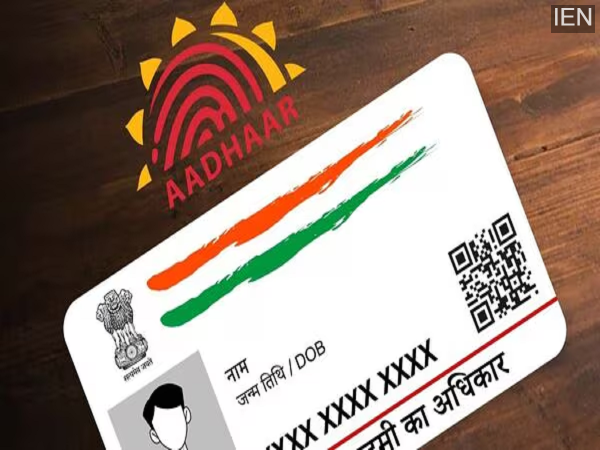
Aadhaar App Launch 2026: The new Aadhaar app has been launched. Users will now be able to safely display and share their digital identity. Learn how its features will work and what benefits it will offer.
Aadhaar App Launch 2026: Aadhaar is one of the most common documents used in India. Whether it's opening a bank account, getting a SIM card, checking into a hotel, or availing government schemes, it's required everywhere. Given the increasing incidence of online fraud, fake websites, and OTP scams, digital safety has become crucial. Keeping this in mind, the Unique Identification Authority of India has launched a new Aadhaar mobile app. Learn about how this app works and its benefits.
How does the new Aadhaar app work?
This next-generation app is built on a privacy-first and consent-based model. You will have control over your information. To log in, you will use your Aadhaar number and the OTP received on your registered mobile number. The app supports face authentication, fingerprint authentication, and a secure PIN. Once logged in, users can view their profile without having to re-enter details.
Information such as name, photo, and address are safely stored on the device. Digitally signed details are shared for identity verification. The Aadhaar number is not stored. The entire system is based on the principle of data minimization, meaning only the necessary information will be shared.
What are its benefits?
The new app is easy to use and offers numerous benefits, including features like QR code-based offline verification for hotel check-in, age verification for cinema tickets, and hospital visitor verification. It can also be used to identify gig workers and service partners.
A QR-based contact card is provided for sharing contact details. There's also the ability to manage up to five Aadhaar profiles on a single mobile phone. This strengthens the concept of "One Family, One App." The app works on both Android and iOS platforms.
Special emphasis on safety
The app's most important feature is the biometric lock and unlock feature. If a user suspects data misuse, they can instantly lock their fingerprint and iris data. No biometric authentication will be possible without permission. Users can also view their authentication history.
This provides insight into when and where Aadhaar was used. The selective credential sharing feature shares only the necessary information. According to the Ministry of Electronics and Information Technology, this system is designed under the Digital Personal Data Protection Act.
-
Vijay Mallya Says He Cannot Leave UK, Bombay HC Says Hearing Depends On Return
-
Nothing Flags Counterfeit Surge in India; 1,100+ Fake Devices Seized in Delhi Raid
-
India AI Summit: Power Cut, Barricades Put In Front Of Pavilion After Govt Asks Galgotias University To Vacate Over Robodog Row - VIDEO

-
OpenAI Partners With Top Indian Universities To Build AI-Ready Talent Across Disciplines

-
Vivek Agnihotri, Bhushan Kumar To Team Up For Film On Operation Sindoor: Report