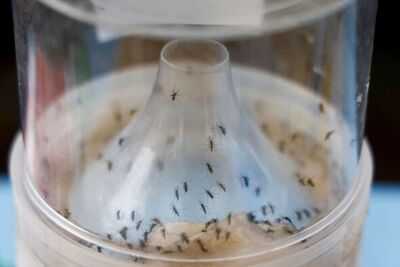
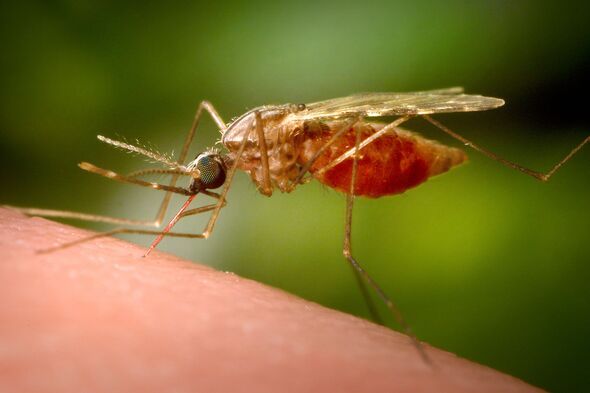
An excruciatingly painful tropical disease once confined to Africa and Asia can now be transmitted by mosquitoes across most of Europe, scientists have warned, raising fears it could soon edge closer to Britain. New research has found that chikungunya - a virus that causes severe and prolonged joint pain and can be fatal in young children and older adults - is able to spread at lower temperatures than previously believed.
As Europe warms, that shift dramatically expands the areas and months during which outbreaks are possible. Chikungunya virus was first detected in 1952 in Tanzania and has historically been confined to tropical regions, where millions of infections occur each year. However, a small number of cases have been reported in more than 10 European countries in recent years, and large-scale outbreaks of hundreds of cases hit France and Italy in 2025.
The new analysis, published in the Journal of the Royal Society Interface, is the first to fully assess the effect of temperature on the incubation time of the virus in the Asian tiger mosquito, Aedes albopictus, which has invaded Europe in recent decades.
The study found the minimum temperature at which infections could occur is 2.5°C lower than previous, less robust, estimates.
Sandeep Tegar, at the UK Centre for Ecology and Hydrology (UKCEH) and lead author of the study, said: "The rate of global warming in Europe is approximately double the rate of global warming at global scale and the lower temperature limit for virus spread matters a lot, so our new estimates are quite shocking. The northward expansion of the disease is just a matter of time."
The study found the cut-off temperature for transmission is 13°C-14°C, meaning infections can occur for more than six months of the year in Spain, Portugal, Italy and Greece, and for three to five months of the year in Belgium, France, Germany, Switzerland and a dozen other European countries.
In south-east England, conditions may be suitable for two months of the year.
The minimum temperature was previously estimated at between 16°C and 18°C, meaning there is a risk of chikungunya outbreaks in more areas and for longer periods than previously thought.
Dr Steven White, also at UKCEH, said: "Twenty years ago, if you said we were going to have chikungunya and dengue in Europe, everybody would have said you were mad: these are tropical diseases. Now everything's changed. This is down to this invasive mosquito and climate change - it really is as simple as that. We're seeing rapid change and that's the worry. Up until last year, France had recorded 30-odd cases of chikungunya over the last 10 years or so. Last year, they had over 800."
Outbreaks in Europe are sparked by infected travellers returning from tropical regions and being bitten by local tiger mosquitoes, which then spread the disease. Until now, Europe's cold winters have halted tiger mosquito activity and served as a firebreak against the disease from one year to the next.
However, scientists are increasingly observing year-round tiger mosquito activity in southern Europe, suggesting chikungunya outbreaks are likely to intensify as the continent warms. The UKCEH team is investigating this issue.
Dr White said: "It is important there is continued action to try to prevent the tiger mosquito from establishing in the UK because this highly invasive species is capable of transmitting several infections that can cause serious health conditions, including chikungunya, dengue and Zika viruses."
There have not yet been any local transmissions of chikungunya reported in the UK, but there were a record 73 cases among people who contracted the virus abroad between January and June 2025, almost three times as many as in the same period in 2024.
Dr Diana Rojas Alvarez, who leads the World Health Organization's team on viruses transmitted by insect and tick bites, said: "This study is important because it indicates that transmission in Europe might become even more evident over time."
She added: "Climate has a huge impact on this, but Europe still has the chance to control these mosquitoes from spreading any further."
-
ED attaches assets worth Rs 10,021 crore in PACL money laundering case

-
Assam's Electoral Roll Update: Appeals and New Initiatives Announced

-
Chhattisgarh: SC restrains forcible exhumation and relocation of Adivasi Christians' bodies

-
Parents urged to do 1 thing now as Victorian disease outbreak hits dozens of children
-
Alankrita Sahai calls working with Karan Aujla in '5-7' 'incredibly rewarding'