Two of England’sgreatest ever women footballers are being ‘reunited’ on Saturday in an emotional plaque unveiling ceremony.
Lily Parr and Lizzy Ashcroft were two trailblazers of the women’s game in the 1920s - decades before the Lionessesrecent extraordinary success. For years the women were forgotten but in recent years their outstanding contribution to women’s football is finally being recognised.
Now on Saturday two individual plaques - honouring their memory - will be unveiled on Merseyside. The dear friends and team-mates will be “together” once again in front of their relatives. Council officials in St Helens have arranged for the unveiling.
• Sarina Wiegman makes World Cup statement after winning award - 'That really drives me'
• First ever film of women's football match from 1917 uncovered by historian
Ensure our latest headlines always appear at the top of your Google Search by making us a Preferred Source. Click here to activate or add us as your Preferred Source in your Google search settings.
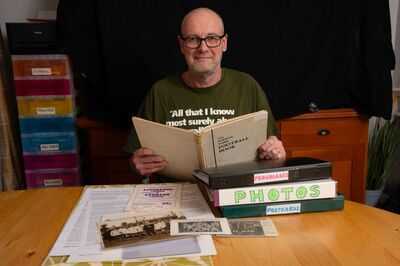
Lizzy’s grandson author Steve Boltonsaid it would be a “very special day”. Bolton, 61, said: “My granny walked with giants. We never knew this and never really appreciated her for it. I now know different and a little part of me will be forever sad that we weren’t able to appreciate her when we knew her.
“So this will be really, really special. Her time has come. Similarly for Lily Parr. She is now a mythical figure, which I think she would find really amusing. After the 1926 general strike they both went to be mental health nurses together in rural Whittingham.
"They worked long hard days in difficult conditions but they had so many beautiful adventures playing the great game. I am so pleased for them.”
Bolton is a respected author and historian and has worked tirelessly in recent years for the pioneers of the women’s game to be recognised. Now his family and the Parr family will be in St Helens to honour the two women in the local leisure centre.
Bolton said: “I didn’t know Lily Parr. I was once introduced to her. In some circles that is a bit like saying ‘I once met Pele’. My cousins met the Parr family last year and this will be my chance to meet them as the two old friends and team-mates are immortalised in St Helens on the scene of one of their famous games.
“Liverpool women now play in St Helens. They are ‘allowed’ to play there. Granny and Parr have finally ‘come home’. He went on: “I am often asked: “What would she have thought about the Lionesses and their success?.” She would have had nothing but pride in the success of the modern ambassadors of the game.
“Like a lot of the women of that era, she and her friend Parr were incredibly shy and reticent; she would have admired them, not just for their footballing skills, but for the confident and articulate ease with which they present themselves.
"They are role models for young girls and boys today. My granny came from a very humble generation of proud, strong Merseyside women - they went through two world wars and were the spine that kept their families and the country going. They did not ask for anything from life, they were just grateful for anything that life gave them.”
Lizzie made he debut for St Helens on the crest of the golden era of women's football in 1921, at the age of 16, playing in front of 85,000 in her first eight games.
Despite the FA ban of 1921 she continued playing until 1935, eventually taking the captaincy from her great friend, Lily. From the 1900s, women's football was hugely popular in England.
Teams played friendlies and raised money for charities, often in front of large crowds, but the FA banned matches at its members' grounds in 1921 as "unsuitable for females". The ban lasted 50 years, until 1971. There was a blue plaque put up for St Helens Ladies team last year but these are the first individual awards for women from that era.
Bolton is a prominent contemporary British historian specialising in the history of women’s football. His work is widely recognised for bridging the gap between academic research and public storytelling, particularly through his efforts to recover the "lost" narratives of early 20th-century female athletes.