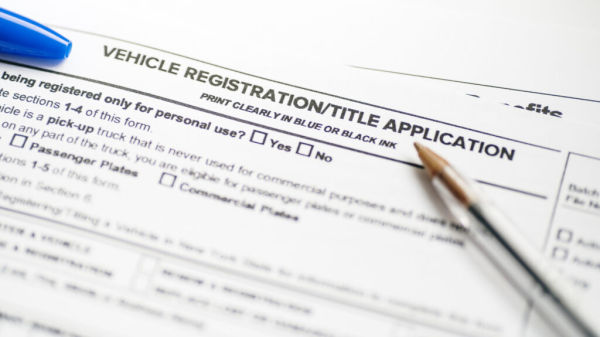
Since the dawn of the digital era, it’s been the dream of many to have a totally paperless society. When the Jetsons first aired in 1962, the idea of a world that used screen-based technology instead of traditional paper media was a far-fetched, pie-in-the-sky notion. Here we are, over 60 years later, and although everyone now carries around pocket gizmos with more processing power than the computers aboard early Apollo spaceships that took men to the moon, we’re still not a totally paperless society.
However, several states are making efforts to help make that reality, at least in part, through Electronic Lien and Titling (ELT) programs. There are currently about 30 states actively using electronic vehicle title (e-title) programs to maintain their motor vehicle records. These digital versions carry the same details (i.e., the owner’s personal information, the Vehicle Identification Number, make, model, and year) and are considered just as valid as old paper documents. What’s more, since they’re in digital form rather than an actual paper document, they can’t be lost or stolen.
The latest state to join the digital revolution is Illinois. Alexi Giannoulias, the Illinois Secretary of State, announced in early February 2026 that “moving to mandatory Electronic Lien and Titling is the next step in bringing Illinois’ vehicle services fully into the digital age.” He went on to say that this secure, paperless method will cut down on the red tape normally involved and, as a result, speed up the entire process (including transferring a car’s title) from what used to take weeks or months — to mere hours.
A few clicks and away it goes instantly
The Illinois General Assembly first approved the ELT program all the way back in 2000, but outdated technology prevented a full implementation. When Giannoulias took office in 2023, he set out to update that technology and, in 2024, finally got the program up and running. Now, all Driver’s Services Facilities in Illinois – as well as every financial institution that processes five or more liens annually – will be required to switch over to this new digital system by July 1, 2026.
The new online ELT program will allow liens and title records to be transmitted directly to the Secretary of State, where they’re kept electronically by approved service providers. It should eliminate the time and cost of mailing and storing paper documents and allow lien and title records to be viewed in real time. Additionally, owners will be spared the hassle of physically trudging down to their nearest DMV to deal with these issues in person (after undoubtedly standing in long lines). Furthermore, it should increase accuracy and keep rejection rates below 0.1%.
Once a loan is fully paid off, financial institutions can then instantly release the vehicle title (of which there are several types you should know about). No more waiting around for it to arrive at its final destination via snail mail, where it can easily go missing, which in turn helps protect against criminal activity such as “title washing” and fraudulent lien releases. Criminals are notorious for intercepting these documents in the mail and then removing (or washing off) information like liens or the fact that it was stolen from a vehicle’s title to create a false “clean title.”