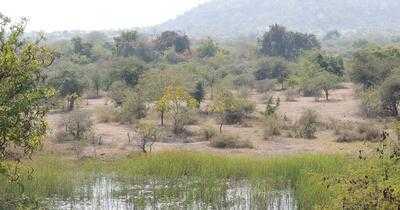
It might have been just another coffee session between two researchers catching up on their work, but when Ashish Nerlekar noticed the mention of savannah specialist trees in Digvijay Patil’s historical references, the duo realised they were onto something new.
“Digvijay’s research focuses on people’s perceptions of natural environments, and he was showing me some of his references from the western Maharashtra region, when I noticed savannah-specialist or indicator trees in them. That led us to systematically study traditional literature to understand the ecological history of savannahs,” says Nerlekar, Presidential Postdoctoral Fellow, Michigan State University, United States. Patil is a PhD student in the Humanities and Social Sciences Department at the Indian Institute of Science Education Research, Pune.
Over the next two years, they scoured through narrative poems, religious texts, myths, field notes, biographical and hagiographical accounts in the Marathi language, published between the 13th and 20th centuries CE. They found several savannah-specific landscape descriptions and mentions of flora and fauna in oral and literary references. These findings refute the popular claim that tropical savannahs are a result of anthropogenic deforestation.
The study, published in People and Nature has garnered wide attention and raised significant interest in unearthing the history of India’s savannahs.
“While previous scientific research establishes the antiquity...
Read more
-
Mia Goth urges ex-partner Shia LaBeouf to seek help after

-
5 Reasons Millennial Woman Refuses To Live With A Man

-
4 Zodiac Signs Attract Major Abundance & Luck On February 23, 2026

-
If you don’t change the non-stick pots and pans on time, there may be serious damage!

-
India launches ₹2,000 crore BIRAC–RDI Fund to turn nation into global biotech powerhouse- The Week