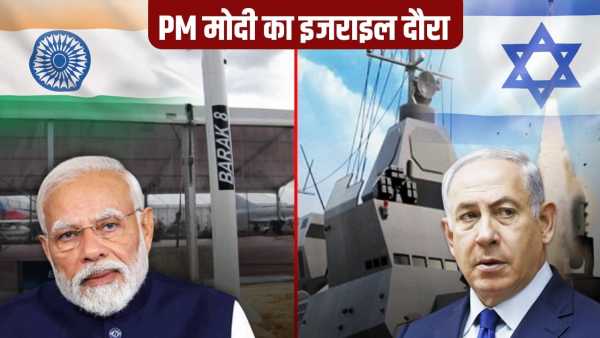
Prime Minister Narendra Modi is going to Israel on a two-day state visit after eight years. This visit is taking place on the invitation of PM Netanyahu. This visit of PM is going to be special. The kind of environment prevailing in the world is the main reason for this. Every country, big or small, is engaged in improving its security infrastructure as per its capacity.
Meanwhile, America's bullying is not hidden from anyone. China's preparations are also well known. In such a situation, India will also have to strengthen its defense and security preparations. This journey is important in this matter. Since there have already been many agreements in the defense sector between India and Israel, it is believed that this time some new deals related to defense may also be signed.
Come, let us know how many and which weapons India imports from Israel on the pretext of PM Modi's proposed two-day visit in 2026? What are their characteristics?
Navy has Barak missile
The most important partnership between India and Israel is missile and air defense systems. Because of this, Indian forces find themselves quite capable. India has many of its models. One of these is Barak-1, which is a short-range naval surface-to-air missile. Barak-8 is also its advanced version. It is a medium to long range missile. It has been jointly developed by India and Israel.
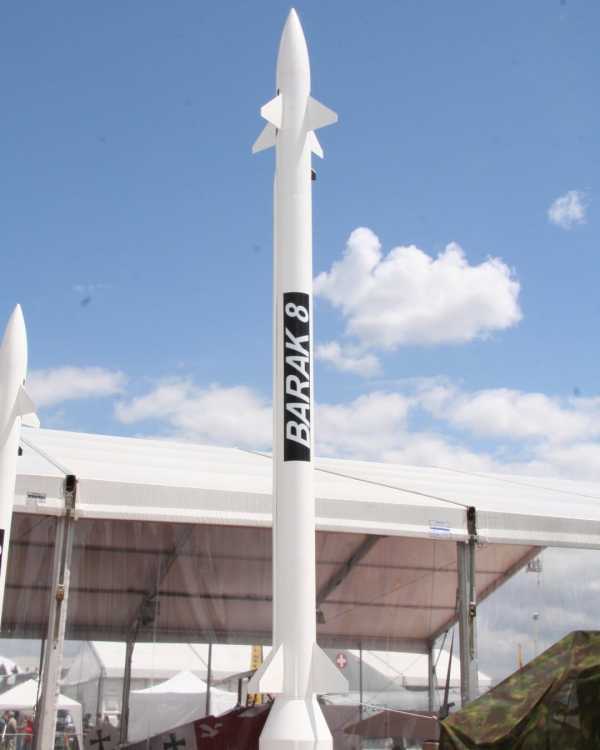
Barak-8 missile.
The Navy has been using it as warships and the Air Force and Army have been using it as land-based air defense. Talking about its features, it has the capability to shoot down enemy fighter planes, helicopters, antiship missiles and drones present at a distance of 70-100 km. It depends on the capacity of different editions. These strengthen the air defense umbrella of ships deployed at sea. Because of these, the strength of the Indian Navy increases in the Arabian Sea and Indian Ocean.
This is very important for India because it is under constant threat from Pakistan and China. This system is helpful to India in multi-layer air defense. Many parts and launchers of missiles are being made under Make in India, this also strengthens the slogan of self-reliant India.
Israel's anti-tank missile system
Israel's third-fourth generation anti-tank guided missile is a very popular weapon in the Indian Army. It is small and soldiers can launch it from the shoulder, from a vehicle or from a helicopter. It is equipped with fire observe and update capability in several variants. Mark capacity of two to four kilometers is common. In some of its variants, it is possible to attack at a greater distance than this.
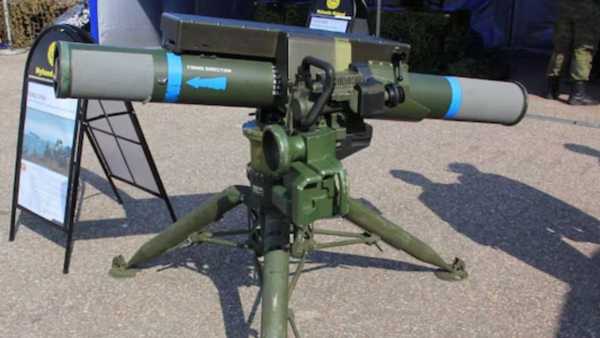
Anti tank guided missile.
It also has the power to penetrate the reactive armor of modern tanks. Its importance for India is from strategic point of view. With its help, the Army and Special Forces deployed on the borders get quick and reliable anti-tank capability. India imports it in limited numbers. Along with this, construction and technology transfer work is also going on. It is expected that concrete results can emerge in this direction soon.
Advanced Border Monitoring System
This technology is very important for India. This is a combination of smart fencing, ground sensors, thermal imagers, radar, and integrated command and control system. It is capable of giving early warning of intrusion even at night, in fog, in difficult weather. It works in an automated manner. As a result, the burden on the security forces deployed at the border posts is relatively less.
Radar, Electronic Warfare and Cyber Defense
India-Israel defense partnership is not limited to just arms procurement, but also extends to high-tech electronic systems and cyber security.
- Advanced Radar System: India has acquired a number of air-surveillance and fire control radars from Israel, which are today part of the Indian air defense network. They also have the ability to detect drones, helicopters and cruise missiles flying at low altitude. This radar also has the facility to track and engage multiple targets simultaneously.
- Electronic Warfare Suits and Self-Protection Systems: Many fighter planes and helicopters of the Indian Air Force are equipped with Israeli electronic warfare suits, jammers and missile warning systems. These have the ability to confuse or jam enemy radar and missile guidance. They have the power to warn the pilot of a missile attack in time.
Emphasis on cyber and AI-driven warfare
It has been claimed in media reports that in this visit of PM Modi, there will be special emphasis on AI-driven combat system, cyber security framework and counterdrone architecture. India knows that in case of war, India gets Israel's combat-tested experience to deal with challenges like data, networks and drone swarms.
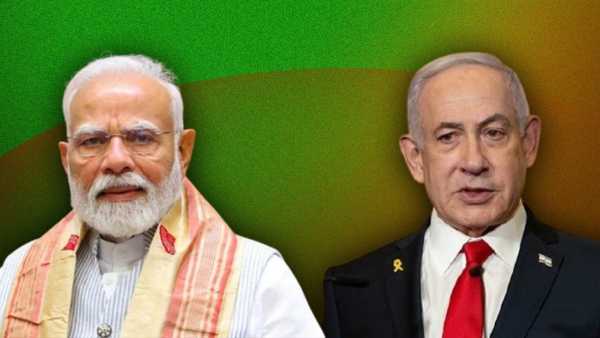
Prime Minister Narendra Modi and Israeli PM Benjamin Netanyahu.
Make in India and Technology Transfer
India now wants not only to buy ready-made weapons but also to produce them in its own country by transferring the technology. Just like Barak-8 and other defense equipment are being prepared here. In this, DRDO and Israeli companies are jointly developing and manufacturing the system. India wants to bring this sequence to other projects. India wants to establish almost the same system in its country as Israel has done. That is, the Israeli Army and the research institutes there do innovation together and their experiment is also successful. India wants to replicate this model in defense corridors and other innovation ecosystems. India wants to reduce foreign dependence by emphasizing technology transfer.
Regional politics, security and message of Modi's visit
This visit of PM Modi is taking place at a time when there is an atmosphere of instability in the Red Sea and West Asia. There is tension between Iran and America. There is pressure on the global supply chain. In such a situation, security cooperation becomes important. Since, India now views relations with Israel separately from the Palestine issue and is parallelly increasing cooperation with Arab countries. This has helped India establish itself as a reliable partner with both factions. The specialty of Israel is that it is ready to provide combat-tested technology comparatively quickly and with less political conditions. Dealing with Israel is easier than with traditional suppliers like Russia and the US.
Drones, Looting Munitions and Surveillance Systems
It is believed that in this visit of PM Modi, there will be emphasis on precision strike and surveillance. Drones, looting munitions and hi-tech border monitoring systems are important parts of this. This includes Heron and Searcher UAVs. In this, Heron is a drone capable of medium altitude, long-term surveillance. Searcher is a lightweight surveillance drone. They are capable of gathering realtime video and image intelligence with long range, multi-hour flight capability. For India, these drones are going to play a very important role in the border areas of both China and Pakistan. India wants to finalize negotiations with Israel for some more advanced drones. He knows that now wars are going to be fought not only through soldiers but also through technology.
In this way we can understand that India-Israel defense relations are no longer just about buyer-seller. From missile defense to drones, loitering munitions, border monitoring, electronic warfare and AI driven warfare, India has incorporated many of Israel's key technologies into its security infrastructure. There are two clear messages from this visit of PM Modi after eight years. One- India is pursuing its Middle East policy in a more confident and balanced manner. In the times to come, India-Israel military technology cooperation, especially in the fields of Make in India, AI warfare systems, counterdrone and missile defense, is going to be deeper and longer term.
-
Saudi Arabia bans poultry, egg imports from India, 39 other countries

-
UN Security Council voices concern over ongoing violence in Sudan

-
School Assembly News Headlines Today February 25, Top National, International, Sports, Business News

-
ABP Deep Dive: Netanyahu Floats ‘Hexagon’ Of Allies Ahead Of Modi Visit; Why Israel Seeks India’s Role
-
New El Niño Warning: Ocean Salinity May Worsen Monsoon Risks For India