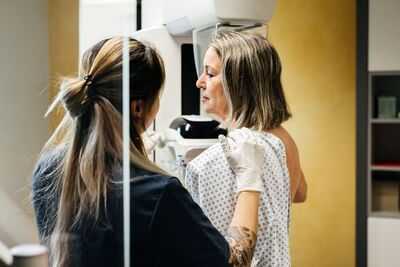
Almost every NHS trust in England is falling short of a major cancer treatment target as patients face widespread "unacceptable delays", analysis reveals. The health service has a long-standing target for at least 85% of patients to wait no more than 62 days from a cancer referral until they start treatment. The standard has not been met nationally since 2014, and the Government has set an interim target of reaching 75% by March 2026.
Analysis of NHS figures reveals that just three out of 119 acute NHS trusts with comparable data met the 85% target in 2025, while around a quarter reached 75%. In the worst-performing locations, some patients faced waits of more than 104 days. Across England, 69.1% of patients (239,038 out of 345,847) began cancer treatment within 62 days last year.
This was up slightly from 67.7% in 2024, according to the analysis by the Press Association. Michelle Mitchell, chief executive of Cancer Research UK, said: "Every cancer patient deserves access to timely, high-quality care.
"Although NHS staff are working hard to cope with increasing pressure on cancer services, far too many people still face unacceptable delays for vital treatment.
"The UK Government has set an important commitment to meet all cancer waiting times targets in England by 2029, but this can't be achieved at the current rate of progress.
"More investment in NHS workforce and equipment will be crucial to deliver genuine change for patients across the country."
The three trusts that hit 85% were Calderdale and Huddersfield (89.2% of patients), Homerton Healthcare (85.8%) and Maidstone & Tunbridge Wells (85.7%).
The bottom five performing trusts were Mid & South Essex (seeing just 45.4% of patients within 62 days), Sheffield Teaching Hospitals (50.1%), Hull University Teaching Hospitals (53.1%), Queen Elizabeth Hospital King's Lynn (54.2%) and Guy's & St Thomas' in London (55.1%).
You can check how your local trust is performing using our interactive map.
Some 65 of the 119 trusts saw a rise year on year in the percentage of patients seen within 62 days, while 54 saw a fall.
In a handful of trusts, at least one in seven patients who began cancer treatment in December 2025 had been waiting more than 104 days since an urgent referral.
Bea Taylor, fellow at the Nuffield Trust think tank, said the NHS "often struggles" to sustain progress on improving cancer waiting times, but "there isn't time for stagnation" as trusts work towards the 85% target.
She added: "The UK lags behind other countries in cancer outcomes and faces longstanding gaps in investment and staff, with key equipment like diagnostic scanners in short supply compared to countries like Germany, Sweden and Italy.
"These factors also made it more difficult for the NHS to recover cancer care post-pandemic.
"Taking advantage of new developments in digital technology could help, for example, by using AI to speed up diagnosis for patients, but making the UK 'world-leading' on cancer will take time and the commitment of scarce resources in a health service already under pressure."
An NHS spokesman said: "The NHS is seeing and treating record numbers of patients for cancer, with more than three quarters of people receiving a diagnosis or all clear within four weeks, but there are still too many people experiencing unacceptably long waits for their first treatment.
"Our landmark National Cancer Plan sets out a clear roadmap to ensuring we are meeting all three cancer standards to see and treat patients on time over the next three years, with further improvements to make care more personalised and significantly improve survival."
Kirsten Major, chief executive of Sheffield Teaching Hospitals, said her trust "previously had some of the best cancer waiting times" and was concerned about the drop in performance.
She added: "This is one of our top three priorities and as such, we have already taken actions to turn this around, including additional clinics and diagnostic capacity and changes to improve and speed up the care that we provide."
A spokesman for NHS Humber Health Partnership, representing Hull University Teaching Hospitals, said clinicians were "driving forward an improvement plan".
Dawn Scrafield, chief executive of Mid & South Essex NHS Foundation Trust, said improving cancer care was a key priority.
She added: "We know we need to do more and that our patients deserve better. We have invested in new technologies to help us treat cancer more quickly, and have also increased the provision of diagnostic tests, outpatient clinics and cancer surgery to reduce the time to diagnosis and treatment."
A spokeswoman for Guy's & St Thomas' said "improving how quickly people can access our services is a key priority for the trust".
-
MPPSC: MPPSC increases the number of Mining Inspector posts, now State and Forest Service posts will be increased..

-
CTET Answer Key 2026: Provisional answer key for CTET exam will be released soon, you can download it by following these steps..

-
What are the parking fees for cars and bikes at Namo Bharat stations? Find out how many vehicles can be parked..

-
UPSC CSE 2026: Tomorrow is the last date to fill the UPSC IAS form, apply immediately..

-
IRCTC Agent: How to register to become an IRCTC agent? Learn the complete process and how to earn...