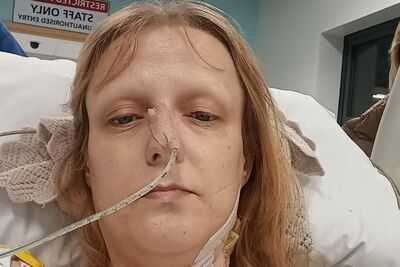
A mum says tumours the size of oranges were missed by doctors despite her raising symptoms multiple times - and now she can't have another child. Caroline Padmore, 36, says she spent seven years making repeat trips to A&E with severe abdominal pain that was so agonising she’d sometimes collapse.
Doctors told the primary school teacher that her pain was likely due to other issues - including polycystic ovary syndrome, appendicitis or period pains – and sent her home. Weeks after the birth of her first child, Caroline discovered the truth.
“I had my baby in October 2024 and the pain happened again in December,” said Caroline, from Timperley, Greater Manchester. “The wait time was too long and I was breastfeeding, so I left. I went to the GP a week later as the pain was still there and I was vomiting.
- 'Breathtaking' UK cove has 'soft white sand and dramatic cliffs'
- Budget 89p supermarket jam crowned best in new taste test beating Hartley's

“The GP felt my tummy and sent me to the hospital, where I had an ultra and a CT. This was when they discovered the ‘nasty’ stuff all over my abdomen.”
Caroline was sent for a biopsy of the “orange-sized” masses in her abdomen in January 2025, and just two weeks later, was diagnosed with low-grade serous ovarian cancer. Despite undergoing multiple ultrasounds and tests when she was expecting son Leo, now aged one, Caroline’s cancer had gone unnoticed.
Caroline added: “I keep reading about ultrasounds being imperative to help diagnose ovarian cancer. Yet, I have been consistently told the opposite [by doctors]. My biopsy was using an ultrasound so they just contradicted themselves.”
Caroline says she felt “numb” when doctors revealed the true cause of her longtime pain. “It felt like an out-of-body experience,” she said “I felt ignored and not listened to.
“But part of me had just trusted what they said and I’d never thought it would be something so terrible. They thought it was appendicitis a few times, too. I was finally diagnosed because the pregnancy hormones sped up the spread of the cancer and made the symptoms worse.“
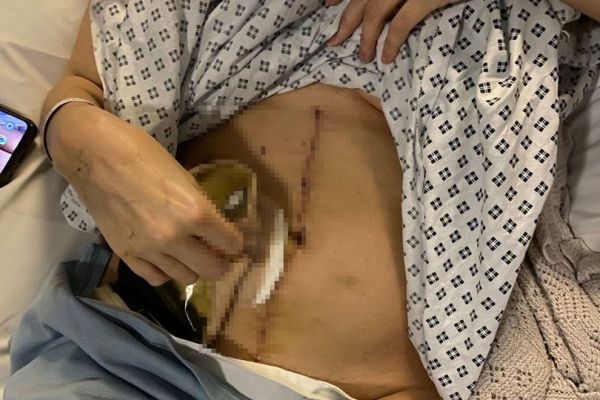
Caroline underwent a major operation in February 2025 to remove her ovaries, cervix, womb, fallopian tubes, appendix, parts of her liver, parts of her diaphragm, her omentum, parts of her peritoneum, some of her bowel, and multiple tumours.
The surgery resulted in Caroline having an ileostomy – a surgical procedure that diverts the small intestine through an opening in the abdominal wall, called a stoma, to allow waste to exit the body into an external pouch. Due to the removal of her ovaries, Caroline also went into surgical menopause, which often has more severe and sudden symptoms than natural menopause, and is continuing to experience the effects.
She then began weekly chemotherapy sessions, which were sometimes interrupted due to A&E trips and bad blood results. Caroline used cold capping, which reduces blood flow to the hair follicles and limits damage, throughout her chemotherapy treatment.
She says the process saved most of the hair on her head, but it did become quite thin, while all other hair on her body was lost, including her eyelashes and brows. But for Caroline, one of the hardest parts of the entire experience was being told she wouldn’t be able to have any more children.
She added: “I remember the appointment where I was told I had cancer, it was two weeks and one day after the biopsy. I had convinced myself it was cancer. My gut told me it was, so I was prepared for her to tell me that.
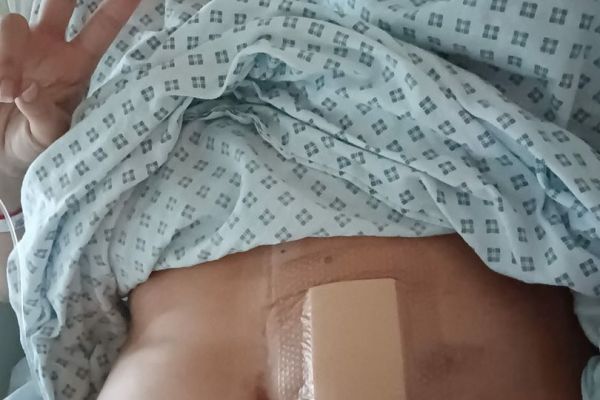
“But when she told me about the surgery and that it would involve removing all of my reproductive organs along with any other signs of cancer, I lost it. That's what made me cry. I was already planning baby number two.”
Caroline was offered the opportunity to retrieve and freeze her eggs, but was told this could delay surgery and would be risky due to the hormonal treatment she would need for the procedure. She opted not to go ahead with freezing her eggs and instead chose surgery.
Caroline said: “It's still one of the hardest parts of all this not being able to have more children. I adored being pregnant and I was desperate for another and it's made me feel less of a woman being stripped of all my organs. Things still massively trigger me now – seeing pregnant people, seeing babies.
“Medical professionals still say inappropriate things or ask inappropriate questions in relation to it that trigger me even more. It will never, ever get easier.”
In August 2025, just days after finishing her final chemotherapy treatment, Caroline was rushed into for emergency bowel surgery. She said: “They told me that if I'd not gone in with the pain and if I'd left it much longer, I would have died. My mum and [my partner] Tom were the ones who insisted she take me to A&E, so they saved my life.”
Recently, Caroline has been reflecting on her journey with cancer, saying she has been in a “constant state” of recovery for almost a year. She went on: “My whole life has been centred around it for the last year. I've been in a constant state of recovery from either surgery, chemo, injections, or medications.
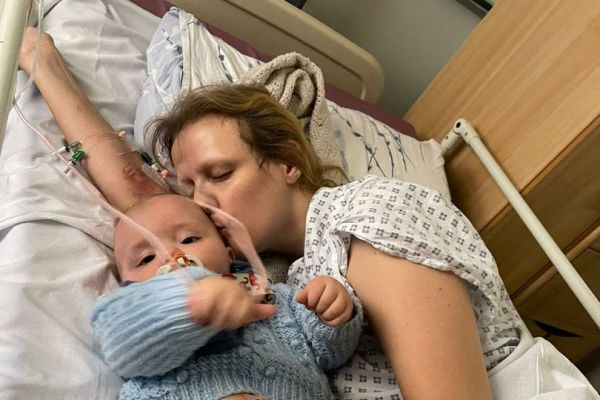
“My younger brother lived in Australia but quit his job and moved home when he found out. My son had to live with my parents for a lot of the year while I was recovering from multiple surgeries, as I couldn't lift him. Months spent in hospitals. Multiple A&E trips throughout the year due to pains and chemo side-effects.”
The fact that the cancer was missed for so long – and with such devastating consequences – is “horrific” for Caroline. She said: “If this had been discovered when I first presented with symptoms, the cancer would have been at an earlier stage. I was at the very advanced stage 3C at diagnosis and I could have been spared and my fertility could have been spared.
“I think I was ignored a lot because of my age, but my specific cancer affects younger women more. Although my cancer is rare, the symptoms are the same. The CA-125 blood test that’s usually used to help diagnose ovarian cancer isn't reliable for my type.
“I had so many ultrasounds during pregnancy and the tumours the size of oranges were never picked up.” Now, Caroline has regular visits with her oncologist to keep track of her recovery and recently she had her stoma reversed.
While recent scans showed no visible signs of cancer, a biopsy taken during Caroline’s stoma removal found microscopic bits of cancer. This means that chemotherapy did not work on the part of her body where these cells were found and that they may be elsewhere too.
Caroline added: “My CA-125 was raised but [the doctor] said that was potentially due to my wound being infected a few weeks ago. I've come out of that appointment feeling a little bit rubbish. I'm on a drug called letrozole that blocks hormones and will hopefully stop any bits from growing, but we don't know if it will work on me or not.
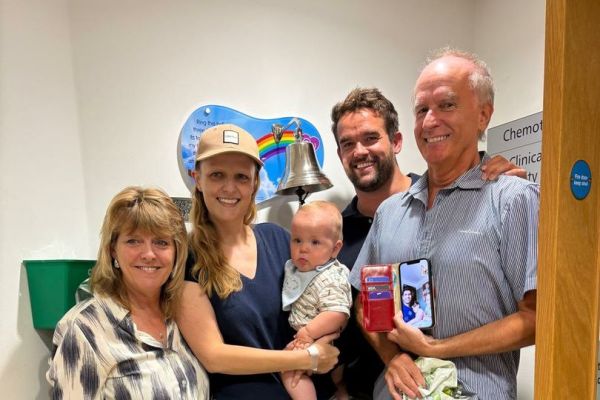
“I'm having scans and bloods every three months. The news has set me back a bit, but it's good in a way that we know it's there because now we can monitor it closer.”
Caroline says she advises other women to listen to their bodies, listen to their gut and “push, push, push” for answers.
-
Amid Toxic–Hai Jawani Toh Ishq Hona Hai Clash Buzz, Makers Claim Discussion Happened Earlier

-
Indian cricketing great Sachin Tendulkar's son Arjun marries Saaniya Chandhok

-
Mizoram's Electrification Efforts: 45 Villages Still Without Power
-
Shah Rukh Khan To Shoot For Cameo In Rajinikanth's Jailer 2 During Final Schedule: Report

-
Lewis Hamilton calls on Africans to 'take continent back' from Britain and other countries