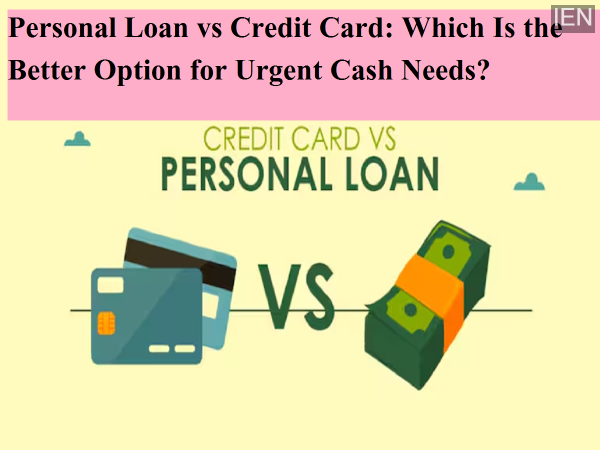
In today’s fast-paced life, unexpected expenses can arise at any moment—whether it’s a medical emergency, urgent home repairs, school fees, or any major financial obligation. When such situations occur, two of the most common solutions people consider are using a credit card or taking a personal loan. Both options provide quick access to funds, but they work very differently and suit different financial situations. Choosing the wrong one can increase your debt burden and lead to higher interest costs.
Understanding Credit Cards for Emergency Expenses
Credit cards are generally best suited for small and immediate expenses. They allow you to make payments instantly without waiting for loan approval. One major advantage is the interest-free period offered by most cards. If you repay the full amount within the billing cycle, you typically pay no interest at all.
However, the downside can be significant. If you fail to pay on time or carry a balance, credit card interest rates can be extremely high—often ranging between 30% and 40% annually. This means a small unpaid balance can quickly grow into a large liability. For this reason, credit cards are ideal only when you are confident that you can repay the amount promptly.
Best suited for:
-
Small purchases
-
Short-term cash needs
-
Users with strong repayment discipline
When a Personal Loan Makes More Sense
Personal loans are usually the better option for larger expenses. These loans, offered by banks and NBFCs, come with a fixed repayment schedule and predetermined EMIs. Interest rates are generally much lower than credit card rates, typically ranging between 10% and 20%, depending on your credit profile and lender.
Because the repayment structure is fixed, personal loans help with budgeting and long-term financial planning. You know exactly how much you need to pay each month and for how long, which reduces uncertainty. This makes them especially suitable for planned or large expenses where repayment will be spread over time.
Best suited for:
-
Large expenses
-
Planned spending
-
Borrowers who prefer structured repayment
Key Differences at a Glance
| Factor | Credit Card | Personal Loan |
|---|---|---|
| Loan Type | Revolving credit | Fixed loan |
| Interest Rate | Very high if unpaid | Lower and fixed |
| Best For | Small, quick payments | Large expenses |
| Repayment | Flexible | Fixed EMIs |
| Risk | High if delayed | Predictable |
Which Option Should You Choose?
The right choice depends mainly on three factors: the amount you need, how quickly you can repay it, and your ability to manage debt responsibly.
-
Choose a credit card if the expense is small and you can repay it quickly.
-
Opt for a personal loan if you need a large amount and want to repay it gradually.
-
Avoid relying on credit cards if you are unsure about timely repayment, as interest can accumulate rapidly.
Many people make the mistake of using credit cards impulsively and later struggle with mounting interest charges. In contrast, a personal loan may feel restrictive because of monthly EMIs, but it often provides greater financial clarity and peace of mind.
Final Takeaway
During financial emergencies, both credit cards and personal loans can be helpful tools. The key is to match the option with your financial situation. Credit cards offer instant relief but can become costly if misused, while personal loans provide a more structured and often more affordable repayment path for bigger expenses. Making a thoughtful decision can protect not only your finances but also your long-term financial stability.
-
March Indian nonfiction: Six new titles that take a sharp look at India's past and future

-
ICAI CA Final January 2026 Results Announcement
-
Karnataka: Govt opens barber shop in Gadag for Dalits

-
UPSSSC Junior Assistant 2023 Typing Test Results Announced

-
PM Modi Ajmer visit: Rs 16,686 crore development push, HPV vaccination drive to be launched today (Ld)