
Listen to this article in summarized format
Loading...
××
Subscribe to

Unlock AI Briefing and Premium Content
New Year Offer 24 Hours Left
Subscribe NowAlready a member? Sign In
What's Included
- Exclusive Stories
- Daily ePaper Access
- Smart Market Tools
- Curated Investment Ideas
- Ad-lite Experience
Subscription

It's a crazy thing, this love! I'm bang in between Valentine's Day and the Ides of March, and the new Wuthering Heights with Margot Robbie and Jacob Elordi is still playing in cinemas. But it was the release of a streaming series, Museum of Innocence, based on Orhan Pamuk's 2008 novel, that made me think about hearts torn apart.
As a young reader, I had first chanced upon Valentine's Day cards sent by Cousin Helen in Susan Coolidge's 1872 novel What Katy Did - summer reading that had lasted beyond its published date, and children's fiction that had lasted well into the 1980s - Valentine's notes not just sent to a lover, but to all loved ones.
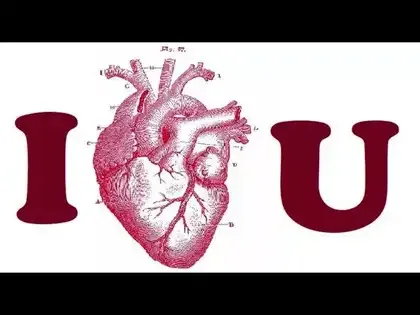
The subsequent symbolism of the heart set me thinking. Did it come from a wake-up call or eureka moment - that the world now needs an inaccurate diagram of an anatomical organ to represent affection? Well, perhaps not. The heart symbol for love is a historical grouping across time zones and centuries. Everyone can take credit for it, and yet no one can. And the doodle we see today has its own story of evolution.
Long before love-themed merch filled shop windows, ancient Cyrene, a Greek colony in what is today's Libya, stamped rough heart shapes on coins - symbols of silphium, a plant used as spice, medicine, aphrodisiac, and reputed contraceptive. Writers cite this as the heart's 'first use,' but it's mostly trivia.
Fact-finding takes us to medieval Europe. Here, the heart became the storage vault for emotions, the soul, and religious devotion. The heart burning, breaking, surrendering, and lifting - now all a part of common parlance. Now, where does medieval Europe stand without its artists? Nowhere. A simplified persona in a neater symbolic shape started evolving. Like a KonMari-style decluttering of the actual design. Less fussy, and cleaner lines.
The 13th c. soft launch was in Thibaut de Blaison's French manuscript, Roman de la Poire (Romance of the Pear), a love story where a lover kneels and offers his heart to a lady. This image goes on to start a trend used to this day. The heart slowly began getting a design upgrade and standardisation over the next two centuries.
Religious images show figures offering hearts to Christ. Secular scenes depict knights and ladies entangled in emotions. By the 14th c., works such as Francesco da Barberino's Documenti d'amore (Teachings of Love) settled into the more established two lobes with a point at the bottom, and the symbol was finally ready for mass production.
The Mamluk and Latin deck of cards had three male face cards. French card makers added hearts, diamonds, clubs, and spades around 1480. The queen was included in the 15th century, replacing the knight. The 'Paris pattern' started assigning historical or biblical identities to face cards, the queen of hearts designed to represent Judith from the Hebrew Bible.
In the 17th c., we land in Jehangir's court, where, as a sign of his undying love for Noor Jehan, a diamond is inscribed with the words 'Love is everlasting' and bears her name. Later, Shah Jahan gave it to Mumtaz Mahal. Although the Taj Mahal may overshadow this jewel bearing the same name, it has endured for centuries. This Cartier piece was gifted by Richard Burton to Elizabeth Taylor, and worn by Robbie at the LA premiere of Wuthering Heights in January.
Jump ahead to the 18th and 19th centuries, when printed Valentine cards took off, and the stylised red heart crashed into mainstream culture like sugar coated M&Ms. The 20th c. and the advertising era turned everything into a logo. In 1977, designer Milton Glaser created the 'I♥NY' logo, using the heart as a visual shorthand for the word, prompting a flurry in which the symbol became the real star in campaigns. From there, 'I♥such and such' probably became one of the world's first memes. The heart is now everywhere, from tattoos to latte art.
When it comes to the question of who designed it, in strict credit assignment terms, nobody did - and everybody did. It's taken centuries of evolution. Romantic, yes; scientific, not. But it's what still turns us jelly-kneed and woolly-eyed. So, it's permitted, not contraband - a cure for aches, and a tiny sign of wishful thinking.
As a young reader, I had first chanced upon Valentine's Day cards sent by Cousin Helen in Susan Coolidge's 1872 novel What Katy Did - summer reading that had lasted beyond its published date, and children's fiction that had lasted well into the 1980s - Valentine's notes not just sent to a lover, but to all loved ones.
The subsequent symbolism of the heart set me thinking. Did it come from a wake-up call or eureka moment - that the world now needs an inaccurate diagram of an anatomical organ to represent affection? Well, perhaps not. The heart symbol for love is a historical grouping across time zones and centuries. Everyone can take credit for it, and yet no one can. And the doodle we see today has its own story of evolution.
Long before love-themed merch filled shop windows, ancient Cyrene, a Greek colony in what is today's Libya, stamped rough heart shapes on coins - symbols of silphium, a plant used as spice, medicine, aphrodisiac, and reputed contraceptive. Writers cite this as the heart's 'first use,' but it's mostly trivia.
Fact-finding takes us to medieval Europe. Here, the heart became the storage vault for emotions, the soul, and religious devotion. The heart burning, breaking, surrendering, and lifting - now all a part of common parlance. Now, where does medieval Europe stand without its artists? Nowhere. A simplified persona in a neater symbolic shape started evolving. Like a KonMari-style decluttering of the actual design. Less fussy, and cleaner lines.
The 13th c. soft launch was in Thibaut de Blaison's French manuscript, Roman de la Poire (Romance of the Pear), a love story where a lover kneels and offers his heart to a lady. This image goes on to start a trend used to this day. The heart slowly began getting a design upgrade and standardisation over the next two centuries.
Religious images show figures offering hearts to Christ. Secular scenes depict knights and ladies entangled in emotions. By the 14th c., works such as Francesco da Barberino's Documenti d'amore (Teachings of Love) settled into the more established two lobes with a point at the bottom, and the symbol was finally ready for mass production.
The Mamluk and Latin deck of cards had three male face cards. French card makers added hearts, diamonds, clubs, and spades around 1480. The queen was included in the 15th century, replacing the knight. The 'Paris pattern' started assigning historical or biblical identities to face cards, the queen of hearts designed to represent Judith from the Hebrew Bible.
In the 17th c., we land in Jehangir's court, where, as a sign of his undying love for Noor Jehan, a diamond is inscribed with the words 'Love is everlasting' and bears her name. Later, Shah Jahan gave it to Mumtaz Mahal. Although the Taj Mahal may overshadow this jewel bearing the same name, it has endured for centuries. This Cartier piece was gifted by Richard Burton to Elizabeth Taylor, and worn by Robbie at the LA premiere of Wuthering Heights in January.
Jump ahead to the 18th and 19th centuries, when printed Valentine cards took off, and the stylised red heart crashed into mainstream culture like sugar coated M&Ms. The 20th c. and the advertising era turned everything into a logo. In 1977, designer Milton Glaser created the 'I♥NY' logo, using the heart as a visual shorthand for the word, prompting a flurry in which the symbol became the real star in campaigns. From there, 'I♥such and such' probably became one of the world's first memes. The heart is now everywhere, from tattoos to latte art.
When it comes to the question of who designed it, in strict credit assignment terms, nobody did - and everybody did. It's taken centuries of evolution. Romantic, yes; scientific, not. But it's what still turns us jelly-kneed and woolly-eyed. So, it's permitted, not contraband - a cure for aches, and a tiny sign of wishful thinking.
(Disclaimer: The opinions expressed in this column are that of the writer. The facts and opinions expressed here do not reflect the views of www.economictimes.com.)





Reshom Majumdar