
Listen to this article in summarized format
Loading...
××
Subscribe to

Unlock AI Briefing and Premium Content
New Year Offer 24 Hours Left
Subscribe NowAlready a member? Sign In
What's Included
- Exclusive Stories
- Daily ePaper Access
- Smart Market Tools
- Curated Investment Ideas
- Ad-lite Experience
Subscription

If you're in your 20s, try this experiment: Say something you think is wise and interesting in a gathering. Then, some 30 years later, say the same wise and interesting thing in a similar group. Once you compare the two sets of reactions to your seemingly sharp observation, you'll very likely find that while today, the room will, at best, politely laugh at your naivete (at worst, ignore you said anything), in around 2056, your observation will be considered wise and interesting.
I have conducted this experiment, and can only conclude that what has caused this change in reaction to things I have shared 30 years apart is just one thing: my age.
Regardless of what's being said, there's an overriding tendency to take an old(er) person's utterances as wisdom, and dismiss the same when they come from someone young(er). So, when OpenAI CEO Sam Altman, at the sprightly 'Goldilocks' age of 40, told a bunch of IIT-Delhi students last week that 'listening to old people is the biggest mistake young people make,' I took his words out of their context - of preparing young people for their careers in an AI era - and ran with it.
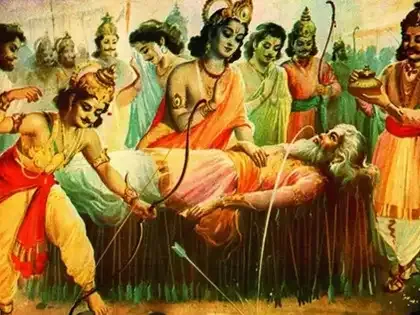
Altman's right on a bigger scale. Especially here in India, we put too much premium on 'wisdom of elders'. And it can be crippling.
Even with the prevalent cult of youth - much of which is propagated by our 'mature' lot who are now in patriarchal-matriarchal positions themselves - the tradition of having an automatic chronological bias in favour of buzurg log is a form of social superstition. Much that is dogma, bias, and downright bigotry has been sanctified by this sanctimonious bunch, who in turn have been sanctified because of a single parameter: age.
There is much truth in the literal or metaphorical saas, having once been a bahu, now making the most of her accumulated-over-years sassiness. The 'traditional' family set-up, like khap panchayats or company boardrooms that scale up the family model a notch or two, is hardly populated evenly by age. The older enter the room retrofitted with pranaam and respectful notion of being wiser.
At some level, this makes sense. As a resident of this planet for 54 years, I would be deemed more familiar and knowledgeable about the ways of the world than, say, 32-yr-old Jaspreet Bumrah. The young heed the advice of their parents, and the parents theirs - that's the standard algo, at least, when it comes to that fuzzy field called 'life lessons'.
But such a notion ignores two things: one, individual talent; two, to quote the very old philosopher Heraclitus: 'No man ever steps in the same river twice, for it's not the same river and he's not the same man.' In other words, the world changes, and the ability to keep up is a paramount feature of being wise.
There are enough tales about young persons giving up their 'foolish ways' and becoming wise - Ratnakar to Valmiki, Siddhartha to the Buddha, pre- and post-Kalinga War Ashoka, pre- and post-Dhurandhar Akshaye Khanna... But there are few cautionary tales of 'Vito to Don Corleone' individuals whose thoughts ossify over time.
Altman's 'anti-Drona Dronacharya' moment made me take out that disturbingly accurate Philip Larkin poem, 'This Be the Verse,' which overturns the whole Shravan Kumar-type filial piety towards parents thing right from its opening lines: 'They fuck you up, your mum and dad./ They may not mean to, but they do.' A friend subsequently pointed me towards Akhil Katyal's brilliant translation more apt for our climes: 'Tumhari le lete hain tumhari mummy-daddy/ Janbujh kar nahi, bas unse ho jata hai.'
So, fellow old(er) people here, start by insisting that young(er) folk don't call you, 'Sir' or 'Ma'am' (unless you're their teacher) and that they address you simply by your name (unless, if you want, by a kid as an elder family member or friend of the family). Altman was right to have preambled his gyan to those 20-somethings to not to take his word for it. More than a decade older, I, too, am telling you not to take mine.
I have conducted this experiment, and can only conclude that what has caused this change in reaction to things I have shared 30 years apart is just one thing: my age.
Regardless of what's being said, there's an overriding tendency to take an old(er) person's utterances as wisdom, and dismiss the same when they come from someone young(er). So, when OpenAI CEO Sam Altman, at the sprightly 'Goldilocks' age of 40, told a bunch of IIT-Delhi students last week that 'listening to old people is the biggest mistake young people make,' I took his words out of their context - of preparing young people for their careers in an AI era - and ran with it.
Altman's right on a bigger scale. Especially here in India, we put too much premium on 'wisdom of elders'. And it can be crippling.
Even with the prevalent cult of youth - much of which is propagated by our 'mature' lot who are now in patriarchal-matriarchal positions themselves - the tradition of having an automatic chronological bias in favour of buzurg log is a form of social superstition. Much that is dogma, bias, and downright bigotry has been sanctified by this sanctimonious bunch, who in turn have been sanctified because of a single parameter: age.
There is much truth in the literal or metaphorical saas, having once been a bahu, now making the most of her accumulated-over-years sassiness. The 'traditional' family set-up, like khap panchayats or company boardrooms that scale up the family model a notch or two, is hardly populated evenly by age. The older enter the room retrofitted with pranaam and respectful notion of being wiser.
At some level, this makes sense. As a resident of this planet for 54 years, I would be deemed more familiar and knowledgeable about the ways of the world than, say, 32-yr-old Jaspreet Bumrah. The young heed the advice of their parents, and the parents theirs - that's the standard algo, at least, when it comes to that fuzzy field called 'life lessons'.
But such a notion ignores two things: one, individual talent; two, to quote the very old philosopher Heraclitus: 'No man ever steps in the same river twice, for it's not the same river and he's not the same man.' In other words, the world changes, and the ability to keep up is a paramount feature of being wise.
There are enough tales about young persons giving up their 'foolish ways' and becoming wise - Ratnakar to Valmiki, Siddhartha to the Buddha, pre- and post-Kalinga War Ashoka, pre- and post-Dhurandhar Akshaye Khanna... But there are few cautionary tales of 'Vito to Don Corleone' individuals whose thoughts ossify over time.
Altman's 'anti-Drona Dronacharya' moment made me take out that disturbingly accurate Philip Larkin poem, 'This Be the Verse,' which overturns the whole Shravan Kumar-type filial piety towards parents thing right from its opening lines: 'They fuck you up, your mum and dad./ They may not mean to, but they do.' A friend subsequently pointed me towards Akhil Katyal's brilliant translation more apt for our climes: 'Tumhari le lete hain tumhari mummy-daddy/ Janbujh kar nahi, bas unse ho jata hai.'
So, fellow old(er) people here, start by insisting that young(er) folk don't call you, 'Sir' or 'Ma'am' (unless you're their teacher) and that they address you simply by your name (unless, if you want, by a kid as an elder family member or friend of the family). Altman was right to have preambled his gyan to those 20-somethings to not to take his word for it. More than a decade older, I, too, am telling you not to take mine.




Indrajit Hazra
Editor, Views