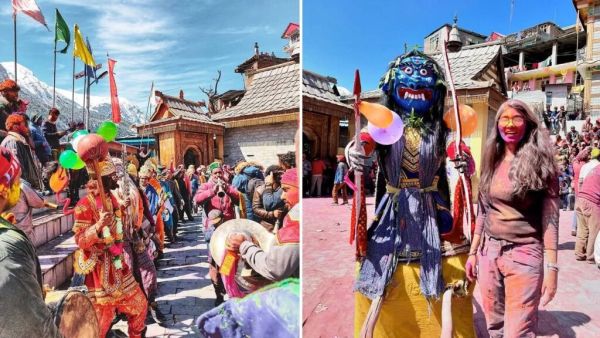
New Delhi: Holi in India often brings to mind clouds of bright powder, loud music and bustling street celebrations. Yet in the high-altitude village of Sangla in Himachal Pradesh’s Kinnaur district, the festival takes place in a markedly different manner. Known locally as Faguli, Sangla Holi 2026 is marked by tribal customs, seasonal change and spiritual cleansing rather than exuberant colour play. Set against the dramatic backdrop of the Baspa Valley, the four-day observance combines temple rituals, masked dances, deity processions and a sacred bonfire.
The celebrations mark the end of long winter isolation in the Himalayas and seek blessings for the agricultural cycle ahead. Visitors who plan carefully can witness a living tradition shaped by faith and community, not tourism. However, travel requires preparation, as Sangla lies within a protected tribal region where permits are mandatory. Understanding the dates, rituals and entry requirements ensures a respectful and well-organised visit.
Key details of Sangla Holi 2026
Sangla Holi 2026 dates
March 1: Temple rituals begin, with priests performing ceremonial prayers to initiate the festival.
March 2: Deity processions take place as local gods are carried through the village in decorated palanquins accompanied by traditional instruments.
March 3: Holika Dahan bonfire is lit in open grounds near the Baspa Valley as part of purification rituals.
March 4: Main Holi celebrations bring together music, symbolic dances and community gatherings.
Cultural meaning behind Faguli Sangla
While much of India celebrates Holi as a commemoration of Prahlad’s victory over Holika, Sangla ki Holi carries additional agricultural and tribal symbolism. The festival signifies the end of winter seclusion in Kinnaur, a time when heavy snowfall often isolates villages. It also marks the blessing of fields before the sowing season begins. Rituals are performed to symbolically remove negative spirits from the valley and restore spiritual balance. Above all, the celebration reinforces village unity, strengthening collective identity and continuity of tradition. Attending Sangla Holi means witnessing an enduring Himalayan practice rather than a staged cultural display.
Activities of Sangla Holi 2026
1. Phagli mask dance
Men wear intricately carved wooden masks, often representing protective or fierce spirits, and perform ritual dances in open spaces. The movements symbolise the triumph of good over evil and are conducted with devotional intent rather than theatrical performance.
2. Deity processions
Village deities are carried in ornate palanquins through narrow lanes, accompanied by rhythmic drumming and traditional wind instruments. Residents gather respectfully as the procession passes, seeking blessings for prosperity and protection.
3. Holika Dahan in Sangla
The ceremonial bonfire is lit in designated open grounds near the Baspa Valley. Unlike large urban gatherings, the ritual here retains solemnity, focusing on purification and seasonal transition.
4. Natural colour ceremony
Colour application is restrained and respectful. In many cases, elders place a small mark of colour first, offering blessings before others participate. The emphasis remains symbolic rather than exuberant.
Permit for Kinnaur Holi 2026
Travellers must obtain permission to enter this protected tribal region. Sangla lies beyond the Kinnaur Gate checkpoint, where an Inner Line Permit is required. Indian visitors need a valid government-issued identification. Foreign nationals must carry passport copies and provide basic travel details. Securing permits in advance helps avoid delays and ensures compliance with regional regulations.
Sangla Holi 2026 offers a rare glimpse into Himalayan heritage shaped by landscape, faith and agricultural rhythms. Those who arrive with patience and respect will experience celebration defined not by colour clouds, but by tradition that continues to guide life in Kinnaur Valley.
-
Netflix is about to stop working on 87 million devices this week - is your TV or phone affected?
-
Mortgage rates jump above 6% after US-Israel strikes on iran push oil prices higher

-
Quote of the day by John Irving: 'If you are lucky enough to find a way of life you love, you have to...' – inspiring lessons on living life, courage, and following your dreams by the author of The World According to Garp

-
Iran closes Strait of Hormuz and will ensure oil prices reach $200 amid US-Israel strikes and rising war tensions
-
Quote of the Day by Ozzy Osbourne: 'Of all the things I've lost I miss my mind the most...'—Inspiring quotes by the 'Prince of Darkness'