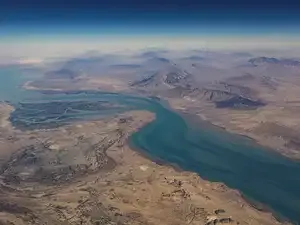
Whether President Donald Trump wins the Third Gulf War will depend a lot on whether the Pentagon can effectively reopen the Strait of Hormuz for oil shipping, and soon. The American military doesn’t have weeks to do so — only days.
The waterway is the world’s most important oil chokepoint, transporting about 20% of the world’s crude and refined petroleum products. Four days into the war, the strait, which consists of two narrow lanes deep enough for the largest oil tankers, is largely closed to tanker traffic. Since the conflict erupted, only a handful of small- and medium-sized tankers have crossed it, typically at night and with their location transponders, called AIS, switched off. But the large oil tankers that are the workhorse of oil shipping are avoiding it.
Also Read | What to know about the Strait of Hormuz, a key passageway essential for global energy supply
The stoppage isn’t due to VHF radio messages by the Iranians claiming that the strait is closed. Since the attack on Iran began, the US has asked oil companies, oil traders and tanker owners to steer clear as a precaution, and most companies have complied. Of course, everyone in the industry is concerned about the potential for Iranian attacks — and a few tankers have been hit, although those strikes have happened far away from the strait itself.
The US Navy is slowly claiming full control of the region, sinking several Iranian warships. Importantly, there's no indication Tehran has laid mines in the strait, and multiple bulk carriers and other vessels are crossing the waterway unimpeded. But Iran can still fire short-range missiles from its coast, plus inexpensive drones, to attack any tanker.
Although the world is focusing on oil exports, the most urgent task is to get tankers inside the Persian Gulf — not out — because storage capacity is limited. Crude production in the region continues and, until now, enough tankers were trapped to take onboard that output. But once those ships are full, countries will need to divert to onshore storage, which is also limited. Sooner rather than later, oil production will need to slow. So far, loadings have continued at a normal pace in Saudi Arabia, Kuwait, Iraq, the United Arab Emirates, Qatar and, too, Iran. Despite talk about an attack on Kharg Island, Iran’s main oil port, satellite pictures don't show any evident damage (or smoke) and loadings there have continued since the war started. Bloomberg News reported on Wednesday that Iraq, which always looked the most vulnerable oil producer, started shutting output at its Rumaila oilfield, the country's largest, as storage runs short.
The problem of lack of tankers to load is compounded because oil refineries inside the Persian Gulf are running out of storage themselves. With regional demand for some products sharply down — airlines aren't flying, so they aren’t buying jet fuel — refiners will soon run out of tank capacity and will need to slow their processing rates. That will exacerbate the production problem, because every barrel that's not refined needs to be exported as crude, and the onshore storage capacity for refined products is more limited than for crude. Thus the urgency to find tankers to take crude onboard will only increase.
Saudi Arabia and the UAE also have pipelines that bypass the Strait of Hormuz. Right now, both are sounding out their clients to see whether they can load crude at the end of those conduits, rather than inside the Persian Gulf. Riyadh can move crude to the Red Sea, and Abu Dhabi can load in the Arabian Sea. The problem is that both pipelines have limited capacity, so they only provide a partial solution. And it would take a few days to relocate the tankers waiting outside the Strait of Hormuz to the new locations.
Also Read |Israel-Iran war's 'Strait' fight can damage one of India's well-built firewalls
What comes next? Based on my industry soundings, oil companies and shipowners are holding discussions with the US government and others about getting the tanker traffic resumed. Either the US feels confident that the Iranian threat has diminished and declares the strait safe, or alternatively it organizes convoys under warship escort, with tankers crossing in batches. From the industry, I hear that the US is very much aware this needs to happen quickly — in days, not weeks. OPEC+ officials tell me that regional navies are involved in the discussion about convoys, although no decision has been taken yet. The US last provided escort to oil tankers convoys in the Persian Gulf in the mid-1980s under Operation Earnest Will during the Iran-Iraq war.
Insurance is an issue, but far from the biggest problem. True, insurers have issue notices of cancellations, but that’s just a customary legal procedure to enable underwriters to renegotiate contracts at much higher rates to reflect the material change in circumstances. If the insurance industry isn’t able to provide enough cover, the US government itself may need to backstop the war premium.
The market reaction to the Iran war has been relatively muted so far, with Brent rising to about $84 a barrel from $71 before the strikes. But unless the Strait of Hormuz is swiftly reopened to traffic, oil-producing nations will need to start slowing their output — which will exacerbate the spike in crude prices.
The waterway is the world’s most important oil chokepoint, transporting about 20% of the world’s crude and refined petroleum products. Four days into the war, the strait, which consists of two narrow lanes deep enough for the largest oil tankers, is largely closed to tanker traffic. Since the conflict erupted, only a handful of small- and medium-sized tankers have crossed it, typically at night and with their location transponders, called AIS, switched off. But the large oil tankers that are the workhorse of oil shipping are avoiding it.
Also Read | What to know about the Strait of Hormuz, a key passageway essential for global energy supply
The stoppage isn’t due to VHF radio messages by the Iranians claiming that the strait is closed. Since the attack on Iran began, the US has asked oil companies, oil traders and tanker owners to steer clear as a precaution, and most companies have complied. Of course, everyone in the industry is concerned about the potential for Iranian attacks — and a few tankers have been hit, although those strikes have happened far away from the strait itself.
The US Navy is slowly claiming full control of the region, sinking several Iranian warships. Importantly, there's no indication Tehran has laid mines in the strait, and multiple bulk carriers and other vessels are crossing the waterway unimpeded. But Iran can still fire short-range missiles from its coast, plus inexpensive drones, to attack any tanker.
Although the world is focusing on oil exports, the most urgent task is to get tankers inside the Persian Gulf — not out — because storage capacity is limited. Crude production in the region continues and, until now, enough tankers were trapped to take onboard that output. But once those ships are full, countries will need to divert to onshore storage, which is also limited. Sooner rather than later, oil production will need to slow. So far, loadings have continued at a normal pace in Saudi Arabia, Kuwait, Iraq, the United Arab Emirates, Qatar and, too, Iran. Despite talk about an attack on Kharg Island, Iran’s main oil port, satellite pictures don't show any evident damage (or smoke) and loadings there have continued since the war started. Bloomberg News reported on Wednesday that Iraq, which always looked the most vulnerable oil producer, started shutting output at its Rumaila oilfield, the country's largest, as storage runs short.
The problem of lack of tankers to load is compounded because oil refineries inside the Persian Gulf are running out of storage themselves. With regional demand for some products sharply down — airlines aren't flying, so they aren’t buying jet fuel — refiners will soon run out of tank capacity and will need to slow their processing rates. That will exacerbate the production problem, because every barrel that's not refined needs to be exported as crude, and the onshore storage capacity for refined products is more limited than for crude. Thus the urgency to find tankers to take crude onboard will only increase.
Saudi Arabia and the UAE also have pipelines that bypass the Strait of Hormuz. Right now, both are sounding out their clients to see whether they can load crude at the end of those conduits, rather than inside the Persian Gulf. Riyadh can move crude to the Red Sea, and Abu Dhabi can load in the Arabian Sea. The problem is that both pipelines have limited capacity, so they only provide a partial solution. And it would take a few days to relocate the tankers waiting outside the Strait of Hormuz to the new locations.
Also Read |Israel-Iran war's 'Strait' fight can damage one of India's well-built firewalls
What comes next? Based on my industry soundings, oil companies and shipowners are holding discussions with the US government and others about getting the tanker traffic resumed. Either the US feels confident that the Iranian threat has diminished and declares the strait safe, or alternatively it organizes convoys under warship escort, with tankers crossing in batches. From the industry, I hear that the US is very much aware this needs to happen quickly — in days, not weeks. OPEC+ officials tell me that regional navies are involved in the discussion about convoys, although no decision has been taken yet. The US last provided escort to oil tankers convoys in the Persian Gulf in the mid-1980s under Operation Earnest Will during the Iran-Iraq war.
Insurance is an issue, but far from the biggest problem. True, insurers have issue notices of cancellations, but that’s just a customary legal procedure to enable underwriters to renegotiate contracts at much higher rates to reflect the material change in circumstances. If the insurance industry isn’t able to provide enough cover, the US government itself may need to backstop the war premium.
The market reaction to the Iran war has been relatively muted so far, with Brent rising to about $84 a barrel from $71 before the strikes. But unless the Strait of Hormuz is swiftly reopened to traffic, oil-producing nations will need to start slowing their output — which will exacerbate the spike in crude prices.