Beijing: Top U.S. and Chinese trade negotiators are expected to meet in mid-March, signalling that plans for a summit between U.S. President Donald Trump and China's leader Xi Jinping remain on track despite U.S. strikes on Iran, Bloomberg News reported.
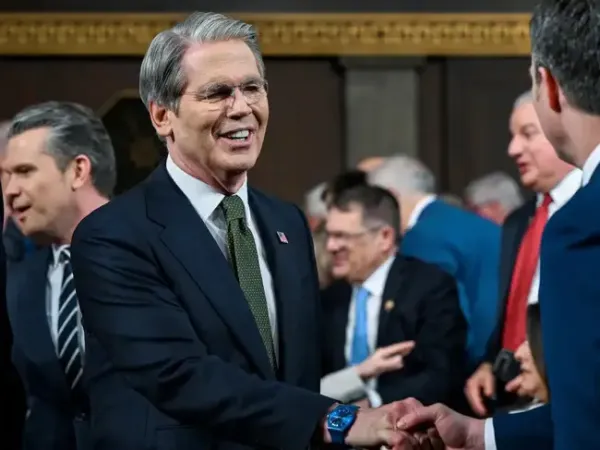
U.S. Treasury Secretary Scott Bessent and Chinese Vice Premier He Lifeng are expected to meet in Paris late next week to discuss potential business deals linked to the highly anticipated leaders' meeting, the report said, citing unnamed sources.
Spokespersons for the U.S. Treasury in Washington did not respond on Tuesday to a request for confirmation of the meetings. The Chinese commerce ministry and the U.S. Department of State also did not immediately respond to Reuters' requests for comment.
Chinese purchase commitments for Boeing aircraft and U.S. soybeans are expected to be on the agenda, the report said, citing people familiar with the meeting's planning, along with the future of Trump's tariffs aimed at curbing fentanyl flows, after the U.S. Supreme Court struck down the duties.
The discussions could also cover the future of Taiwan, the report said, with Beijing stepping up military exercises around the democratically governed island in recent years to reinforce its sovereignty claims. Trump is set to arrive in Beijing at the end of March, but the U.S. military campaign against Iran that killed Supreme Leader Ayatollah Ali Khamenei, following the U.S. capture of Venezuelan leader Nicolas Maduro in a risky Caracas raid in January has put Chinese leader Xi Jinping on the back foot, analysts say.
Earlier in the day, the South China Morning Post reported that Beijing and Washington had begun talks on restarting reciprocal investment. Boeing is in talks to sell as many as 500 jets to China, which would represent a major breakthrough for the company in the world's second-largest aviation market, where orders have stalled amid U.S.-China tensions.
The aircraft maker is one of the largest U.S. exporters and historically sent around a quarter of its planes to China, though Boeing has not secured a major Chinese purchase since Trump's first term in office.
Meanwhile, Trump said last month that China was weighing increasing U.S. soybean imports to 20 million metric tons for the current season, but traders remained sceptical as higher prices make U.S. soy uneconomical.
Chinese buyers only restarted booking U.S. soybeans in late October, slightly ahead of the two leaders' last meeting. Analysts attributed the move to a goodwill gesture.
Beijing has said it is closely watching whether Trump reaches for other levers to reimpose some of the duties struck down by the U.S. Supreme Court. It did not retaliate when the White House announced a new temporary tariff of 15% on U.S. imports from all countries late last month.
U.S. Treasury Secretary Scott Bessent and Chinese Vice Premier He Lifeng are expected to meet in Paris late next week to discuss potential business deals linked to the highly anticipated leaders' meeting, the report said, citing unnamed sources.
Spokespersons for the U.S. Treasury in Washington did not respond on Tuesday to a request for confirmation of the meetings. The Chinese commerce ministry and the U.S. Department of State also did not immediately respond to Reuters' requests for comment.
Chinese purchase commitments for Boeing aircraft and U.S. soybeans are expected to be on the agenda, the report said, citing people familiar with the meeting's planning, along with the future of Trump's tariffs aimed at curbing fentanyl flows, after the U.S. Supreme Court struck down the duties.
The discussions could also cover the future of Taiwan, the report said, with Beijing stepping up military exercises around the democratically governed island in recent years to reinforce its sovereignty claims. Trump is set to arrive in Beijing at the end of March, but the U.S. military campaign against Iran that killed Supreme Leader Ayatollah Ali Khamenei, following the U.S. capture of Venezuelan leader Nicolas Maduro in a risky Caracas raid in January has put Chinese leader Xi Jinping on the back foot, analysts say.
Earlier in the day, the South China Morning Post reported that Beijing and Washington had begun talks on restarting reciprocal investment. Boeing is in talks to sell as many as 500 jets to China, which would represent a major breakthrough for the company in the world's second-largest aviation market, where orders have stalled amid U.S.-China tensions.
The aircraft maker is one of the largest U.S. exporters and historically sent around a quarter of its planes to China, though Boeing has not secured a major Chinese purchase since Trump's first term in office.
Meanwhile, Trump said last month that China was weighing increasing U.S. soybean imports to 20 million metric tons for the current season, but traders remained sceptical as higher prices make U.S. soy uneconomical.
Chinese buyers only restarted booking U.S. soybeans in late October, slightly ahead of the two leaders' last meeting. Analysts attributed the move to a goodwill gesture.
Beijing has said it is closely watching whether Trump reaches for other levers to reimpose some of the duties struck down by the U.S. Supreme Court. It did not retaliate when the White House announced a new temporary tariff of 15% on U.S. imports from all countries late last month.