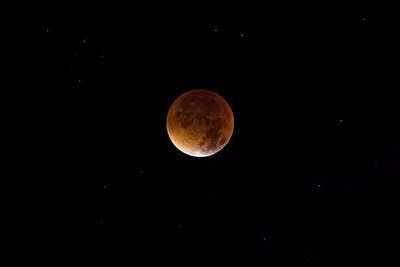
Skywatchers and members of the public in Lucknow are being invited to a special night‑sky observation event organised by the Indira Gandhi Planetarium on Tuesday, March 3, as part of efforts to let people experience a rare celestial event firsthand. The free programme will coincide with the year’s first total lunar eclipse, often referred to as a “blood moon” due to the reddish hue the Moon takes on during totality.
The lunar eclipse occurs when the Earth moves directly between the Sun and the Moon, casting its shadow on the lunar surface and filtering sunlight through Earth’s atmosphere. This scattering of shorter blue light while allowing red and orange wavelengths to reach the Moon gives it a distinctive coppery tint that has long fascinated both astronomers and casual observers alike.
According to the schedule shared by the organisers, the eclipse will begin in the afternoon around 3:20 pm local time. The total phase, when the Moon is completely engulfed in Earth’s shadow, is expected to last approximately 59 minutes from around 4:34 pm until about 5:33 pm. After this, the Moon will gradually emerge from totality, with the partial eclipse phase concluding by roughly 6:47 pm. Since sunset in Lucknow is forecast for around 6:08 pm, observers in the city will be able to see the latter stages of the eclipse as the Moon rises in the evening sky.
The event at the planetarium will provide telescopes for visitors to view the eclipse more clearly, offering an opportunity for people of all ages to observe the blood moon phenomenon and learn more about the science behind it. Members of the Uttar Pradesh Amateur Astronomers Club are collaborating with the planetarium on the programme, and participants can expect explanations and guidance on what to look for during the lunar spectacle.
Astronomical events like a total lunar eclipse are relatively uncommon, and this particular eclipse is drawing attention not just because of its visual impact but also because it marks the first total lunar eclipse of the year visible in many regions. For enthusiasts and the curious public alike, gatherings at planetariums and science centres often serve as a way to share knowledge, enjoy the view through telescopes, and engage in discussions about space and celestial mechanics.
Whether attendees come with cameras and binoculars or simply with an interest in the night sky, the free viewing event aims to make this natural phenomenon accessible and educational. Weather permitting, clear skies could offer a memorable sight as the Moon turns a soft crimson against the backdrop of early evening
-
Martin Keown notices three things Arsenal need to tweak as Mikel Arteta avoids Chelsea problem

-
2026 SSC MTS and Havaldar Answer Key Released
-
Iconic Tenerife hotspot launches major tourist crackdown - 290k visitors a year

-
Winning EuroMillions numbers LIVE: Full lottery results with Thunderball on March 3

-
TV host speechless as William's two-word bombshell leaves Beatrice and Eugenie blindsided