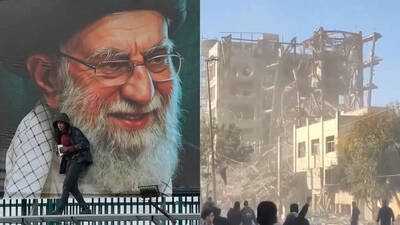
U.S. leaders say they are "punishing" Iran, "annihilating" its navy and meting out "retribution" against its rulers.
What comes after all that destruction, they increasingly insist, is not the United States' problem.
"We'll see what happens with the people," President Donald Trump said Tuesday as he hosted German Chancellor Friedrich Merz, referring to the possibility of a popular uprising in Iran in the wake of the war. "You know, they have their chance."Also Read: The US has to reopen the Strait of Hormuz as soon as possible
It was the latest instance of Trump and his top officials taking pains to paint Iran's political future as being outside the scope of American responsibility.
They appeared to be trying to draw a distinction from what they derisively refer to as the "nation-building" wars in Iraq and Afghanistan. But as Trump and his backers try to show that this Middle East war is different, they are also telegraphing that the risk of chaos or even greater repression in Iran in the aftermath is not their paramount concern.
Vice President JD Vance said on Fox News on Monday evening that the Trump administration would prefer "a stable country." But as long as Iran cannot build a nuclear bomb, he went on, "I think the president will be happy with the outcome."Also Read: Trump's backing won't break Taliban while Pakistan's crisis spreads to Tehran
"We hope that the Iranian people can overthrow this government," Secretary of State Marco Rubio told reporters hours earlier. "If there's something we can do to help them down the road we'd obviously be open to it, but that's not the objective."
Seated next to Trump in the Oval Office on Tuesday, Merz said twice that he planned to talk to the president about plans for "the day after" in Iran. It was a sign of the concern around the world that even if the United States and Israel do immense damage to Iran and its military potential, the uncertainty of what will follow presents a new set of dangers.
"We have to talk about the strategy -- what is following after this regime is away," Merz said, adding: "This is important not just for the Americans. This is extremely important for Europe and extremely important for Israel and their security."
Trump offered few details about his plans. He indicated that he would not seek a mass purge of government workers and that he would prefer a new, more moderate leader "from within" the Iranian establishment -- even as the bombings kill so many senior officials that "pretty soon we're not going to know anybody." He acknowledged the possibility of a "worst case" in which "we do this and then somebody takes over who's as bad as the previous person."
"That could happen," Trump said.
Washington journalists and policymakers used to talk about the risks of military intervention by invoking what is known as the Pottery Barn rule: "You break it, you own it." The idea was that the United States would own the consequences of its wars in whatever countries it attacked. Colin Powell, the former secretary of state, used that argument in warning President George W. Bush about the danger of invading Iraq.
But in recent weeks, proponents of attacking Iran have embraced the inverse -- something like "we break it, they own it." They have rejected the idea that the United States should bear responsibility for what happens inside Iran after a war. Rather, they say, the United States has the right to use force to address its security concerns and destroy a malevolent regime, leaving Iran's population of 90 million to deal with the consequences.
"You know this idea, you break it, you own it?" Sen. Lindsey Graham, R-S.C., perhaps the most outspoken Iran hawk at the president's side, told NBC News on Sunday. "I don't buy that one bit."
Graham argued that it was "in America's interest" to kill the Iranian leader, Ayatollah Ali Khamenei, and prevent the country from sponsoring terrorism. But he said it was not Trump's job, or his, to plan for Iran's political future.
"Once the people decide what they want to do next, I don't mind helping them," Graham said.
The message has been striking, given that Trump's threats to Iran in January began with a promise to protesters that "help is on its way." But it also echoed Trump's attempts in recent days to distance himself from the longer-term consequences of the war, as he did when he announced the bombing early Saturday and all but dared Iranians to rise up.
"Now you have a president who is giving you what you want," Trump said, addressing the Iranian people. "So let's see how you respond."
The approach could allow Trump to take credit for any positive political change in Iran while shifting the blame for any failures to the Iranian people.
Experts say that the risks created by the bombings are severe. What remains of the Iranian regime could become even more repressive, and unarmed protesters would be no match for even a weakened domestic security force. In Libya in 2011, NATO bombings helped bring down dictator Moammar Gadhafi, but accelerated a civil war that split the country apart.
In Iraq and Afghanistan, of course, those countries and the United States suffered dire consequences from the U.S. invasion even though Washington tried to take responsibility for their political futures. That legacy gives Trump and his Cabinet the opening to argue that they are fighting the right kind of Middle East war.
Trump "called the last 20 years of nation-building wars dumb, and he's right," Defense Secretary Pete Hegseth said Monday. "This is the opposite."
But by talking about a hope for revolution while making clear that there is no plan to accomplish it, the Trump administration is injecting an additional level of risk and uncertainty into its war. Douglas Lute, who focused on Iraq and Afghanistan as a senior official in the George W. Bush and Barack Obama presidencies, said he saw that approach as reflective of an administration that "doesn't worry about the follow-on responsibility" of its actions.
"You see the willingness to break things and to disrupt the status quo," Lute, a retired Army general, said. "But the rest of the story is: So then what?"
This article originally appeared in The New York Times.
What comes after all that destruction, they increasingly insist, is not the United States' problem.
"We'll see what happens with the people," President Donald Trump said Tuesday as he hosted German Chancellor Friedrich Merz, referring to the possibility of a popular uprising in Iran in the wake of the war. "You know, they have their chance."Also Read: The US has to reopen the Strait of Hormuz as soon as possible
It was the latest instance of Trump and his top officials taking pains to paint Iran's political future as being outside the scope of American responsibility.
They appeared to be trying to draw a distinction from what they derisively refer to as the "nation-building" wars in Iraq and Afghanistan. But as Trump and his backers try to show that this Middle East war is different, they are also telegraphing that the risk of chaos or even greater repression in Iran in the aftermath is not their paramount concern.
Vice President JD Vance said on Fox News on Monday evening that the Trump administration would prefer "a stable country." But as long as Iran cannot build a nuclear bomb, he went on, "I think the president will be happy with the outcome."Also Read: Trump's backing won't break Taliban while Pakistan's crisis spreads to Tehran
"We hope that the Iranian people can overthrow this government," Secretary of State Marco Rubio told reporters hours earlier. "If there's something we can do to help them down the road we'd obviously be open to it, but that's not the objective."
Seated next to Trump in the Oval Office on Tuesday, Merz said twice that he planned to talk to the president about plans for "the day after" in Iran. It was a sign of the concern around the world that even if the United States and Israel do immense damage to Iran and its military potential, the uncertainty of what will follow presents a new set of dangers.
"We have to talk about the strategy -- what is following after this regime is away," Merz said, adding: "This is important not just for the Americans. This is extremely important for Europe and extremely important for Israel and their security."
Trump offered few details about his plans. He indicated that he would not seek a mass purge of government workers and that he would prefer a new, more moderate leader "from within" the Iranian establishment -- even as the bombings kill so many senior officials that "pretty soon we're not going to know anybody." He acknowledged the possibility of a "worst case" in which "we do this and then somebody takes over who's as bad as the previous person."
"That could happen," Trump said.
Washington journalists and policymakers used to talk about the risks of military intervention by invoking what is known as the Pottery Barn rule: "You break it, you own it." The idea was that the United States would own the consequences of its wars in whatever countries it attacked. Colin Powell, the former secretary of state, used that argument in warning President George W. Bush about the danger of invading Iraq.
But in recent weeks, proponents of attacking Iran have embraced the inverse -- something like "we break it, they own it." They have rejected the idea that the United States should bear responsibility for what happens inside Iran after a war. Rather, they say, the United States has the right to use force to address its security concerns and destroy a malevolent regime, leaving Iran's population of 90 million to deal with the consequences.
"You know this idea, you break it, you own it?" Sen. Lindsey Graham, R-S.C., perhaps the most outspoken Iran hawk at the president's side, told NBC News on Sunday. "I don't buy that one bit."
Graham argued that it was "in America's interest" to kill the Iranian leader, Ayatollah Ali Khamenei, and prevent the country from sponsoring terrorism. But he said it was not Trump's job, or his, to plan for Iran's political future.
"Once the people decide what they want to do next, I don't mind helping them," Graham said.
The message has been striking, given that Trump's threats to Iran in January began with a promise to protesters that "help is on its way." But it also echoed Trump's attempts in recent days to distance himself from the longer-term consequences of the war, as he did when he announced the bombing early Saturday and all but dared Iranians to rise up.
"Now you have a president who is giving you what you want," Trump said, addressing the Iranian people. "So let's see how you respond."
The approach could allow Trump to take credit for any positive political change in Iran while shifting the blame for any failures to the Iranian people.
Experts say that the risks created by the bombings are severe. What remains of the Iranian regime could become even more repressive, and unarmed protesters would be no match for even a weakened domestic security force. In Libya in 2011, NATO bombings helped bring down dictator Moammar Gadhafi, but accelerated a civil war that split the country apart.
In Iraq and Afghanistan, of course, those countries and the United States suffered dire consequences from the U.S. invasion even though Washington tried to take responsibility for their political futures. That legacy gives Trump and his Cabinet the opening to argue that they are fighting the right kind of Middle East war.
Trump "called the last 20 years of nation-building wars dumb, and he's right," Defense Secretary Pete Hegseth said Monday. "This is the opposite."
But by talking about a hope for revolution while making clear that there is no plan to accomplish it, the Trump administration is injecting an additional level of risk and uncertainty into its war. Douglas Lute, who focused on Iraq and Afghanistan as a senior official in the George W. Bush and Barack Obama presidencies, said he saw that approach as reflective of an administration that "doesn't worry about the follow-on responsibility" of its actions.
"You see the willingness to break things and to disrupt the status quo," Lute, a retired Army general, said. "But the rest of the story is: So then what?"
This article originally appeared in The New York Times.