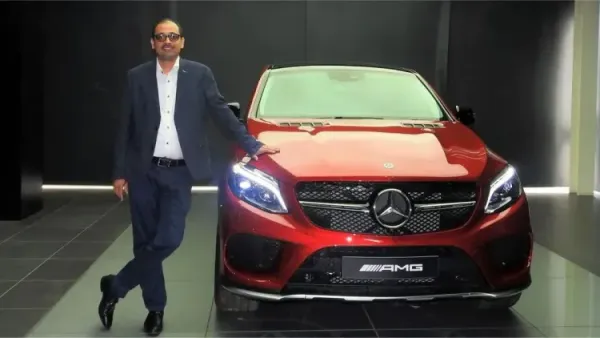
The recently formalised Free Trade Agreement between India and the European Union has sparked widespread hope among consumers that luxury cars imported from Europe will soon become significantly cheaper. However, the top executive at India’s largest luxury carmaker has quickly managed those expectations. Santosh Iyer, Managing Director and CEO of Mercedes-Benz India, clarified that buyers holding out for massive price crashes will be disappointed. Not only will luxury car prices refrain from dropping anytime soon, they are actually set to increase steadily over the coming months due to external economic pressures.
According to Iyer, the belief that the new trade pact will immediately trigger a wave of cheap luxury vehicle imports is a largely overhyped phenomenon. The core reason behind this is the extended timeline for the agreement’s implementation, combined with the severe depreciation of the Indian rupee against the Euro.
The Long Road To Lower Duties
The primary mechanism of the FTA designed to lower car prices is a gradual reduction in import tariffs. Currently, fully built imported cars attract a steep customs duty. Under the new agreement, this duty is set to drop from the current 35 percent to 10 percent. However, this reduction will not happen overnight.
Iyer pointed out that the actual implementation of the FTA might take at least 18 to 24 months. Once it goes into effect, the tariff reduction will be phased in over a five-year glide path. This means that even in an optimistic scenario where the FTA starts in early 2028, the lowest 10 percent duty bracket will only be reached by 2033.

Crucially, this tariff reduction path initially completely excludes pure electric vehicles and plug-in hybrids, which will only enter the scope five years after the FTA is implemented. Consequently, buyers looking for immediate relief on import taxes for green vehicles will see no benefit in the short term.
Forex Pressures Driving Prices Up
While the duty benefits are years away, automakers are currently grappling with immediate financial headwinds that are actively pushing retail prices higher.
The most significant factor is the sharp deterioration of the Indian rupee against the Euro. Last year, the exchange rate stood around Rs 90 to a Euro, but it has since climbed to between Rs 108 and Rs 110.
This 20 to 25 percent depreciation heavily impacts the cost of importing vehicle components and fully built units. In response, Mercedes-Benz already increased its vehicle prices by 2 percent in January.
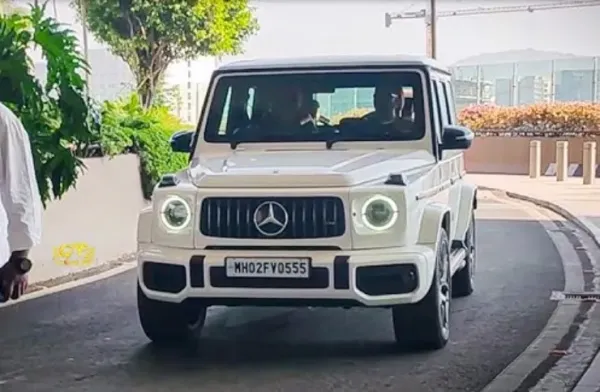
Iyer confirmed that another 2 percent hike is scheduled for April, noting that the company will be forced to implement price increases every quarter just to absorb a portion of the pure forex inflation.
Even with these quarterly hikes, the overall 4 to 5 percent price increase on the showroom floor remains significantly lower than the actual 20 percent currency deterioration the manufacturer is absorbing behind the scenes.
Local Manufacturing Remains Essential

Given the promise of cheaper imports a decade from now, there were widespread concerns that European manufacturers might abandon their local assembly operations in India.
Iyer completely dismissed this notion, confirming that Mercedes-Benz has absolutely no plans to alter its current investment strategy or reduce its manufacturing footprint at the Chakan plant near Pune.
Currently, about 90 to 95 percent of all Mercedes-Benz vehicles sold in India are assembled locally as Completely Knocked Down kits. These locally assembled units attract a much lower import duty of 15 to 16 percent.
Iyer explained that it makes far more financial sense to continue producing cars at this lower local duty rate rather than importing fully built cars at the current 35 percent rate and waiting nearly a decade for the FTA benefits to match the local assembly advantage.
As the Indian luxury car market expands over the next ten years, maintaining a local production facility will be essential to keep logistics costs viable, completely ruling out any knee-jerk shift towards a pure import model.
Via TOI
-
'Hardest Hits Yet To Come': Marco Rubio Warns Iran Of Intensified US Strikes Amid Escalating Conflict
-
Satellite Imagery Reveals Fresh Damage At Iran’s Natanz Nuclear Site Following US-Israeli Strikes
-
How Britain’s Colonial Legacy Re-Embroiled Cyprus In Middle East Conflict
-
Holi 2026: Top 5 Delicious thandai recipes to try this Holi

-
India steps up maritime security for vessels and seafarers in West Asia