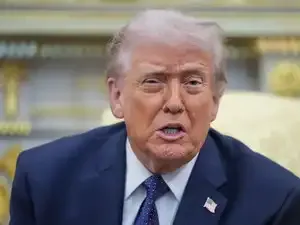
As the war in West Asia rages on for the fifth day, US President Donald Trump on Wednesday said he has directed the United States Development Finance Corporation to immediately provide political risk insurance and financial guarantees for maritime trade moving through the Gulf.
In a post on Truth Social, the US Preisdent said the cover would be offered “at a very reasonable price” and made available to all shipping lines, with a particular focus on energy cargoes transiting the region.
Also Read | Russia said to fulfil India’s energy demand amid Middle East crisis
"Effective IMMEDIATELY, I have ordered the United States Development Finance Corporation (DFC) to provide, at a very reasonable price, political risk insurance and guarantees for the Financial Security of ALL Maritime Trade, especially Energy, traveling through the Gulf," his post read.
“This will be available to all Shipping Lines. If necessary, the United States Navy will begin escorting tankers through the Strait of Hormuz, as soon as possible. No matter what, the United States will ensure the FREE FLOW of ENERGY to the WORLD,” he further wrote.
The announcement comes as the conflict involving Iran has raised fresh concerns over the security of key shipping lanes.
Tehran has warned that "unauthorized" vessels attempting to pass through the Strait of Hormuz could be targeted, triggering volatility in oil markets and heightening fears of supply disruptions.
The narrow waterway handles a significant share of global crude exports, including shipments bound for major importers such as India, China and European economies.
Also Read | Oil shock could strain emerging markets beyond inflation, analysts say
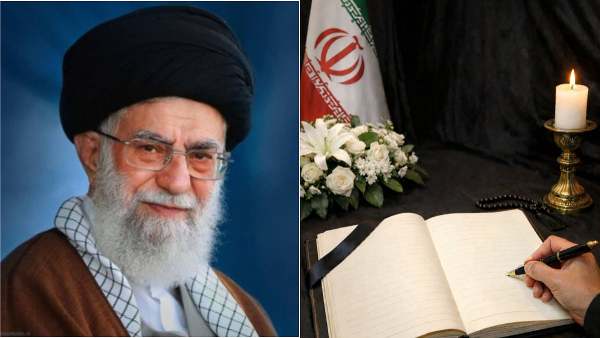
In the days following the joint US-Israel 'Operation Epic Fury' on Iran that killed Supreme Leader Ayatollah Khamenei, missile and drone activity has been reported across parts of the Gulf, and several countries have temporarily shut airspace as a precaution.
Shipping companies have also been reassessing routes and insurance cover, while freight rates and war-risk premiums have risen.
The move offers a critical lifeline for New Delhi, which faces a 45-day countdown before its strategic reserves hit empty.
With nearly 60% of India's crude currently trapped behind Tehran’s "selective blockade," the DFC’s intervention aims to offset the spike in war-risk premiums.
Domestic fuel prices, however, remain temporarily frozen, while the PM Modi-led government is pivoting toward Russian supplies to bypass the volatility. Moscow, in turn, has conveyed its readiness to continue supplying energy to India if disruptions from the escalating West Asia conflict affect supplies from the Gulf region, sources told ET Bureau.
In a post on Truth Social, the US Preisdent said the cover would be offered “at a very reasonable price” and made available to all shipping lines, with a particular focus on energy cargoes transiting the region.
Also Read | Russia said to fulfil India’s energy demand amid Middle East crisis
"Effective IMMEDIATELY, I have ordered the United States Development Finance Corporation (DFC) to provide, at a very reasonable price, political risk insurance and guarantees for the Financial Security of ALL Maritime Trade, especially Energy, traveling through the Gulf," his post read.
“This will be available to all Shipping Lines. If necessary, the United States Navy will begin escorting tankers through the Strait of Hormuz, as soon as possible. No matter what, the United States will ensure the FREE FLOW of ENERGY to the WORLD,” he further wrote.
The announcement comes as the conflict involving Iran has raised fresh concerns over the security of key shipping lanes.
Tehran has warned that "unauthorized" vessels attempting to pass through the Strait of Hormuz could be targeted, triggering volatility in oil markets and heightening fears of supply disruptions.
The narrow waterway handles a significant share of global crude exports, including shipments bound for major importers such as India, China and European economies.
Also Read | Oil shock could strain emerging markets beyond inflation, analysts say
In the days following the joint US-Israel 'Operation Epic Fury' on Iran that killed Supreme Leader Ayatollah Khamenei, missile and drone activity has been reported across parts of the Gulf, and several countries have temporarily shut airspace as a precaution.
Shipping companies have also been reassessing routes and insurance cover, while freight rates and war-risk premiums have risen.
The move offers a critical lifeline for New Delhi, which faces a 45-day countdown before its strategic reserves hit empty.
With nearly 60% of India's crude currently trapped behind Tehran’s "selective blockade," the DFC’s intervention aims to offset the spike in war-risk premiums.
Domestic fuel prices, however, remain temporarily frozen, while the PM Modi-led government is pivoting toward Russian supplies to bypass the volatility. Moscow, in turn, has conveyed its readiness to continue supplying energy to India if disruptions from the escalating West Asia conflict affect supplies from the Gulf region, sources told ET Bureau.