Videos of unusual animal behavior often spread quickly online. A bird performing an unexpected action, a mammal reacting strangely to its environment, or an amphibian showing unusual reproductive behavior can attract global attention. While these moments may appear random or amusing, scientists often see them as clues to deeper biological processes.
Recent research shows that many surprising animal behaviors are connected to complex biological mechanisms. These include viral interactions with animal cells, subtle regulation of the immune system, evolutionary changes in sensory organs, and genetic diversity in reproductive systems. Together, these discoveries reveal that animals respond to environmental pressures through intricate biological systems that shape their physiology and behavior.
The ability of viral proteins to adopt different shapes makes them extremely effective at infiltrating host systems. Researchers believe that similar strategies may also be used by other viruses, such as the Nipah virus and Ebola virus. Understanding how these proteins work could help scientists identify new ways to block viral infections in animals and humans. This research also highlights how viruses interact with animals' biological systems, potentially influencing physiology and behavior.
When parasites trigger an immune response, CD22 acts as a brake, preventing the immune system from becoming overly aggressive. This helps maintain a stable response that fights infection without causing severe tissue damage. Such regulatory mechanisms demonstrate that immune systems are carefully tuned to manage complex biological threats. This balance is essential for the survival of many animal species in environments where parasites are common.
For example, mammals that rely heavily on sound for navigation or hunting often develop similar inner ear shapes even if they evolved along different evolutionary paths. These structures help them detect subtle changes in sound frequency and direction. The findings show that environmental pressures can strongly shape sensory systems. As animals adapt to particular habitats, natural selection often favors anatomical solutions that improve survival in those conditions.
When viruses interact with host organisms over long periods of time, they create strong evolutionary pressure. Hosts evolve defensive strategies, while viruses evolve new ways to bypass those defenses. This ongoing evolutionary competition can drive rapid changes in proteins that affect immunity, cellular communication, and other biological functions. As a result, viruses have helped shape many aspects of mammalian biology across millions of years.
Instead, amphibians appear capable of rapidly altering their genetic mechanisms for sex determination. These shifts may allow populations to adapt to environmental changes or ecological pressures. Understanding this genetic diversity helps scientists explore how reproductive strategies evolve and how species maintain stable populations despite changing environmental conditions.
These discoveries show that animals constantly adapt to complex challenges in their environments. What may appear to be a simple or surprising behavior often reflects deep biological processes shaped by millions of years of evolution. As researchers continue to study these mechanisms, they are gaining a clearer understanding of how animals survive, adapt, and respond to the changing world around them.
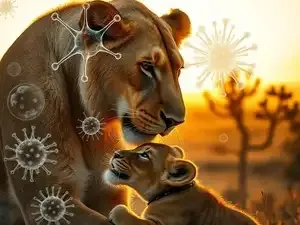
A lioness grooms her cub, a tender moment overlaid with ethereal scientific visualizations.
Recent research shows that many surprising animal behaviors are connected to complex biological mechanisms. These include viral interactions with animal cells, subtle regulation of the immune system, evolutionary changes in sensory organs, and genetic diversity in reproductive systems. Together, these discoveries reveal that animals respond to environmental pressures through intricate biological systems that shape their physiology and behavior.
How Viruses Interact With Animal Cells
Viruses are usually associated with disease, but they also play a significant role in shaping animal biology. One example comes from research on the rabies virus, which uses a specialized protein known as the phosphoprotein to interact with host cells. Scientists discovered that this protein can change its shape to bind with RNA molecules inside infected cells. This structural flexibility allows the virus to manipulate several cellular pathways and interfere with normal biological processes.The ability of viral proteins to adopt different shapes makes them extremely effective at infiltrating host systems. Researchers believe that similar strategies may also be used by other viruses, such as the Nipah virus and Ebola virus. Understanding how these proteins work could help scientists identify new ways to block viral infections in animals and humans. This research also highlights how viruses interact with animals' biological systems, potentially influencing physiology and behavior.
The Immune System’s Balancing Act
Animals must constantly defend themselves against parasites and pathogens. However, the immune system must balance two competing goals. It needs to eliminate harmful organisms while avoiding excessive inflammation that could damage the body. Researchers studying parasitic infections discovered an important mechanism involving a group of immune cells known as virtual memory T cells. These cells express a molecule called CD22 that helps regulate immune responses.When parasites trigger an immune response, CD22 acts as a brake, preventing the immune system from becoming overly aggressive. This helps maintain a stable response that fights infection without causing severe tissue damage. Such regulatory mechanisms demonstrate that immune systems are carefully tuned to manage complex biological threats. This balance is essential for the survival of many animal species in environments where parasites are common.
How Evolution Shapes Animal Senses
Another line of research focuses on the sensory systems that animals use to interact with their environments. Scientists studying mammalian inner ear structures discovered that unrelated species sometimes develop remarkably similar hearing organs. This phenomenon is known as convergent evolution. It occurs when species that are not closely related evolve similar anatomical features because they occupy comparable ecological niches.For example, mammals that rely heavily on sound for navigation or hunting often develop similar inner ear shapes even if they evolved along different evolutionary paths. These structures help them detect subtle changes in sound frequency and direction. The findings show that environmental pressures can strongly shape sensory systems. As animals adapt to particular habitats, natural selection often favors anatomical solutions that improve survival in those conditions.
Viruses as Drivers of Evolution
Viruses have also played a major role in shaping mammalian evolution. Genetic studies indicate that viral pressures have contributed substantially to adaptive changes in mammalian proteins. One analysis suggests that viruses have influenced roughly thirty percent of adaptive amino acid changes in conserved mammalian proteins. These proteins are important because they control many essential biological processes.When viruses interact with host organisms over long periods of time, they create strong evolutionary pressure. Hosts evolve defensive strategies, while viruses evolve new ways to bypass those defenses. This ongoing evolutionary competition can drive rapid changes in proteins that affect immunity, cellular communication, and other biological functions. As a result, viruses have helped shape many aspects of mammalian biology across millions of years.
Rapid Changes in Amphibian Sex Determination
Scientists have also uncovered surprising genetic diversity in amphibians. Studies of African clawed frogs revealed an unusually complex system of sex determination. Among only eleven species examined, researchers identified eight different sex chromosomes. This finding challenges the traditional view that sex determination systems remain stable over long evolutionary periods.Instead, amphibians appear capable of rapidly altering their genetic mechanisms for sex determination. These shifts may allow populations to adapt to environmental changes or ecological pressures. Understanding this genetic diversity helps scientists explore how reproductive strategies evolve and how species maintain stable populations despite changing environmental conditions.
Understanding Animal Behavior Through Biology
Many unusual animal behaviors that attract public attention have biological explanations rooted in evolution, genetics, and physiology. Viral interactions with host cells, immune regulation during infections, sensory adaptation to environmental pressures, and genetic variation in reproduction all contribute to the diversity of behaviors seen in the animal kingdom.These discoveries show that animals constantly adapt to complex challenges in their environments. What may appear to be a simple or surprising behavior often reflects deep biological processes shaped by millions of years of evolution. As researchers continue to study these mechanisms, they are gaining a clearer understanding of how animals survive, adapt, and respond to the changing world around them.