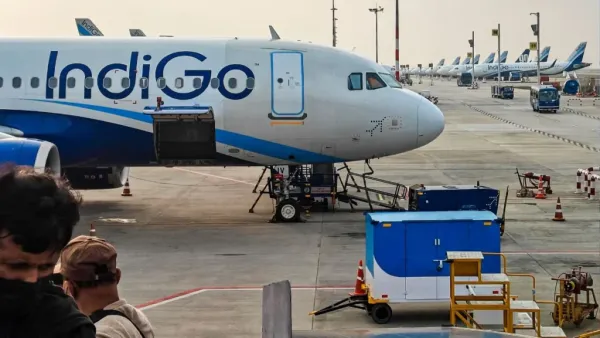
India’s largest airline, IndiGohas cancelled more than 500 flights between February 28 and March 3, 2026, as escalating tensions and sweeping airspace restrictions across West Asia disrupted global aviation networks.
The cancellations affect services to the Middle East and select international destinations, marking one of the most significant operational disruptions for the carrier in recent years. The move comes amid rapidly evolving geopolitical developments that have forced multiple countries to shut or partially restrict their airspace.
A Region Under Lockdown
As of March 4, Iran’s airspace remains fully closed, with restrictions extended to at least March 7. Iraq’s airspace closure has been in effect until March 4, while Qatar, Bahrain, and Kuwait remain largely inaccessible for commercial overflights.
The United Arab Emirates (UAE), a critical transit hub for Indian carriers, is operating under partial restrictions. Major hubs like Dubai are functioning cautiously, with repatriation and essential flights taking priority.
Israel has begun limited overnight reopening between March 4 and 5, allowing some flights to resume at Ben Gurion Airportbut operations remain tightly controlled.
According to aviation tracking data, more than 12,000 flights globally have been cancelled or rerouted due to the unfolding crisis — underscoring the scale of disruption.
IndiGo’s Response: Recalibrating in Real Time
In a regulatory filing, IndiGo stated that its operational teams are “continuously assessing the evolving regional developments” and recalibrating flight schedules accordingly.
The airline emphasised coordination with Indian authorities and international aviation regulators to manage passenger movement and initiate repatriation operations where necessary.
“Our operational teams are continuously assessing the evolving regional developments, recalibrating flight schedules, and planning repatriation operations… with the objective of minimising disruption to passengers,” the airline said.
For a carrier with a large footprint in the Gulf region — a market heavily dependent on Indian expatriate travel — the airspace restrictions present both logistical and financial challenges.
Revenue Impact Under Watch
While passenger safety remains the top priority, IndiGo has acknowledged that the revenue environment is under close monitoring.
The Middle East is one of the most lucrative corridors for Indian airlines, driven by strong demand from migrant workers, business travellers, and connecting traffic to Europe and North America. Prolonged restrictions could dent yields, especially if rerouting leads to longer flight paths, increased fuel burn, and operational inefficiencies.
Airlines globally are already grappling with higher insurance premiums and volatile fuel prices triggered by geopolitical instability. For IndiGo, which has been aggressively expanding its international network, sustained disruption could temporarily slow momentum.
Repatriation Efforts and Passenger Advisory
With thousands of passengers stranded or facing uncertainty, airlines including IndiGo are working to mount repatriation flights wherever airspace permissions allow.
Dubai and other UAE hubs are cautiously facilitating departures under tight security and regulatory oversight. However, schedules remain fluid and subject to sudden changes.
Passengers have been advised to monitor real-time updates via airline communication channels and flight-tracking platforms. Given the dynamic situation, last-minute cancellations or reroutes remain a possibility.
A Test of Operational Resilience
This episode highlights the vulnerability of global aviation to geopolitical flashpoints. Modern air travel depends heavily on shared airspace corridors; when even one major transit zone shuts down, ripple effects spread across continents.
For IndiGo, the crisis is also a test of operational resilience. The airline has built a reputation for efficiency and cost discipline, but managing widespread cancellations, passenger refunds, crew scheduling challenges, and aircraft repositioning simultaneously requires immense coordination.
If the restrictions ease within days, the financial damage may remain contained. However, a prolonged closure across West Asia could reshape flight networks temporarily, forcing carriers to rethink route economics and scheduling strategies.
What Lies Ahead?
The situation remains fluid. With partial reopening in Israel and cautious operations in the UAE, the coming days will be crucial. Much depends on diplomatic developments and regional security assessments.
For now, IndiGo and other global carriers remain in contingency mode — prioritising safety, compliance, and passenger support while navigating one of the most complex airspace disruptions in recent times.
As global skies adjust to geopolitical realities once again, the aviation industry is reminded that even in an era of technological sophistication, it remains deeply tied to the stability of the world below.
-
Hyderabad: Rashmika, Vijay Deverakonda host star-studded reception at Taj Krishna

-
Arsenal's statement on William Saliba injury as defender misses Brighton match

-
Dele Alli Tottenham return truth after midfielder makes decision on retiring aged 29

-
This is how you can travel for free on Namo Bharat and Meerut Metro, earn points, and find out what the offer is..

-
T20 World Cup 2026: Can India Overcome 2016 Ghosts At Wankhede?