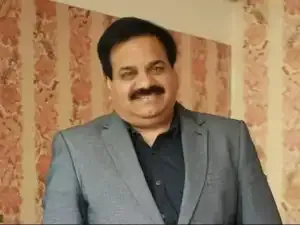
Amit Syngle
With JSW Paints and AkzoNobel India joining forces, and the debut of Aditya Birla Group in the paints segment at a time when demand was at a multi-year low, the pressure on the paints industry intensified. Yet, without succumbing to price wars, Asian Paints has managed to claw back some market share as it doubled down on regional branding, product innovation and sustained marketing.In an exclusive interview with Nikita Periwal and Kalpana Pathak, CEO Amit Syngle said competition in the sector is not new, but the scale and speed of disruption this time were unprecedented. Asian Paints is now betting on long-term brand strength, premiumisation, and growth in the B2B segment to stay ahead, even as competitive intensity remains high. Edited excerpts:
How has competition impacted you so far?
There were some losses in our market share in fiscal 2025 because suddenly the industry was not growing. Market share was also lost as we saw newer competition coming in. However, in fiscal 2026, we have regained some market share and grown larger than the overall market. While the competitive intensity is still very high, our work in terms of innovation is starting to give us far stronger results. Therefore, some of the newer incumbents will start feeling the pressure. It is not just a war of pricing, but what you are doing with the brand and innovation.
Has the competition ever been so intense?
While competition has always been there, in the last year it has been much more than usual. Generally, the competition would come in, and you would feel the impact over two to three years. Here, we felt the impact more in one year itself.
So what are the strategy changes you have made?
Based on our research, a lot of our marketing efforts have been shifting from just a central initiative to regional markets and micro marketing. For example, in Tamil Nadu, we launched Varnamaalai, a shade guide based on the soaps that Sun TV was showcasing. In West Bengal, we did a pack which had the elements of Durga Puja, the Howrah Bridge and the trams of Kolkata. Because of regionalisation, paint cans, which were earlier used in bathrooms and kitchens, are now adorning living rooms. While it has led to a significant increase in our marketing budget, we think it is a worthwhile return on what we spend, rather than just spending on a national framework, which we continue to do.
So will higher marketing spends be the new normal?
That will depend on the brands and how they want to really propagate. A lot of brands want to spend more below the line; they want to spend more on discounting and might not like to spend so much on branding. We want to invoke the consumer far more strongly. Earlier, there were periods of high and possibly a little bit muted campaigns, but last year, we changed this to an all-year-round excitement. A lot of other companies are trying to engage retailers and contractors, which we feel is not sustainable over a long period of time.
Given that the industry requires spending on both dealers and consumers, what do you think about discounting?
We wanted to stay out of that price war because, as the leader, if you get into a price war, you will only bring the prices down. Having seen a lot of competition over the last two decades, the approach is to spend more in the medium to long term. We have also tried innovation last year, because a new product creates excitement at the retailer, at the contractor, at the designer, and at the consumer level. So, all the elements get roped in very well.
How do you see the paint industry evolving over the next five years?
When we look at the overall paint industry, there are certain dynamics which are changing. The whole area of repainting is going through a certain cycle, whereas the B2B and the industrial markets are flaring up. Therefore, we see that volume growth should be near double-digits, anywhere between 8% to 10% over the next year. The industry could reach a size of ₹1 lakh crore in three to four years.
Which segments do you see bringing in more growth for your company?
The B2B industry continues to grow very strongly. This includes airports, highways and ports from the government side, and capital expenditure from the private sector as well. B2B and Industrial are expected to grow in double digits and would definitely be strong growth drivers for us.
Would you be looking at acquisitions for growth?
We don't feel that just a market acquisition is a good idea, but a technology acquisition is a very good space to look at.
How has competition impacted you so far?
There were some losses in our market share in fiscal 2025 because suddenly the industry was not growing. Market share was also lost as we saw newer competition coming in. However, in fiscal 2026, we have regained some market share and grown larger than the overall market. While the competitive intensity is still very high, our work in terms of innovation is starting to give us far stronger results. Therefore, some of the newer incumbents will start feeling the pressure. It is not just a war of pricing, but what you are doing with the brand and innovation.
Has the competition ever been so intense?
While competition has always been there, in the last year it has been much more than usual. Generally, the competition would come in, and you would feel the impact over two to three years. Here, we felt the impact more in one year itself.
So what are the strategy changes you have made?
Based on our research, a lot of our marketing efforts have been shifting from just a central initiative to regional markets and micro marketing. For example, in Tamil Nadu, we launched Varnamaalai, a shade guide based on the soaps that Sun TV was showcasing. In West Bengal, we did a pack which had the elements of Durga Puja, the Howrah Bridge and the trams of Kolkata. Because of regionalisation, paint cans, which were earlier used in bathrooms and kitchens, are now adorning living rooms. While it has led to a significant increase in our marketing budget, we think it is a worthwhile return on what we spend, rather than just spending on a national framework, which we continue to do.
So will higher marketing spends be the new normal?
That will depend on the brands and how they want to really propagate. A lot of brands want to spend more below the line; they want to spend more on discounting and might not like to spend so much on branding. We want to invoke the consumer far more strongly. Earlier, there were periods of high and possibly a little bit muted campaigns, but last year, we changed this to an all-year-round excitement. A lot of other companies are trying to engage retailers and contractors, which we feel is not sustainable over a long period of time.
Given that the industry requires spending on both dealers and consumers, what do you think about discounting?
We wanted to stay out of that price war because, as the leader, if you get into a price war, you will only bring the prices down. Having seen a lot of competition over the last two decades, the approach is to spend more in the medium to long term. We have also tried innovation last year, because a new product creates excitement at the retailer, at the contractor, at the designer, and at the consumer level. So, all the elements get roped in very well.
How do you see the paint industry evolving over the next five years?
When we look at the overall paint industry, there are certain dynamics which are changing. The whole area of repainting is going through a certain cycle, whereas the B2B and the industrial markets are flaring up. Therefore, we see that volume growth should be near double-digits, anywhere between 8% to 10% over the next year. The industry could reach a size of ₹1 lakh crore in three to four years.
Which segments do you see bringing in more growth for your company?
The B2B industry continues to grow very strongly. This includes airports, highways and ports from the government side, and capital expenditure from the private sector as well. B2B and Industrial are expected to grow in double digits and would definitely be strong growth drivers for us.
Would you be looking at acquisitions for growth?
We don't feel that just a market acquisition is a good idea, but a technology acquisition is a very good space to look at.