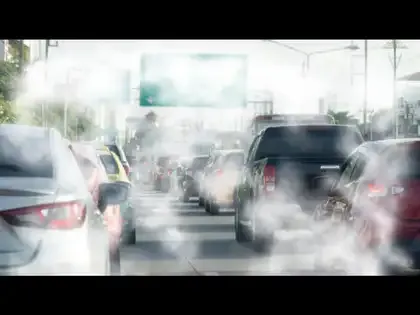
India faces a daily public health emergency. Policymakers have been aware of it since the late 1980s, with litigators approaching the Supreme Court by the 1990s, and several times since then. Yet, we still cannot breathe. According to University of Chicago's Air Quality Life Index (AQLI), on average, an Indian lives 3.5 yrs less due to air pollution. It also ruins our quality of life, giving us strokes, dementia and unhealthy newborns. Our policy has not yet gotten it right. Nor has our practice.
In January, the top court, speaking about Delhi-NCR, directed that 'catalysts that are causing the most pollution must be addressed on a priority basis'. This order to use data to drive policy is vital. What if we deployed this lens to reframe the biggest source of emissions in most of north India - vehicular pollution?
Experts don't agree fully on the share of transport at an airshed level - but we know it is significant. We also know airsheds are the smallest units that will improve public health. We must roll out better transportation policies and processes across airsheds. Multiple credible studies, including Aironomics 2025 report by Bharat Climate Forum and Dalberg, show that nearly 80% of transport-related pollution in Delhi is contributed by two-wheelers, three-wheelers and trucks.
While cars are said to contribute less than 10% of transport emissions, this obfuscates two challenges: the age and standards, and the fuel. About 55% of cars on the road are pre-BS VI vehicles, accounting for almost 96% of car-related emissions.
Despite constituting only 8% of the car fleet in Delhi, diesel cars contribute nearly 59% of car-related emissions. This should be a concern because diesel emits even more particulate matter and pollutants.
This is why assuming cars are homogeneously polluting skews policy. It also prevents us from engaging in rational public debate, such as the one on phasing out old cars.
GoI has suggested that a rigorous and enforced scrappage of older, high-polluting vehicles can deliver approximately 31% reduction in vehicular pollution load. By contrast, mandates that force a shift from modern BS VI cars to EVs yield a negligible reduction of around 0.02%. While the EV policy is welcome, it cannot significantly reduce emissions. Replacing a BS III or BS IV car with a BS VI vehicle reduces particulate emissions by 55-95 mg per km. Moving from a BS VI car to an EV saves about 4.5 mg.
Had we continued with the plan to scrap old vehicles in Delhi, using credible data to engage with the public, we would have positively impacted this public health emergency. But we bailed for fear of a public backlash.
Even if we implement scrappage efficiently, we cannot ignore the public health damage that diesel causes. Why not phase out private diesel automobiles? Implementing this in Delhi is not enough - large swathes of India are suffering. From subsidies to switch from diesel to petrol, CNG or e-vehicles, to steep sin taxes on diesel cars, to proper scrappage - state governments must act smartly, plugging loopholes.
India is rolling out an EV policy. This is essential to our decarbonisation goals. But electric cars are expensive, and it is hard to charge them across even the capital city. While states iron out these challenges, they cannot force those with existing BS VI, CNG, petrol or hybrid cars to scrap them and buy an EV. It will happen slowly and, hopefully, surely. But in the meantime, policy must focus on pushing both improved electric bus services while zealously incentivising two-wheelers and three-wheelers - the middle class's choice of mobility. Technology readiness and affordability are already aligned in the case of this sector, and only repair needs a strong push.
For India to breathe better, we must push diesel vehicles off our roads, prioritise the most polluting two- and three-wheelers to shift to e-versions with incentives, and improve our messy scrappage system.
In January, the top court, speaking about Delhi-NCR, directed that 'catalysts that are causing the most pollution must be addressed on a priority basis'. This order to use data to drive policy is vital. What if we deployed this lens to reframe the biggest source of emissions in most of north India - vehicular pollution?
Experts don't agree fully on the share of transport at an airshed level - but we know it is significant. We also know airsheds are the smallest units that will improve public health. We must roll out better transportation policies and processes across airsheds. Multiple credible studies, including Aironomics 2025 report by Bharat Climate Forum and Dalberg, show that nearly 80% of transport-related pollution in Delhi is contributed by two-wheelers, three-wheelers and trucks.
While cars are said to contribute less than 10% of transport emissions, this obfuscates two challenges: the age and standards, and the fuel. About 55% of cars on the road are pre-BS VI vehicles, accounting for almost 96% of car-related emissions.
Despite constituting only 8% of the car fleet in Delhi, diesel cars contribute nearly 59% of car-related emissions. This should be a concern because diesel emits even more particulate matter and pollutants.
This is why assuming cars are homogeneously polluting skews policy. It also prevents us from engaging in rational public debate, such as the one on phasing out old cars.
GoI has suggested that a rigorous and enforced scrappage of older, high-polluting vehicles can deliver approximately 31% reduction in vehicular pollution load. By contrast, mandates that force a shift from modern BS VI cars to EVs yield a negligible reduction of around 0.02%. While the EV policy is welcome, it cannot significantly reduce emissions. Replacing a BS III or BS IV car with a BS VI vehicle reduces particulate emissions by 55-95 mg per km. Moving from a BS VI car to an EV saves about 4.5 mg.
Had we continued with the plan to scrap old vehicles in Delhi, using credible data to engage with the public, we would have positively impacted this public health emergency. But we bailed for fear of a public backlash.
Even if we implement scrappage efficiently, we cannot ignore the public health damage that diesel causes. Why not phase out private diesel automobiles? Implementing this in Delhi is not enough - large swathes of India are suffering. From subsidies to switch from diesel to petrol, CNG or e-vehicles, to steep sin taxes on diesel cars, to proper scrappage - state governments must act smartly, plugging loopholes.
India is rolling out an EV policy. This is essential to our decarbonisation goals. But electric cars are expensive, and it is hard to charge them across even the capital city. While states iron out these challenges, they cannot force those with existing BS VI, CNG, petrol or hybrid cars to scrap them and buy an EV. It will happen slowly and, hopefully, surely. But in the meantime, policy must focus on pushing both improved electric bus services while zealously incentivising two-wheelers and three-wheelers - the middle class's choice of mobility. Technology readiness and affordability are already aligned in the case of this sector, and only repair needs a strong push.
For India to breathe better, we must push diesel vehicles off our roads, prioritise the most polluting two- and three-wheelers to shift to e-versions with incentives, and improve our messy scrappage system.
(Disclaimer: The opinions expressed in this column are that of the writer. The facts and opinions expressed here do not reflect the views of www.economictimes.com.)





Bharati Chaturvedi
Founder-director, Chintan Environmental Research and Action Group