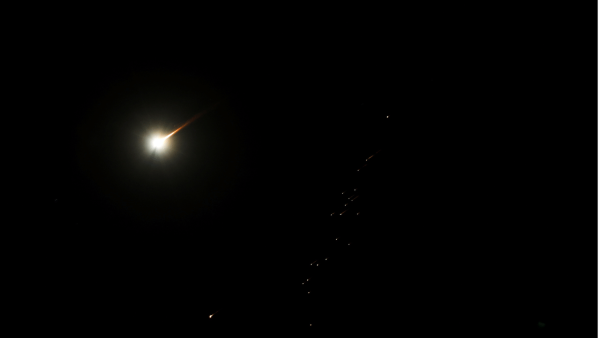
Tehran: Iran’s reported use of cluster warheads in missile strikes against Israel has intensified scrutiny over how Tehran developed the weapons capability, raising speculation that foreign assistance may have played a role.
Israeli military officials said Iran launched ballistic missiles equipped with cluster munitions toward Israeli territory during the latest round of fighting. Unlike conventional missiles that detonate at a single point, cluster warheads open mid-air and scatter multiple smaller explosives across a wide area.
Cluster weapons used in strikes
Defence analysts say the such missiles significantly increase the risk to civilians and leave behind unexploded bomblets that can remain dangerous long after an attack.
Israeli officials claim that one of the missiles struck central Israel during the barrage. According to reports, the warhead split open about four miles, or roughly seven kilometres, above the ground before releasing around 20 submunitions. The bomblets spread across an area with a radius of nearly eight kilometres.
One of the explosives reportedly hit a residential property in the town of Azor, south of Tel Aviv, causing structural damage. No deaths were reported in that particular strike, although injuries were recorded elsewhere.
According to reports cited by NBC News, an Iranian missile strike near Tel Aviv wounded at least 12 people. Since February 28, Iranian missile attacks have killed at least 11 people in Israel and injured more than 1,000.
Israeli military spokesperson Brigadier General Effie Defrin accused Iran of using weapons designed to harm civilians.
“The terror regime seeks to harm civilians and even used weapons with wide dispersal in order to maximise the scope of the damage,” he said.
Questions over foreign assistance
Security experts say the emergence of cluster-capable ballistic missiles in Iran’s arsenal raises questions about how the technology was developed, particularly given the repeated assassinations of Iranian scientists associated with advanced weapons programmes.
Some Israeli analysts believe Tehran may have received technical knowledge from external partners, with speculation focusing on possible military cooperation with Russia or China.
Iran is believed to possess several missile systems capable of carrying cluster warheads, including the Zolfaghar, Qadr and Khorramshahr ballistic missiles. The Khorramshahr system reportedly has a range of around 2,000 kilometres and can carry upto 80 submunitions.
Neither Iran nor Israel is a signatory to the international Convention on Cluster Munitions, which bans the production, transfer and use of such weapons.
-
Astrology: Plant these 4 plants near the main gate of your house, your luck will change overnight
-
Labour's failure on immigration is maddening - it's drenched in metropolitan snobbery

-
Gujarat CM flags off 'Sardar Ekta Yatra', highlights 'nation first' approach
-
Chelsea star loses temper in Aston Villa win as six-word Alejandro Garnacho message speaks volumes

-
How many points Arsenal need to win Premier League after costly Man City slip up