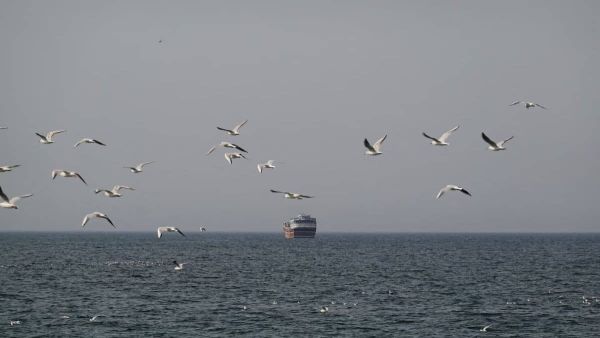
New Delhi: In a dramatic escalation of the current West Asia war, Iran on Thursday stressed that the Strait of Hormuz is strictly off-limits to vessels from the United States, Israel, Europe, and their allies.
Warning further, Iran stated that the violators who try to pass through the Strait of Hormuz will become target of drones and missiles.
Iran Partially Closes Strait of Hormuz | Why It Is A Chokepoint For Global Oil Supply?
— Republic (@republic) February 19, 2026
Tune in to LIVE TV for all the fastest #BREAKING alerts - https://t.co/hJgGwOxtQG#Iran #hormuz #IranUSwar pic.twitter.com/6DEF5bRgIK
The announcement comes just days after joint U.S.-Israeli strikes targeted Iranian leadership and infrastructure, a move President Donald Trump stated was aimed at "neutralizing" the Iranian threat.
The Strait is Closed
In a major strategic shift, deputy head of Iran's Ministry of Foreign Affairs announced the Strait of Hormuz will remain closed to all "hostile" vessels for the duration of the ongoing conflict, signaling a move toward a prolonged blockade of the world’s most vital oil chokepoint.
#TrumpKillsKhamenei | ‘It’s not about regime change, more about controlling of ‘Strait of Hormuz’’: Tatyana Kukhareva, Senior Journalist, Russia
— Republic (@republic) March 1, 2026
Watch #DebateWithArnab now, on-air, and online. Tune in and fire in your comments: https://t.co/p9yoYe3oay#RepublicWorld #RepublicTV… pic.twitter.com/0JLjq5n9WM
Indian Seafarers Stuck
Escalating military conflict between the US, Israel, and Iran has paralyzed major shipping lanes, potentially leaving up to 23,000 Indian seafarers stranded across the volatile Gulf region.
As of March 5, 37 Indian-flagged vessels remain trapped in the Persian Gulf, as per National Union Of Seafarers Association data.
#BreakingNews | 'We found people floating in the water and recued them. Later on when we enquired we found that they belonged to an Iranian ship': Sri Lanka Navy Media Director on rescue operation
— Republic (@republic) March 4, 2026
Republic breaks down the wider implications
Tune in for the latest updates:… pic.twitter.com/BoNvtzLjHp
To ensure the safety of its maritime assets, the Indian government has intensified surveillance in high-risk zones, increasing the frequency of vessel monitoring from every six hours to every hour.
Authorities are also maintaining continuous, direct communication with all trapped crews to monitor their well-being and security.
The majority of these vessels are carrying crucial energy supplies, including crude oil, liquefied petroleum gas (LPG), and commercial cargo.
‘Will attack any ship’
Earlier on March 2, a commander in Iran’s Revolutionary Guard Corps (IRGC) has said the Strait of Hormuz is closed and warned that any vessel attempting to pass through will be attacked, according to Iranian state media.
“The strait is closed. If anyone tries to pass, the heroes of the Revolutionary Guard and the regular navy will set those ships ablaze,” Ebrahim Jabari, a senior adviser to the IRGC’s commander-in-chief, said on Monday.
Global Energy Markets in Turmoil
The Strait of Hormuz, which lies between Iran and Oman, is the world’s most vital oil chokepoint, with approximately 20% of global oil and gas consumption transiting through the narrow 21-mile-wide passage daily.
Shipping Stalls as the transit activity has reportedly plummeted by 80% since the initial strikes on February 28. On Tuesday (March 3), only four vessels were recorded crossing the strait, compared to a normal daily average of nearly 80.
#BreakingNews | Dramatic Visual of attack near Strait of Hormuz | WATCH
— Republic (@republic) March 1, 2026
Tune in to watch the #Latest update: https://t.co/umGvVLioq3#RepublicWorld #RepublicTV #RepublicNews #IndiaNews #LiveNews #RepublicExclusive #RepublicWorldLive #ArnabGoswami #RepublicDigital #NationFirst pic.twitter.com/hoqyRaHN5y
Insurance crisis is also reported as most global marine insurers have cancelled war-risk extensions for the region, effectively grounding hundreds of tankers that are now anchored in the Gulf of Oman or the Persian Gulf.
Furthermore, price spikes as crude oil prices have already jumped by more than 10%, with analysts warning that a prolonged blockade could send prices well above $120 per barrel.
Regional Blowback
The closure follows a wave of Iranian retaliatory missile strikes against regional neighbours hosting U.S. military bases, including Qatar, Kuwait, Bahrain, and the UAE.
In a rare move, six Persian Gulf nations are reportedly on the verge of ending their neutrality, accusing Tehran of "reckless and indiscriminate" attacks on their territories.
Meanwhile, the U.S. Pentagon reported that the Chairman of the Joint Chiefs of Staff, Gen. Dan Caine, has briefed that the U.S. operation has already destroyed over 20 Iranian naval vessels and one submarine.
Despite these losses, the Iranian Ambassador to India in an exclsuive conversation with Republic TV maintained earlier today that Tehran is "ready for peace and war," while calling for an investigation into the sinking of an Iranian vessel near Sri Lanka.
-
Are you troubled by falling hair? Mix these 2 special things in eggs and apply them, you will see the difference in 7 days!

-
Drink this special drink every morning, laziness and fatigue will go away.

-
Women’s Independence: 5 important aspects of self-reliance

-
Men are getting scrotal filler to combat a sneaky TRT side effect

-
West Indies team stayed in India for 4 days, coach Darren Sammy asked for help to return home