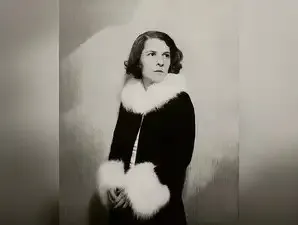
The Thought of the day today turns the spotlight on an enduring lesson about bravery from an American stage and screen legend whose career spanned seven decades. Actor, playwright and Oscar winner Ruth Gordon built a life defined by persistence, reinvention and artistic courage, qualities that echo powerfully in today’s reflection.
Best remembered by many for her eccentric yet unforgettable roles in Hollywood, Gordon’s journey from theatre hopeful to Academy Award winner was neither swift nor simple. Her life story underscores the idea that fortitude is not inherited, but cultivated, often through trial, failure and perseverance.
“Courage is like a muscle. We strengthen it by use.”
The succinct line captures a philosophy of steady effort rather than dramatic heroism. It suggests that bravery is not a rare trait possessed by a chosen few but a quality that grows through repeated acts of resolve.
In a world often seeking instant success, the message resonates as a reminder that resilience is built incrementally. Whether in personal battles or professional pursuits, consistent action in the face of fear shapes character over time.
For Gordon, whose career moved fluidly between Broadway triumphs and Hollywood acclaim, this belief was not abstract. It was lived experience.
The thought challenges the assumption that courage must be grand or theatrical. Instead, it proposes that everyday decisions, speaking up, trying again after failure, stepping into unfamiliar territory, are the repetitions that build inner strength.
Gordon’s life reflects this philosophy. From her early days as a young actress navigating competitive theatre circles to her later reinvention as a character actor adored by a new generation, she repeatedly embraced uncertainty. Each stage of her journey demanded renewed resolve.
She made her Broadway debut in 1915 in Peter Pan, playing Nibs, and soon became associated with New York’s vibrant literary and theatrical circles, including the famed Algonquin Round Table. Over the next three decades, she appeared in numerous stage productions, performing works by playwrights such as Henrik Ibsen and Anton Chekhov. Her performance in a 1936 London production of The Country-Wife marked one of her early stage triumphs.
Hollywood beckoned in the early 1940s. Gordon appeared in films such as Abe Lincoln in Illinois (1940), Dr. Ehrlich’s Magic Bullet (1940) and Two-Faced Woman (1941), the last film of Greta Garbo. After several screen roles, she returned to the stage, stepping away from cinema for more than two decades — a move that itself required conviction at a time when film stardom was ascendant.
Her marriage in 1942 to screenwriter and director Garson Kanin marked a creative turning point. The couple collaborated on acclaimed screenplays, including A Double Life (1947), Adam’s Rib (1949), and Pat and Mike (1952). Their writing partnership earned multiple Academy Award nominations and cemented Gordon’s reputation not only as a performer but also as a formidable writer.
She subsequently developed a cult following with performances in films such as Harold and Maude, where she played an unconventional septuagenarian who forms an unlikely bond with a young man. The performance redefined perceptions of ageing on screen and showcased her fearless embrace of complex, unconventional characters.
Her television work also drew acclaim. In 1979, she won an Emmy Award for a guest appearance on the sitcom Taxi, proving once again her ability to adapt across mediums and generations.
Throughout these reinventions, Gordon embodied the principle embedded in the Thought of the day. Each new chapter required her to confront changing industry norms, audience tastes and personal challenges. Rather than retreat, she exercised the very courage she described.
Gordon’s career illustrates that bravery need not be loud. It may manifest in persistence, auditioning again after rejection, writing after criticism, or returning to the screen after decades away. Her longevity in entertainment, remaining active until her death in 1985, stands as testimony to sustained resolve.
Best remembered by many for her eccentric yet unforgettable roles in Hollywood, Gordon’s journey from theatre hopeful to Academy Award winner was neither swift nor simple. Her life story underscores the idea that fortitude is not inherited, but cultivated, often through trial, failure and perseverance.
Thought of the day today
The Thought of the day today reads:“Courage is like a muscle. We strengthen it by use.”
The succinct line captures a philosophy of steady effort rather than dramatic heroism. It suggests that bravery is not a rare trait possessed by a chosen few but a quality that grows through repeated acts of resolve.
In a world often seeking instant success, the message resonates as a reminder that resilience is built incrementally. Whether in personal battles or professional pursuits, consistent action in the face of fear shapes character over time.
For Gordon, whose career moved fluidly between Broadway triumphs and Hollywood acclaim, this belief was not abstract. It was lived experience.
Thought of the day meaning
The Thought of the day meaning lies in its metaphor. By likening courage to a muscle, Gordon presents bravery as something dynamic and trainable. Muscles weaken when unused and strengthen with exercise; so too does confidence when tested repeatedly.The thought challenges the assumption that courage must be grand or theatrical. Instead, it proposes that everyday decisions, speaking up, trying again after failure, stepping into unfamiliar territory, are the repetitions that build inner strength.
Gordon’s life reflects this philosophy. From her early days as a young actress navigating competitive theatre circles to her later reinvention as a character actor adored by a new generation, she repeatedly embraced uncertainty. Each stage of her journey demanded renewed resolve.
Thought of the day by Ruth Gordon
Born on October 30, 1896, in Wollaston, Massachusetts, Gordon pursued acting at a time when women in theatre often faced rigid expectations. After high school, she studied at the American Academy of Dramatic Arts in New York City, determined to carve her own path.She made her Broadway debut in 1915 in Peter Pan, playing Nibs, and soon became associated with New York’s vibrant literary and theatrical circles, including the famed Algonquin Round Table. Over the next three decades, she appeared in numerous stage productions, performing works by playwrights such as Henrik Ibsen and Anton Chekhov. Her performance in a 1936 London production of The Country-Wife marked one of her early stage triumphs.
Hollywood beckoned in the early 1940s. Gordon appeared in films such as Abe Lincoln in Illinois (1940), Dr. Ehrlich’s Magic Bullet (1940) and Two-Faced Woman (1941), the last film of Greta Garbo. After several screen roles, she returned to the stage, stepping away from cinema for more than two decades — a move that itself required conviction at a time when film stardom was ascendant.
Her marriage in 1942 to screenwriter and director Garson Kanin marked a creative turning point. The couple collaborated on acclaimed screenplays, including A Double Life (1947), Adam’s Rib (1949), and Pat and Mike (1952). Their writing partnership earned multiple Academy Award nominations and cemented Gordon’s reputation not only as a performer but also as a formidable writer.
Reinvention in Hollywood
Gordon’s most dramatic professional resurgence came later in life. After years focused largely on theatre and writing, she returned to films in the mid-1960s. Her portrayal of Minnie Castevet in Rosemary's Baby won her the Academy Award for Best Supporting Actress in 1969. The role, quirky, unsettling and sharply comic, introduced her to younger audiences.She subsequently developed a cult following with performances in films such as Harold and Maude, where she played an unconventional septuagenarian who forms an unlikely bond with a young man. The performance redefined perceptions of ageing on screen and showcased her fearless embrace of complex, unconventional characters.
Her television work also drew acclaim. In 1979, she won an Emmy Award for a guest appearance on the sitcom Taxi, proving once again her ability to adapt across mediums and generations.
Throughout these reinventions, Gordon embodied the principle embedded in the Thought of the day. Each new chapter required her to confront changing industry norms, audience tastes and personal challenges. Rather than retreat, she exercised the very courage she described.
Thought of the day relevance
The Thought of the day, drawn from Gordon’s words holds particular resonance in contemporary times, where rapid change demands adaptability. In professional environments shaped by technological disruption and in personal lives marked by uncertainty, the idea of incremental courage offers both comfort and instruction.Gordon’s career illustrates that bravery need not be loud. It may manifest in persistence, auditioning again after rejection, writing after criticism, or returning to the screen after decades away. Her longevity in entertainment, remaining active until her death in 1985, stands as testimony to sustained resolve.