After nearly two decades at the centre of Bihar’s politics, the curtain has fallen on the legislative career of chief minister Nitish Kumar, opening a new chapter in one of India’s most politically crucial states.
Though the move had been anticipated for some time, the moment still came with a sense of abrupt finality.
When the longest-serving chief minister of Bihar [first taking office in 2005 and continuing till 2026 excluding a brief 2000 stint] filed his nomination papers for the Rajya Sabha on Thursday, 5 March, emotions ran high among his supporters. Some broke down while insisting they would not allow him to leave Bihar’s politics.
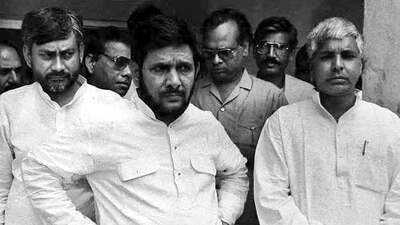
Others saw the moment differently. Describing it as poetic justice, they recalled how Nitish Kumar had once sidelined socialist stalwarts like George Fernandes and Sharad Yadav to consolidate control over his party —Janata Dal (United).
But the overall feeling was that Nitish Kumar had betrayed Bihar’s mandate under some pressure.
The opposition described it as a forced resignation —akin to a 'coup d'etat'. Referring to a Nitish Kumar's post on X, RJD's Manoj Jha said, "This is not Nitish Kumar's language. We have stood with him in both opposition and support. This tweet was written in Delhi. It feels so childish to even hear this...Is this even a thing? The Chief Minister, who has served the longest is saying he wants to go to the Rajya Sabha. This will resonate for years."
The Janata Dal (United) was founded on October 30, 2003, emerging from the merger of Sharad Yadav’s faction of the Janata Dal, the Samata Party led by George Fernandes and Nitish Kumar, and the Lok Shakti Party.
The merger strengthened the anti-Lalu Prasad Yadav camp in Bihar and paved the way for Nitish Kumar’s rise as a regional force rooted in socialist politics, backward caste mobilisation and promises of governance reform.
Two decades later, however, political observers say the leader who once consolidated his grip over the party by sidelining socialist stalwarts such as George Fernandes and Sharad Yadav, while aligning himself with the rising tide of Hindutva politics, has now met a similar fate at the hands of Amit Shah, the chief strategist of the BJP.
For Bihar watchers, the transition was slow but visible.
It is worth recalling here that in 2014, Nitish Kumar briefly attempted to position himself as a national alternative to Narendra Modi. But as the wave of Hindutva politics gathered strength, he recalibrated his strategy, concluding that it would be politically imprudent to remain outside the BJP-led coalition for long.
After briefly experimenting with the Mahagathbandhan alongside the Rashtriya Janata Dal, he returned to the National Democratic Alliance fold in July 2017.
His alliances continued to shift in the years that followed the opposition camp in 2022, only to exit again in January 2024, declaring the arrangement unsustainable.
The ten-time chief minister had cultivated the image of “Sushasan Babu”—a leader associated with governance reforms and administrative efficiency. In recent years, however, that image had begun to fade.
Political circles increasingly whispered about the declining health of Nitish Kumar, with some suggesting that his deteriorating condition may have played a role in his [forced?] decision to step aside.
During the recently held Bihar elections, it was evident that the BJP had co-opted the JDU and had tightened its grip over the party’s functioning—from candidate selection to social media campaigns.
There was also speculation about a formal merger between the JD(U) and the BJP then. While such a merger has not officially taken place, many believe that politically, the process of absorption is complete.
Despite his reputation for political pragmatism and flexibility, Nitish Kumar will also be known for personal integrity and clean image.
In a state where parties such as the RJD, Hindustani Awam Morcha, and Lok Janshakti Party (Ram Vilas) are run like a family business, Nitish stood out for his consistent opposition to dynastic politics. However, this image defies the now reported move to induct his son Nishant Kumar as deputy chief minister
The question that now arises is who will eventually fill Nitish Kumar’s political space? Nobody knows the answer but two things are quite clear.
First, his political journey ultimately facilitated the BJP’s consolidation in Bihar—a state which had long been resistant to overt communal polarisation.
Second, his departure from the Bihar assembly marks the end of what many analysts call the Lalu–Nitish era. With Lalu Prasad Yadav already retired from active politics, Bihar now enters an uncertain political transition.
Election Commission announces Rajya Sabha poll schedule for 37 seats-
IND vs NZ T20 World Cup Final: Date, Venue, Match Time And Live Streaming Details
-
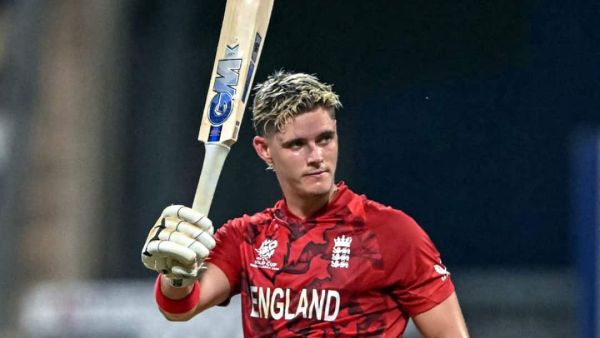
Top 10 Fastest Hundreds In T20 World Cup History, Ft. Jacob Bethell
-
From Cape Detours To Pipeline Limits: Why Hormuz Still Controls Global Energy

-
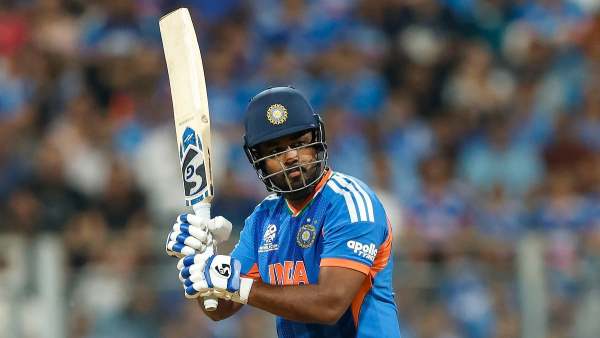
Sanju Samson Breaks Rohit Sharma's Six Record In Front Of Him At Wankhede Stadium During IND VS ENG T20 WC26 Semi-Final
-
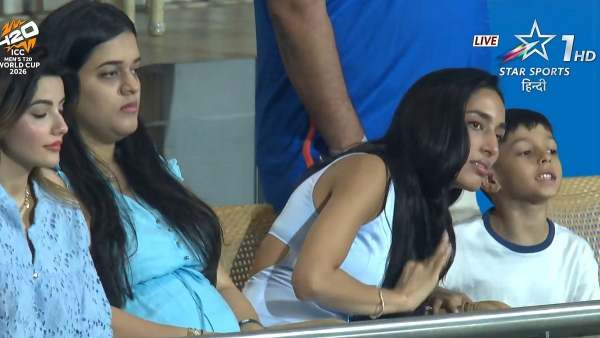
Hardik Pandya's Son Agastya Spotted With Maheika Sharma Cheering For Dad During IND Vs ENG ICC T20 WC26 Semi-Final