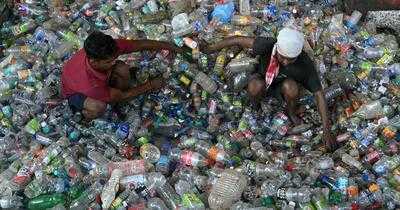
As good citizens, we diligently fill the recycling bins provided by our local authorities with all manner of plastic trays, boxes, bottles and bags. But as these bins fill up quicker and quicker each week, an awkward question arises: is all this effort actually doing any good?
Many of us would answer with a sceptically resigned “of course not”. The facts unfortunately support this increasingly common view. In Europe, only around 15% of plastics are recycled, while in the United States the figure drops to 9%. The remainder ends up in incinerators, landfills or, in the worst of cases, in the natural environment.
The question we must answer is therefore not whether plastic recycling has issues, but why the system we have all trusted for decades is failing so catastrophically.
Problems begin before the binTo understand what’s going wrong, it’s worth taking a step back and looking at how we actually use plastic. Around half of all plastics are used for single-use products: containers, packaging, bags, agricultural sheeting and so on.
Between 20% and 25% are used in long-term applications – pipes, cables, building materials – and the rest is used in consumer goods with an intermediate lifespan, such as vehicles, furniture and electronic devices.
In the EU, post-consumer plastic waste already reached 24.6...
Read more
-
'Thala For A Reason': Social Media Flooded With Memes Crediting MS Dhoni After India Beat England By '7' Runs

-
Is the Vanessa Trump–Tiger Woods romance under pressure? Experts raise questions

-
How can employees with insurance claim up to $7,500? Sequoia data breach settlement deadline, eligibility and process explained

-
West Asia conflict disrupts India’s gems and jewellery trade; diamond shipments halted

-
Strait of Hormuz crisis shows India’s thin energy safety net