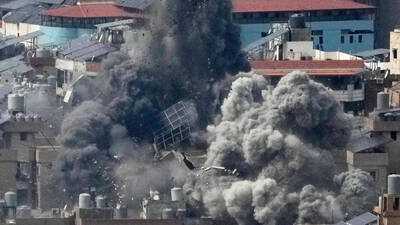
On Friday, the United States Central Command released details regarding the initial week of a significant military operation targeting Iran's military assets. Dubbed Operation Epic Fury, this initiative commenced at 1:15 AM on February 28, following directives from President Donald Trump. The primary objective of the operation is to dismantle Iran's security framework and eliminate threats deemed immediate. CENTCOM reported that over 3,000 targets were engaged within the first week, coinciding with escalating tensions surrounding Tehran's nuclear ambitions and ongoing conflicts with the US.
Targets of the US Strikes What Targets Did US Forces Strike?
The operation primarily focused on facilities associated with the Islamic Revolutionary Guard Corps, a key segment of Iran's military. US forces targeted command and control centers essential for military coordination, as well as the joint headquarters of the Islamic Revolutionary Guard Corps and its aerospace division. Additionally, integrated air defense systems, crucial for detecting and intercepting aerial threats, were also struck, aiming to diminish Iran's airspace security. Ballistic missile sites, which are integral to Iran's missile capabilities, were another focal point. Reports indicate that Iranian naval assets suffered significant damage, with at least 43 vessels reported as damaged or destroyed during the operation's first week.
Military Assets Deployed by the US What Military Assets Did US Deploy?
According to CENTCOM, a variety of aircraft, drones, and naval forces were utilized throughout the operation. Strategic bombers, including the B-1 Lancer and the stealthy B-2 Spirit, played a pivotal role in the strikes. Fighter jets such as the F-15 Eagle, F-16 Fighting Falcon, F/A-18 Hornet, F-22 Raptor, and F-35 Lightning II were also involved. Ground attack aircraft like the A-10 Thunderbolt II supported the offensive against military targets. Electronic warfare aircraft, specifically the EA-18G Growler, were deployed to disrupt enemy radar and communication systems, enhancing the effectiveness of the strikes. Surveillance and strike missions were supported by drone systems, including MQ-9 Reaper and LUCAS drones. Missile defense systems, such as the Patriot and THAAD, safeguarded US and allied positions in the region. Nuclear-powered aircraft carriers and guided-missile destroyers facilitated strike operations, while reconnaissance aircraft like the RC-135 gathered vital intelligence. Cargo aircraft, including the C-17 Globemaster III and C-130 Hercules, were responsible for transporting necessary equipment and supplies, with refueling aircraft extending operational reach.
-
Five Indian Captains To Lead Team India Into World Cup Finals

-
Dhurandhar 2 Trailer: Ranveer Singh Says ‘Told You It Was Personal’, Declares ‘India Will Decide The Future Of Pakistan’

-
Dubai Airport Temporarily Shuts Operation After Reported Explosion Sound, Emirates Cancels Flights
-
'Caught On Wrong Side Of Events’: Jaishankar Explains Why India Allowed Iranian Ship To Dock In Kochi

-
'Did He Not Get A Visa?': Netizens React After Aston Martin's Lance Stroll Skips FP3 Due To 'ICE' Issue