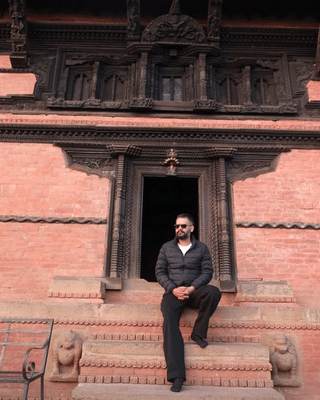
Kathmandu, March 7 (IANS) When Balen Shah, the former Mayor of Kathmandu Metropolitan City, chose Jhapa-5 as his constituency to contest the parliamentary elections against former Prime Minister K P Sharma Oli in the latter’s traditional stronghold, many leading experts had questioned the move despite the rising popularity graph of the rapper-turned politician.
However, as the election results were announced on Saturday, Shah defeated Oli by a wide margin of 49,614 votes, securing 68,348 votes against 18,734 votes obtained by Oli. This is the highest number of votes any candidate for the House of Representatives has secured in Nepal's parliamentary elections since 1991.
Shah is a prime ministerial candidate from the Rastriya Swatantra Party (RSP), a relatively new political party formed by former media personality Rabi Lamichhane. After Shah joined Lamichhane, the party appeared to have become an unstoppable force in this year’s elections, securing the highest number of wins so far and leading in most of the constituencies for the 165 seats under the First-Past-the-Post system.
Shah’s story is that of a new-generation politician who emerged onto the national political scene only recently.
Born on April 27, 1990 in Kathmandu in a Madhesi family that valued education and culture, Shah completed his bachelor’s degree in Kathmandu before pursuing a master’s degree in Structural Engineering from a university in India.
His academic background in engineering gave him a practical understanding of infrastructure, urban development and public works, which helped shape his governance approach during his tenure as Mayor of Kathmandu Metropolitan City.
Before entering politics, Shah — a structural engineer by profession — had already established himself as a well-known figure in Nepal’s underground hip-hop scene.
As a rapper and lyricist, he gained recognition for socially conscious lyrics reflecting the struggles of Nepali society. His ability to speak bluntly through music earned him a strong following among young people. His song 'Balidan', highlighting the divide between the privileged and the marginalised, resonated strongly with the youth even though rap music has traditionally remained outside Nepal’s mainstream music industry.
Shah first came into the national limelight when he announced his candidacy for Mayor of Kathmandu Metropolitan City — the country’s largest metropolis — as an independent candidate in the 2022 Nepal local elections. He went on to win the post.
His victory was widely seen as a turning point in Nepal’s politics and is believed to have encouraged Lamichhane — known for his combative questioning style on television — to launch his own political party, the Rastriya Swatantra Party (RSP).
After getting elected as Mayor, Shah continued to cultivate his image of a political rebel. He frequently clashed with then Prime Minister Oli and other leaders of traditional political parties on social media over various issues, often attracting thousands of reactions and supporters within minutes.
During his tenure as Mayor, Shah pushed reforms focused on urban issues, including waste management, regulation of illegal structures, transparency in municipal operations and protection of Kathmandu’s cultural heritage.
Amid growing public dissatisfaction with traditional political parties — particularly following a series of corruption scandals involving senior leaders — Shah’s leadership style, often direct and confrontational toward bureaucratic inefficiencies and central authorities, made him both popular among supporters and controversial among critics.
Last September, Nepal witnessed what many described as a Gen-Z movement, which led to the fall of the government headed by Oli after unrest that resulted in the death of 77 people and damage to public and private property worth over NPR 84 billion, according to government estimates.
During the political vacuum following Oli's ouster, Shah was widely viewed as a potential candidate for the post of Prime Minister, with many Gen-Z youth leaders calling for his leadership. However, he instead backed current interim Prime Minister Sushila Karki to lead the government, which successfully oversaw the parliamentary elections.
Shortly before the elections, Shah and Lamichhane decided to unite under a single political platform — a move that has now proven to be a masterstroke for the RSP and its president with the political landscape now set to completely change following the elections.
Shah’s rise in national politics is widely seen as a symbol of generational change in Nepal’s political landscape, as younger voters increasingly demand reform, accountability and stronger youth leadership in the country.
--IANS
scor/as
-
India Brings Back Over 52,000 Citizens From Gulf Amid Regional Tensions
-
Cricket Fever Sends Ahmedabad Airfares Soaring: Almost 250% Jump Ahead Of T20 World Cup Final

-
Tax-free Personal Allowance will rise to £20,070 thanks to HMRC rules

-
Liam Rosenior makes nine Chelsea changes vs Wrexham as Cole Palmer and Joao Pedro decisions made

-
Chelsea encouraged to make surprise swoop for Man City star after transfer confession