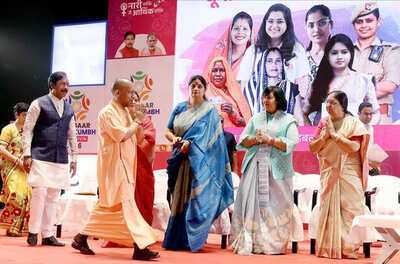
Nearly three lakh rural women in the Gorakhpur district have taken significant steps towards economic participation and financial autonomy through self‑help groups (SHGs) formed under the National Rural Livelihood Mission (NRLM). Officials say the initiative has encouraged women to move beyond traditional household roles and engage in diverse livelihood activities that contribute to family incomes and community economies.
According to local administration sources, 21,106 SHGs have been registered in the district, involving around 2,99,892 women. These groups bring women together to collectively engage in various productive activities and access financial and institutional support. During the ongoing financial year, 629 new SHGs were formed, attracting nearly 7,950 new women members.
Members of these groups are involved in a wide range of work, including vegetable cultivation, mushroom farming, livestock rearing, spice and food processing, artificial jewellery making, tailoring, and production of soft toys and nutritional products. Participation in such diverse activities has enabled many women to contribute to household budgets in ways that were previously inaccessible.
Financial assistance has played a central role in supporting the SHGs. As of now, around 18,446 groups have received nearly ₹30 crore in revolving funds, with 1,006 of these groups receiving funds in the current year alone. In addition to revolving funds, 15,558 groups have benefited from the Community Investment Fund, designed to strengthen operational capacity and meet working capital needs.
Access to formal credit has been a key enabler for expanding women‑led enterprises. Officials reported that 12,210 SHGs in the district have secured cash credit linkage (CCL) from banks. Under this facility, groups are provided credit limits that start from ₹1.5 lakh in the first year and can increase to ₹3 lakh and then ₹6 lakh with satisfactory repayment and transactions. This access to bank credit helps groups invest in productive ventures and scale their operations.
While SHGs have existed in various parts of India for decades as a community‑based approach to financial inclusion and empowerment, their role in rural areas like Gorakhpur highlights ongoing efforts to support women’s economic involvement. By pooling resources, sharing skills and accessing institutional support, women in these groups are building financial resilience and pursuing diverse income streams that extend beyond subsistence.
The expansion of SHGs reflects broader trends in community‑led livelihood development, where collective action and organized access to finance and markets can help address barriers that individual women often face in entering formal economic activities.
-
Did Hardik Pandya Cheat On Natasa Stankovic With Mahieka Sharma? Viral Instagram Post Sparks Rumours

-
'This Isn't Right...': Michael Vaughan Slams ICC As West Indies & South Africa Team Remain Stranded In India Amid Middle East Tensions

-
Centre Reaffirms 27% OBC Reservation In Civil Posts & Services, Expands Scholarships & Welfare Schemes

-
Randeep Hooda & Lin Laishram Welcome Baby Girl On His Father Ranbir Hooda's Birthday; See FIRST Photo Of Newborn

-
'US Missile Strike Hits School, Damages Homes In Iran’s Khomeyn': Report