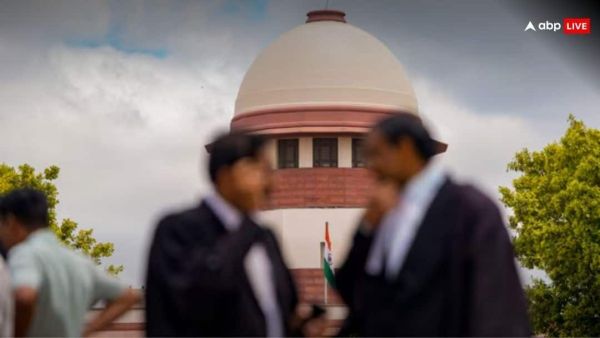
The Supreme Court has expressed serious concern over the rewriting of a chapter on judicial corruption in a Class 8 NCERT Social Science textbook. In a significant order, the court directed the Centre, all state governments, and publicly funded institutions to distance themselves from individuals involved in preparing the controversial content.
The directive specifically concerns Professor Michel Danino, who chaired the NCERT social science curriculum panel, along with two associate members. The court said these individuals should no longer be associated with curriculum development or textbook preparation funded by public money.
The Supreme Court has directed the Centre and all State governments along with all institutions receiving public funds, either partially or fully, to dissociate the chairperson of NCERT social science curriculum, Professor Michel Denino and his two other associate members who…
— ANI (@ANI) March 11, 2026
Court Directs Authorities to Disassociate Involved Members
A bench led by Chief Justice of India Surya Kant issued instructions to the Union government, all states, and institutions that receive government funding either fully or partially to remove the individuals concerned from any curriculum-related projects.
The order relates to a sub-chapter titled ‘Corruption in the Judiciary’, which appears in Part 2 of the Class 8 NCERT Social Science textbook. According to the court, the experts involved in drafting the content should not continue to participate in the preparation or finalisation of educational material meant for students.
The court also said that the concerned members should not be given roles in institutions where they may receive payments sourced from public funds.
Supreme Court Raises Concern Over Representation of Judiciary
During the proceedings, the bench raised questions about the way the judiciary was portrayed in the chapter meant for school students.
“At the outset we have no reason to doubt that professor Michel Danino along with Ms Diwakar and Mr Alok Prasanna Kumar either does not reasonable knowledge about Indian judiciary or they deliberately knowingly misrepresented the facts in order to project a negative image of Indian judiciary before students of Class 8 who are at an impressionable age. There is no reason as to why such persons be associated in any manner with preparation of curriculum or finalisation of text book for the next generation. We direct union, all states, all institutions recieving state funds, to disassociate them from rendering any service which would mean payment to them from public funds”, the Court noted.
The bench emphasised that school textbooks play a crucial role in shaping the understanding of young students and therefore must present information responsibly and accurately.
-
The phone's flashlight doesn't just provide light; it can be useful for everything from measuring your heart rate to saving lives.

-
Google's original name was something else! A spelling mistake made it to Google.

-
PM-Kisan 22nd Installment: The wait is over! Complete this task immediately to get ₹2,000, or your money could be stuck..

-
LPG Crisis: Now the second cylinder cannot be booked before 25 days, the government has changed the rules..

-
Are fraudsters also scamming people under the guise of food delivery? Be alert immediately, or you'll become a victim