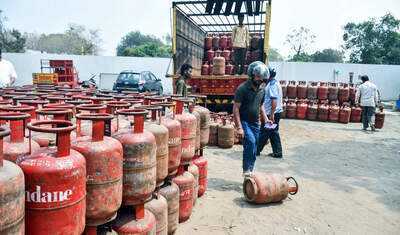
On Wednesday, the Indian government announced its commitment to guarantee a complete domestic supply of LPG in light of the ongoing conflict in West Asia. This turmoil has led to the closure of the Hormuz Strait and significant disruptions in global supply chains, resulting in a potential energy crisis. Just a day prior, India implemented strict controls on natural gas and cooking gas. To combat hoarding, the government has extended the minimum booking period for domestic LPG cylinders from 21 to 25 days.
Discussion with State Officials
The Union Home Secretary held discussions with the Directors General of Police (DGPs) and Chief Secretaries of all states regarding the current LPG situation. He urged states to take stringent measures against hoarding and black marketing. Officials have been instructed to ensure smooth and fair distribution of LPG across the country. During a press conference convened to discuss recent developments in West Asia, an inter-ministerial panel noted that misinformation has led to panic buying and hoarding, emphasizing that there is no need for rushed bookings.
Implementation of Essential Commodities Act
The panel indicated that the Essential Commodities Act would be enforced to facilitate rationalization measures. They confirmed that there would be a 100% domestic supply, with tea receiving approximately 80% of the allocation, and a reduction in petrol supply. LPG imports are expected to be 60%, with 90% of that coming through the Hormuz Strait. Additionally, domestic LPG production will see a 25% increase, with hospitals and educational institutions classified as non-domestic.
Securing Oil Supply Amid Crisis
Sujata Sharma, Joint Secretary of the Ministry of Petroleum and Natural Gas, stated on Wednesday that despite the crisis in West Asia affecting global energy routes, India's crude oil supply remains secure through diversified procurement processes. During a joint press briefing, she reassured that India's crude oil supply is stable, with daily consumption around 5.5 million barrels. The volume of oil secured today exceeds the usual amount that typically comes through the Hormuz Strait during this period.
Government's Support for Consumers
In light of the tensions in West Asia impacting LPG supply, Sharma mentioned that the government has absorbed a significant portion of the cost increases to protect consumers. Addressing an inter-ministerial press briefing, she noted that LPG is currently being dispatched to the domestic sector, with priority given to essential areas like hospitals and educational institutions for non-domestic LPG. The committee is consulting with state officials and industry bodies to finalize plans for fair and transparent distribution of available LPG.
LNG Cargoes Departing for India
Sharma also reported that two LNG cargoes have already set sail for India. She highlighted that Indian gas companies have procured LNG cargoes from new sources. Discussing crude oil supply, she mentioned that India imports crude oil from approximately 40 countries. She clarified that the normal delivery cycle for domestic LPG is about two and a half days, urging consumers to remain calm.
-
LPG Shortage Pushes Commercial Cylinder Prices to ₹3,000, Small Eateries Fear Shutdown

-
Gold Cheaper in Dubai Amid Middle East Tensions—Know the Rules Before Bringing It to India

-
India Approves 43 New Medical Colleges in 2025–26, Adds 11,682 MBBS Seats: Government Tells Rajya Sabha

-
Naagin Fame Pearl V Puri To Make Television Comeback With Ekta Kapoor's Kyunki Saas Bhi Kabhi Bahu Thi 2? Here's What We Know About His Role

-
Lancôme best-selling set slashed to half price in last-minute Mother's Day gift sale
