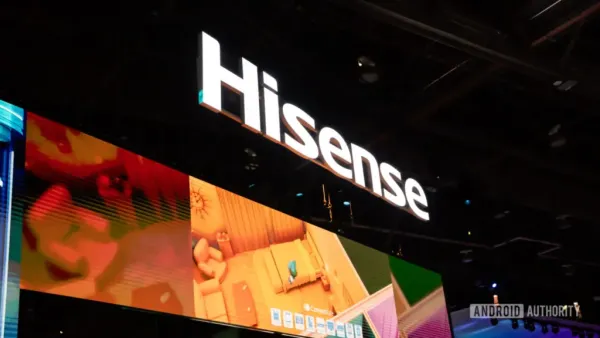
It used to be a simple transaction: you buy a television, you plug in your console or cable box, and you watch your content. But in March 2026, the “Smart TV” bargain, the unwritten agreement where we accept cheaper hardware in exchange for some light data tracking has officially reached a breaking point. A bombshell report has detailed a burgeoning consumer revolt against Hisense. Owners of the brand’s newer sets are reporting a frustrating new reality: unskippable, full-screen advertisements appearing not just on the home screen, but during the most basic navigational tasks like switching HDMI inputs or simply changing the channel.
For years, smart TV manufacturers like Roku, Samsung, and Vizio have flirted with the boundaries of intrusive advertising, mostly keeping their “sponsored content” to banners on the home screen. Hisense, however, has reportedly moved the goalposts directly into the field of play.
Users across Europe and North America, particularly those on Hisense’s proprietary VIDAA OS (recently rebranded as Home OS), have documented a jarring experience. When a user attempts to switch from a streaming app to a gaming console via an HDMI port, the TV triggers a 10-second unskippable video ad. Imagine sitting down to play a game, only to be forced to watch a trailer for a movie or a beverage commercial before your own hardware is allowed to display on the screen you paid for.
The practice isn’t limited to input switching. Some reports indicate ads appearing during volume adjustments or while flipping through local digital channels. For many, this represents the “enshitification” of the living room, the process where a product people actually like is slowly degraded by corporate greed until it becomes a chore to use.
The “Spot Test” Defense: A PR Masterclass in Gaslighting
In response to the mounting fury on platforms like Reddit and X, Hisense has issued a statement that has, predictably, only added fuel to the fire. The brand denies any wrongdoing, characterizing the intrusive ads as a “spot test” limited to specific markets like Spain.
Hisense’s PR team argued that these ads do not prevent owners from “using their devices normally,” a phrase they repeated three times in their official clarification. This has led to a sarcastic outcry from the tech community: if waiting through a commercial to access your own PlayStation 5 is “normal,” then the definition of ownership has fundamentally shifted.
The company maintains that the objective of the test was to evaluate “advertising formats linked to free content,” yet users have reported these ads popping up even when they aren’t using free ad-supported streaming television (FAST) channels. The ads are being injected at the OS level, meaning no corner of the TV’s functionality is safe.
The Invisible Eye: ACR and the Texas Lawsuit
While the ads are the visible symptom, the underlying “disease” is Automatic Content Recognition (ACR). This technology allows your TV to “fingerprint” every pixel and soundbite that passes through it whether it’s a Netflix show, a personal home movie, or a video game and report that data back to servers to better target you with ads.
This practice has already landed Hisense in hot water. In late 2025, the Texas Attorney General filed a massive lawsuit against Hisense (and four other manufacturers), alleging that the company’s use of ACR is an “egregious violation of privacy.” The suit claims that Hisense captures data every 500 milliseconds and that the “consent” users give during the initial setup is buried in such dense legal jargon that it’s effectively meaningless.
The Consumer Rebellion: The Rise of the “Dumb TV”
The backlash has sparked a renewed interest in what enthusiasts call the “Dumb TV” movement. On forums like r/hardwarethe advice is increasingly uniform: Never connect your TV to the internet.
Consumers are finding creative ways to reclaim their hardware:
-
External Streamers: Using an Apple TV, Nvidia Shield, or even a Raspberry Pi to handle the “smart” stuff while leaving the TV’s WiFi chip disabled.
-
Pi-holes & DNS Blocking: Tech-savvy users are setting up network-level ad blockers to “sinkhole” Hisense’s ad servers.
-
The Return Policy Weapon: There is a growing call for users to return their sets the moment an ad appears, with the hope that retailers will eventually refuse to stock brands that generate high return rates due to “software features.”
The Hisense controversy is a canary in the coal mine for the broader electronics industry. As hardware margins continue to slim, companies are increasingly looking at their customers not as owners, but as a recurring “inventory” of attention to be sold to the highest bidder.
If Hisense’s “spot test” proves profitable despite the PR nightmare, it won’t be long before other manufacturers follow suit. Today it’s a 10-second ad to switch to HDMI 1; tomorrow, it could be a “premium subscription” just to unlock the full brightness of your OLED panel. For now, the best way to vote is with your wallet and your WiFi password.
-
Iran will not send its team to FIFA World Cup 2026, announced in protest against American attack

-
Opposition got upset with Amit Shah’s speech, scolded loudly. Amit Shah’s Speech Sparks Major Opposition Backlash

-
As soon as the market opened, investors lost ₹ 5 lakh crore, Sensex 900 and Nifty fell 264 points.

-
Chaitra Navratri 2026: This time Chaitra Navratri is falling in Kharmas, will it affect the worship, many precautions will have to be taken

-
Ranveer Singh’s Dhurandhar 2 Set for Historic Opening as Paid Preview Sales Soar