The same oil shock lifting crude prices is crushing the margins of India’s state refiners. Goldman warns of 2008 peak. Hormuz remains shut.
India’s three state-owned oil marketing companies fell sharply in Thursday’s session as crude oil’s 6% surge on MCX — and Brent’s march back toward $100 per barrel — delivered the worst possible combination for downstream refiners: soaring input costs with no immediate ability to pass them on.
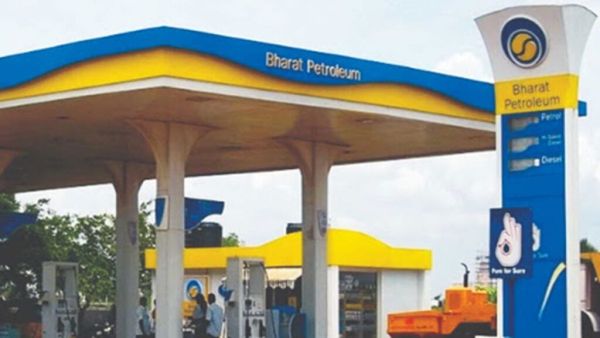
BPCL dropped 1.95% to ₹318.70. IOC fell 2.01% to ₹157.40. HPCL led the declines, shedding 2.04% to ₹376.40.
The trigger was not just a number on a screen. It was fire on the water.
Iran Blows Up Two Tankers. One Dead. Hormuz Still Closed.
On Wednesday evening, Iran claimed direct responsibility for destroying two oil tankers near Iraq — a brazen escalation that sent shockwaves through energy markets overnight. At least one crew member was killed in the attack. Rescue operations pulled 38 survivors from the burning vessels.
The strike came hours after the U.S. Embassy in Baghdad had issued an explicit warning: Iran and Tehran-backed Iraqi armed groups were potentially planning attacks on U.S.-owned oil facilities in Iraq. That warning proved prescient within the same news cycle.
Iran has been unambiguous about its position. Tehran has publicly vowed that no oil will leave the Persian Gulf while its war with the United States and Israel continues. And for now, it appears to be making good on that threat. The Strait of Hormuz — the narrow chokepoint through which roughly one-fifth of the world’s seaborne oil passes — remains effectively closed to almost all oil tankers.
That single fact is the engine behind every energy market move on Thursday.
Goldman Sachs: This Could Exceed the 2008 Peak
Goldman Sachs, in a note released Thursday, doubled its Hormuz disruption assumption — now modelling 21 days of severely restricted flows at just 10% of normal capacity, up from a previous estimate of 10 days. The revision forced an immediate upgrade to price forecasts.
Base case: Brent at $71 and WTI at $67 for Q4. But Goldman’s scenario analysis is where the numbers get alarming. A 30-day disruption pushes Q4 Brent to $76 and WTI to $72. A 60-day disruption scenario puts Brent at $93 and WTI at $89. And at the extreme end, Goldman warned explicitly: if Hormuz flows remain depressed through March, daily oil prices could breach the 2008 peak — the highest crude has ever traded.
Oil prices, Goldman added, are expected to trend higher until markets gain genuine confidence that a lengthy disruption is off the table. That confidence does not currently exist.
The IEA Relief Package Isn’t Enough
Markets got their emergency response earlier this week — a coordinated IEA strategic reserve release of 400 million barrels, with the U.S. contributing 172 million barrels beginning next week. ING’s commodities strategy team did the arithmetic and found it wanting.
The U.S. release, spread over roughly 120 days, works out to approximately 1.4 million barrels per day. Total coordinated IEA flows, assuming similar timelines across member nations, come to around 3.3 million barrels per day. The supply losses from the Persian Gulf are running significantly above that figure. The reserve release is a pressure valve, not a solution.
Technical Charts Point to $101–$104 Next
Reuters technical analysis adds a further layer of concern. U.S. crude futures have completed an inverted head-and-shoulders pattern — one of the most reliably bullish formations in technical analysis — after bouncing hard from Tuesday’s low of $76.73. The neckline breakout targets a range of $101.21 to $104.59 per barrel. If a pullback occurs before that move, analysts see support holding around $88. The broader chart shows the market stabilised at $79.77 — the 61.8% Fibonacci retracement of the uptrend from $55.27 to $119.40 — a level that held and confirmed the uptrend remains intact.
Why OMCs Are on the Wrong Side of This Trade
For India’s oil marketing companies, the crude surge creates a margin vice that is difficult to escape. BPCL, HPCL and IOC buy crude at international prices and sell refined products — petrol, diesel, LPG, kerosene — domestically at prices that are either regulated or politically sensitive to raise. When crude spikes, their input costs jump immediately. Their selling prices do not.
CLSA, in a separate note Thursday, flagged that OMCs may face sustained margin pressure and that LPG — one of the most politically sensitive products these companies distribute — faces the most acute supply vulnerability from the Middle East disruption, with alternate supply not expected before end-April.
The stock market is simply pricing what the income statement will show next quarter: revenues roughly flat, costs sharply higher, margins compressed.
The Broader Energy Cascade
The tanker attacks and Hormuz closure are not isolated to crude. Natural gas futures on MCX rose 2.33% to ₹303.1 on Thursday, reflecting spillover energy anxiety. India imports significant LNG volumes from the Gulf region, and CLSA has warned of potential acute gas shortages affecting fertilisers, petrochemicals, restaurants, and industrial users over the next three to four weeks.
Aluminium — energy-intensive to produce — gained 0.78% as rising power costs squeeze supply margins. Copper, gold, and silver all retreated modestly, reflecting dollar strength and demand-slowdown fears rather than the energy premium driving crude.
The Bottom Line
BPCL, HPCL and IOC are not falling because something is wrong with their businesses. They are falling because the world’s most important oil chokepoint is effectively closed, Iran just destroyed two tankers on camera, Goldman Sachs is warning about 2008-level oil prices, and India’s government is unlikely to let these companies pass the full cost shock to consumers at the pump.
That is not a one-day story. Until Hormuz reopens or the conflict trajectory changes materially, OMC stocks remain structurally on the wrong side of the oil trade.
BPCL: ₹318.70, -1.95% | HPCL: ₹376.40, -2.04% | IOC: ₹157.40, -2.01% | MCX Crude: ₹8,593, +5.99% | As of March 12, 2026, NSE session.
This article is for informational purposes only.
-
Why Zakir Khan Says One Person Can Change a Family

-
The Effect of Hookah and Shisha Smoke on Foetal Development

-
Copper vs Glass Bottle: Which One Is Better for Storing Drinking Water?

-
Tile Cleaning Tips: Simple Home Remedies to Remove Dirt Between Tiles

-
Homemade Kitchen Masala: Prepare Kitchen King, Biryani Masala and Other Spice Blends at Home