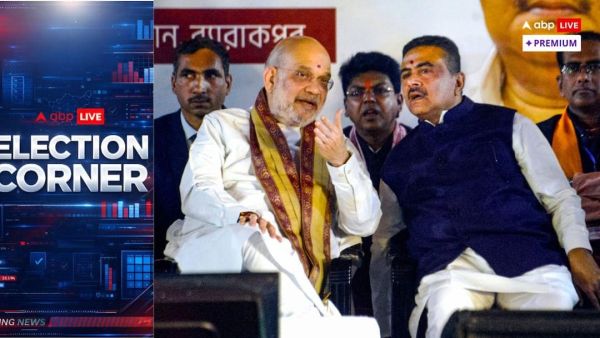
The 2021 West Bengal assembly election, spanning eight phases from March 27 to April 29, marked the longest such process in India's history for a state assembly poll. Covering 292 constituencies (with two held later), it unfolded over more than a month amid the COVID-19 pandemic, which influenced the Election Commission's decision for staggered voting to manage logistics and health risks. The Bharatiya Janata Party (BJP) aggressively challenged the incumbent All India Trinamool Congress (TMC), led by Mamata Banerjee, deploying national leaders like Prime Minister Narendra Modi and Home Minister Amit Shah for extensive campaigning. Despite high visibility and a vote share rise to around 38%, the BJP secured only 77 seats against the TMC's 213, with the TMC retaining power emphatically.
Five years on, as the 2026 assembly election approaches, the political landscape has shifted markedly. During the recent three-day visit by the Chief Election Commissioner-led full bench to West Bengal, where individual meetings occurred with all major parties, the BJP made an unexpected demand: hold the polls in a single phase, or at most two if one proves impossible. This stance aligns with similar calls from the CPI(M)-led Left Front and Congress, contrasting sharply with 2021 when the BJP favoured a prolonged schedule. The reversal stems from hard-earned lessons about how multi-phase polling disproportionately benefits the TMC's entrenched strengths while exposing the BJP's persistent vulnerabilities.
Prolonged Polling Amplifies TMC's Grassroots Mobilisation Edge
The TMC operates as a deeply rooted grassroots force with extensive booth-level networks, including local leaders, workers, and influential figures often described as strongmen in certain areas. This structure allows rapid, sustained voter outreach throughout an extended campaign. In a multi-phase setup, the party can allocate resources sequentially—personnel, funds, and mobilisation efforts—across phases, focusing on undecided voters in later stages after observing early trends. The staggered timeline provides breathing room to persuade swing voters through door-to-door campaigns, welfare promises, and community engagements, leveraging incumbency advantages like access to state machinery.
In contrast, the BJP has historically struggled with booth-level organisation in West Bengal. Even in the 2024 Lok Sabha elections, the party faced challenges in deploying agents at every booth, highlighting gaps in grassroots penetration. A drawn-out process exhausts limited resources without commensurate gains, as the TMC's superior local presence dominates persuasion in the final phases. Shorter polling minimises this asymmetry, forcing a more level contest where national messaging and rapid mobilisation can play a bigger role.
Late Deciders Tilt Decisively Toward TMC in Extended Campaigns
CSDS-Lokniti post-poll survey data from 2021 indicate that 24% of voters, one in four, finalised their choice at the last minute: 15% on polling day and 9.1% a day or two before (among valid responses from 4100 voters). Among these late deciders, the TMC secured a commanding 54% support, compared to the BJP's 33%. This edge was consistent but grew sharper in later phases: among late and campaign-time deciders (those deciding during the campaign or just before voting), the TMC held advantages across all phases, widening notably in Phases 6–8 (up to 58% TMC vs. 31% BJP in Phase 8). In the final phases, late deciders favoured the TMC by margins as high as 27–30 percentage points.
The extended campaign window enabled the TMC to sustain momentum through localised efforts, effectively neutralising national narratives. For the BJP, maintaining intensity over weeks strained resources reliant on central figures. A condensed poll would narrow the decision timeframe, limiting last-minute swings and curbing the TMC's exploitation of mobilisation superiority in prolonged phases.
Cultural and Leadership Barriers Exacerbated by Staggered Phases
West Bengal's electorate values regional identity, the Bengali language, and credible local leadership. Mamata Banerjee's framing as a staunch defender of Bengali interests facilitated authentic, district-spanning campaigns. The BJP's dependence on national leaders like Narendra Modi and Amit Shah proved potent in short bursts but weakened over time, as perceptions of "outsider" influence or Hindi-dominant messaging gained traction.
The 2021 eight-phase structure framed the contest as a drawn-out battle of "Bengali pride" versus central dominance, allowing repeated TMC grassroots reinforcement of this narrative. Multi-phase polling prolonged cultural disconnects for the BJP. A single- or two-phase format would shorten this exposure, concentrating the contest on unified national themes and swift appeals, potentially mitigating some incumbency edges.
Risks of Intimidation and Resource Manipulation in Staggered Voting
Extended phases open avenues for resource redirection, alleged intimidation, and anti-social influence across booths and constituencies. The TMC's entrenched networks enable potential sway in later phases, particularly where early outcomes signal vulnerabilities—skewing equity toward the incumbent. The BJP's 2021 experience revealed that prolonged polling impeded booth-level monitoring and micro-management, magnifying TMC advantages rather than aiding the challenger.
By advocating fewer phases for 2026, the BJP seeks to curtail these vulnerabilities, bolster central force deployment, and promote a more balanced contest. Recent representations stress violence-free polling via compressed timelines and enhanced security.
Sayantan Ghosh teaches journalism at St. Xavier’s College (Autonomous), Kolkata. He is on X as @sayantan_gh.
-
Ange Postecoglou's two-word response on Tottenham return with Igor Tudor on the brink

-
WAFCON 2026: A 'combination of factors' behind postponement

-
NCERT Unveils New English Textbook for Class 9 Featuring Prominent Indian Authors

-
BARC Junior Research Fellowship 2026: Application Details and Eligibility Criteria

-
Odisha SSB Junior Assistant and Clerk Recruitment 2026 Announced