Rising geopolitical uncertainty is beginning to influence how UAE-based investors rebalance their portfolios, triggering a shift that industry specialists describe as more tactical than transformational.
According to Madhur Kakkar, Founder and CEO of Elevate Financial Services, the current market unease is accelerating changes that were already underway as the UAE cements its status as one of the world’s fastest‑growing wealth hubs.
Kakkar says the movement of capital into the UAE is not simply increasing — it is evolving. The country is expected to attract nearly 10,000 relocating millionaires this year, a wave of wealth he describes as “anything but passive.” These individuals bring with them exposure to international markets, familiarity with alternative assets, and sophisticated cross‑border structuring needs. “This is not routine asset reallocation,” he says. “It is a structural evolution in capital behaviour.”
This shift is reinforced by the rapid growth of family offices and succession vehicles across Dubai’s financial centres. DIFC has seen a notable expansion in foundations and family structures, a trend Kakkar interprets as a sign that Gulf wealth is moving from informal, relationship‑based management to institutional design. “Wealth in the region is no longer simply accumulated — it is being engineered for continuity,” he notes.
Geopolitics pushes investors toward defence, liquidity
With geopolitical tensions rattling global markets, Kakkar says short‑term portfolio rebalancing has already begun. Investors are seeking higher liquidity, rotating towards commodities, and increasing allocations to defensive assets. “Oil and precious metals have strengthened while global equity indices opened softer,” he explains. “These are textbook reactions during periods of uncertainty.”
But he stresses that the shift remains tactical rather than structural. The UAE’s track record in crisis management, supported by strong fiscal buffers and regulatory stability, continues to anchor investor confidence. “Unless tensions prolong materially, we expect rebalancing to remain measured,” he says. “We do not foresee a broad retreat from regional assets.”
Fixed income returns, but with new rules
After years of negligible yields, fixed income has regained relevance in allocation models — but Kakkar warns that renewed enthusiasm must be matched with discipline. Regional sovereign bonds, particularly from the UAE and Saudi Arabia, have matured into higher-quality exposures, and international markets increasingly treat UAE debt as closer to developed‑market risk than traditional emerging‑market paper.
Corporate issuance is also rising — especially from UAE real estate developers — creating opportunities but also tying investors more closely to refinancing cycles and liquidity conditions. If geopolitical tensions delay global rate cuts, duration risk could elevate bond volatility. “Yield has returned. Discipline must return with it,” Kakkar says, emphasising sovereign and quasi‑sovereign issuers as portfolio anchors.
Emerging market debt: a wide spectrum, not a single trade
Kakkar cautions that investors chasing high yields in emerging markets risk overlooking fundamental resilience. Fiscal strength, reserves, currency stability and political continuity must take precedence over yield spreads, he says. The UAE stands out with strong fiscal positioning and a stable peg — conditions not shared by emerging economies facing currency weakness or trade imbalances. “The key is not maximizing yield. It is calibrating risk‑adjusted income,” he says. “Capital preservation compounds more reliably than aggressive yield chasing.”
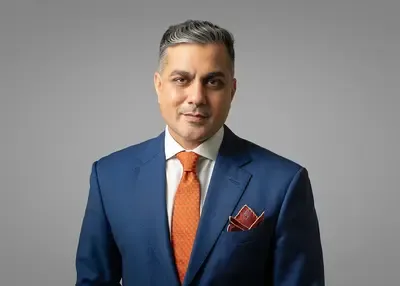
Madhur Kakkar, Founder and CEO of Elevate Financial Services
Intergenerational wealth transfer forces a rethink
As the UAE enters a major era of intergenerational wealth handover, families face a persistent misconception: that asset concentration equals safety. Historically, regional families built wealth through property and operating businesses, but today’s preservation challenges require governance structures, liquidity frameworks and cross‑border tax planning.
More families are turning to DIFC foundations, trusts and Private Placement Life Insurance structures — tools once considered niche but now moving mainstream. At the same time, jurisdiction matters more than ever, with digital asset accessibility and regulatory regimes determining where and how families can hold diversified assets. “Families are no longer asking just what they own — they’re asking how and where they own it,” Kakkar says.
Portfolios need new stress tests for a new cycle
In today’s environment, Kakkar believes every UAE‑based portfolio should be tested against three pressures: delayed global rate cuts, liquidity stress in high‑yield and private credit, and exposure concentration — particularly in regional real estate. Traditional long‑only private banking models, he argues, are poorly suited for these multi‑directional cycles.
He sees a widening gap in investor support, especially at wealth levels below internal thresholds set by major institutions. “Affluent investors often end up underserved or overcharged,” he says, urging a shift toward dynamic allocation, cross‑asset diversification and technology‑led execution. “Volatility is not the enemy. Rigidity is.”
A measured recalibration — not a retreat
Despite global tensions, Kakkar does not expect UAE investors to make sweeping reallocations away from the region. Tactical shifts into commodities, liquidity and high-quality fixed income will continue as long as uncertainty persists, but the UAE’s governance, fiscal stability and global attractiveness for high‑net‑worth migrants serve as counterweights. “Rebalancing is happening,” he says. “But it is measured, tactical and grounded in confidence — not fear.”
-
Women in Middle East reshaping the regional investment landscape

-
Married At First Sight's Mel Schilling announces tragic terminal cancer news

-
Mum fuming after 'eyesore' telegraph pole erected just two metres from house
-
Winning Set for Life numbers LIVE: National Lottery results on March 12

-
A Wedding in Madhya Pradesh Challenges Dowry Traditions