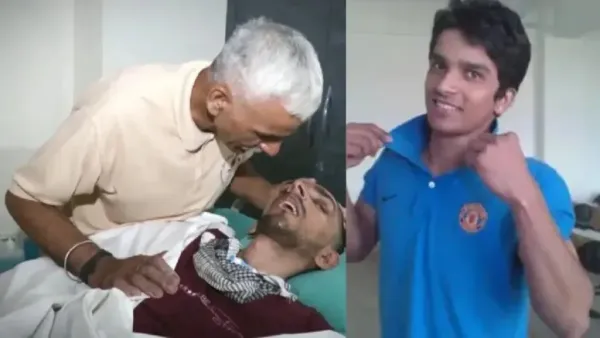
Who is Harish Rana: An extremely sensitive and unprecedented chapter was added to the judicial history of India on Wednesday. Supreme Court Ghaziabad 32 year old Harish Rana has been given permission for ‘passive euthanasia’. A bench of Justices JB Pardiwala and KV Vishwanathan took this decision in view of the 13-year-long torture of Harish and his incurable medical condition.
The court made it clear that human dignity lies not only in survival but also in a dignified death. As per court order, Harish should be immediately AIIMS Instructions have been given to start the process of removing his life support system by admitting him in (AIIMS).
Who is Harish Rana?
This sad story of Harish Rana started in the year 2013. At that time he was pursuing his studies at Panjab University and lived in a PG in Chandigarh. One unfortunate day, he fell from the fourth floor of the hostel, causing serious head injuries. This accident changed his entire life. Harish has been in ‘permanent vegetative state’ i.e. deep coma for the last 13 years. In the language of medical science, this condition means that the patient is alive, but his brain has no control over the body and he has completely lost consciousness.
Harish Rana’s life depends on machines
According to medical reports, Harish is suffering from 100 per cent disability and ‘quadriplegia’. His condition is so serious that he is not even able to breathe or eat naturally. A tracheostomy tube for breathing and a gastrojejunostomy tube for nutrition have been installed in his body. A panel of doctors informed the court that after such a long period, there was no scope for improvement in his health. He has been bedridden with only the support of artificial devices for more than a decade.
Why did the Supreme Court give such a strict order?
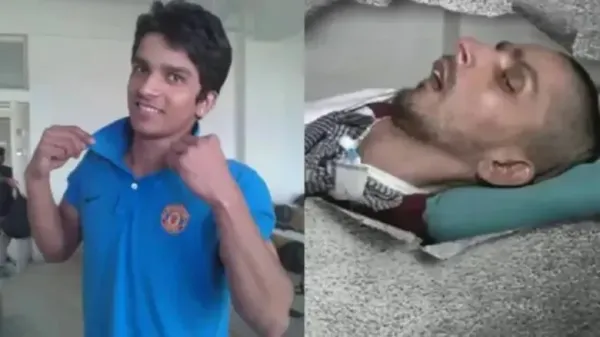
During the hearing of this case, the Supreme Court gave a new interpretation of the right to life. The bench argued that life does not merely mean breathing or maintaining physical existence. If a person is in a situation where he has become a prisoner of machines and there is no hope of his return, then forcibly keeping him alive is a violation of his human dignity. The court held that ‘right to life’ also includes ‘right to die with dignity’, especially when life has become synonymous with suffering.
Difference between passive and active euthanasia
Legally, there are two types of euthanasia. ‘Passive euthanasia’ means removing artificial treatments that keep the patient alive, such as a ventilator or feeding tube, so that death can occur naturally. The Supreme Court in India has allowed this with some strict conditions. In contrast, ‘active euthanasia’ involves the deliberate termination of life by giving a lethal injection or medication, which is completely illegal in India. Harish Rana’s case comes under passive euthanasia, where only life support will be removed.
Where is there legal recognition?
Many developed countries of the world have made strict laws regarding euthanasia. Active euthanasia under doctor’s supervision is also permitted in European countries such as the Netherlands, Belgium and Luxembourg. In Canada, Spain, Colombia and New Zealand, people suffering from incurable diseases also have this right. In US states like Oregon and California, as well as parts of Australia, ‘Physician Assisted Suicide’ is legal, provided the patient is in unbearable pain and gives clear consent.
-
Reform UK wins council by-election in latest boost for Nigel Farage

-
SIT moves Kerala HC to cancel bail of tantri in Sabarimala gold loss case
-
Here's How Odisha Dealing With The Cooking Gas Unavailability: From Temples To Hotels
-
Zendaya Seen Blushing As Paps Scream 'Mrs. Holland' Amid Wedding Buzz With Tom Holland

-
Eco‑tourism sites to get new amenities and trails for visitors in Uttar Pradesh
