Foreign ministers from across the European Union are preparing for a high-stakes meeting on 16 March, where discussions on military assistance to Ukrainesanctions policy, and the economic consequences of the conflict involving Iran are expected to dominate the agenda. The meeting reflects growing concern among European governments about the legal and policy implications of ongoing geopolitical crises affecting energy markets and regional security.
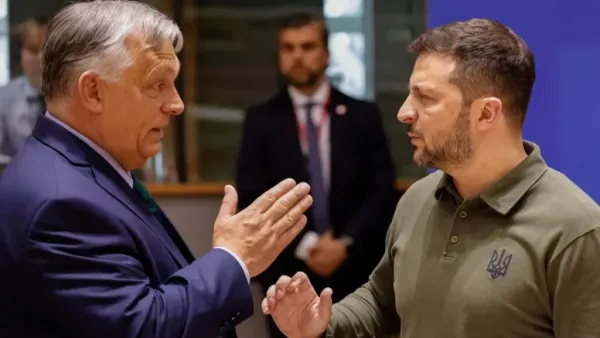
At the centre of the discussions is a proposed €90 billion financial assistance package designed to support Ukraine’s war-time economy and defence needs. EU leaders agreed in December to provide the funds in the form of long-term soft loans, but the legal mechanism required to raise and distribute the money has encountered resistance from Viktor Orbán’s government in Hungary.
Budapest has linked its veto to a separate dispute concerning oil supplies through the Druzhba Pipelinea major energy corridor transporting Russian crude oil into Central Europe. Hungarian officials have indicated they will block the loan’s legal approval until Russian oil transit to Hungary resumes. EU diplomats warn that the move risks undermining the bloc’s collective decision-making procedures and the legal commitments agreed upon by member state leaders.
European officials argue that once heads of government approve a financial mechanism, member states are expected to implement the legal framework necessary to execute the agreement. Failure to do so could create institutional tensions within EU governance structures and complicate the bloc’s foreign policy coordination.
Beyond financial assistance, ministers are also expected to discuss the broader security environment surrounding Ukraine. Several European governments are concerned that the conflict in the Middle East is diverting international attention and military resources away from Ukraine’s defence needs. Reports of shortages in advanced air-defence systems, including systems similar to the Patriot Missile Systemhave intensified calls for increased bilateral military assistance from European countries.
Energy security concerns linked to the conflict in Iran are also expected to feature prominently in the meeting. Member states that participate in the International Energy Agency recently agreed to release approximately 400 million barrels of oil from strategic reserves to stabilize global energy markets and ensure short-term supply stability.
However, energy analysts caution that disruptions to oil and gas production in the Gulf region could limit the effectiveness of these reserves, potentially covering demand for only a few months if the conflict continues to escalate. Rising oil prices have already triggered economic concerns across Europe, where governments remain sensitive to inflationary pressure following earlier energy crises.
Complicating the situation further is a recent decision by the United States Department of the Treasury to temporarily ease certain restrictions on Russian oil cargoes already at sea. European leaders have expressed concern that relaxing sanctions on Russia could weaken the coordinated international pressure designed to limit Moscow’s war financing.
Antonio Costapresident of the European Councilwarned that easing economic pressure on Russia could affect European security interests and undermine efforts to push Moscow toward negotiations over the war in Ukraine.
The meeting will also address potential new sanctions against Iranian officials accused of human rights violations. EU diplomats say ministers are expected to consider adding 19 individuals and entities linked to Iran’s government to the bloc’s sanctions list as part of the EU’s human-rights sanctions framework.
Separately, European policymakers are reassessing financial support for security missions abroad. The European Commission recently decided to end funding for a peacekeeping mission operated by the Rwandan Defence Force in Mozambique’s Cabo Delgado province after concerns emerged over Rwanda’s alleged involvement in conflict in the eastern region of Democratic Republic of the Congo.
The ministers’ agenda will also include discussions with Subrahmanyam Jaishankarthe foreign minister of India. Talks are expected to focus on strengthening defence and security cooperation between the EU and India alongside ongoing negotiations linked to a broader trade and economic partnership.
Analysts say the meeting illustrates the complex intersection of sanctions law, energy policy, and security strategy confronting European governments. As conflicts in Ukraine and the Middle East continue to reshape global markets and alliances, EU policymakers face mounting pressure to maintain policy coordination while protecting the bloc’s economic and security interests.
-
Madurai airport gets international status; Tuticorin now Thoothukudi airport
-
Six Nations bosses have 'mission impossible' battle on final day after trophy damaged

-
Beatrice and Eugenie urged to make big change - 'use your married names'
-
Arsenal player ratings vs Everton - Viktor Gyokeres and Max Dowman shine as 8/10 makes impact

-
Family 'devastated' after 'amazing, loving' mum found dead - murder investigation launched