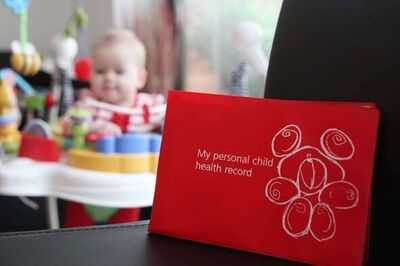

The UK Health Security Agency (UKHSA) has put out a fresh alert, encouraging parents to "look in their red book or speak to your GP practice". The UKHSA safeguards the public against infectious diseases and environmental threats, predominantly across England.
In a recent message shared on X today (March 16), the government body stated: "Vaccines protect your child from measles, whooping cough and other serious illnesses. If you're a dad, check if your child has missed vaccinations: look in their red book or speak to your GP practice."
It continues: "Vaccines help protect what matters most. Check your child's vaccines are up to date. Stay strong. Get vaccinated."
The NHS maintains that vaccines represent the most effective method of preventing numerous infectious diseases.
Your child's Personal Child Health Record (PCHR) is commonly referred to as the "red book". This document tracks your child's weight and height, the immunisations they have had, and other vital health information, reports the Mirror.
Parents can also record details themselves - it proves useful for monitoring their child's development. It's advisable to bring it along to clinic appointments, GP visits, or hospital consultations. In certain areas of the UK, a digital version is available.
According to the health service, receiving vaccines promptly is crucial for optimal protection. If you or your child has missed one, contact your GP to catch up.
The NHS website states: "Always get your vaccine and health information from trusted sources, such as the NHS or World Health Organisation (WHO). All the current evidence tells us that getting vaccinated is safer than not getting vaccinated."
This comes as the NHS alerts that measles and mumps are beginning to re-emerge in England, "even though the MMR vaccine is the best protection against both diseases". Measles can result in severe complications like meningitis, whilst mumps can lead to hearing loss.
The NHS advises: "If 95% of children receive the MMR vaccine, this would stop measles spreading completely. However, measles, mumps and rubella can quickly spread again if fewer than 90% of people are vaccinated. Everyone should be up to date with their routine vaccinations to give them the best protection."
By eight weeks, infants should have received their initial doses of the six-in-one vaccine, the Rotavirus vaccine, and the MenB vaccine. By 12 weeks, they should have their second dose of these vaccines.
They should have the third dose of the six-in-one by 16 weeks, and their first dose of the Pneumococcal vaccine, according to the NHS. Children born on or after January 1, 2025, should have their first dose of the MMRV vaccine by the age of one. As well as their second dose of the Pneumococcal vaccine and third dose of the MenB vaccine. To view the complete vaccine schedule, visit the NHS website.
The NHS adds: "Health reviews are carried out by your health visitor. They can be at home or in your GP surgery, baby clinic or children's centre. The reviews are really important and a great opportunity to celebrate how your child is growing and developing.
"They also support your child's learning and growth, and offer you any additional support if it's needed. Your child's very first health review takes place shortly after they're born. Reviews continue until they are at least two to two-and-a-half years old."
-
Gautam Gambhir Says He Wants To See MS Dhoni As India Head Coach One Day

-
Karnataka Govt Clears M. Chinnaswamy Stadium For IPL 2026 Matches, RCB Set To Host Season Opener After Safety Review
-
Fact Check: Did Virat Kohli Post An Instagram Story For Former Pakistan Skipper Sarfaraz Ahmed On His Retirement?

-
Anna University Results 2026 Declared For UG, PG Courses At coe1.annauniv.edu; Here’s How To Check Marksheet Online
-
'Whatever Happened Last Night Was...': Bigg Boss 18 Star Eisha Singh Apologises For Being 'Disrespectful' Towards Fans