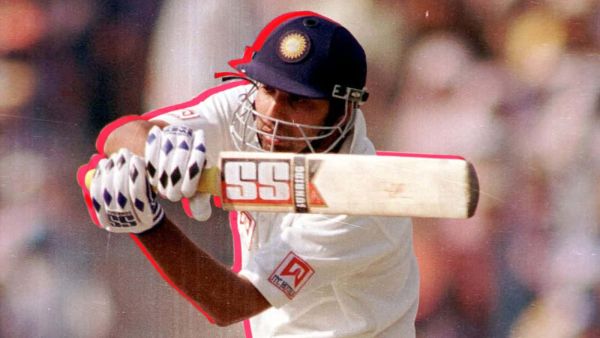
Some achievements in India’s cricket history have remained etched forever in the minds of all fans. A few examples are Kapil Dev‘s brilliant catch to dismiss Viv Richards in the 1983 World Cup final, Anil Kumble’s 10 wickets in one innings against Pakistan in 1999 and VVS Laxman’s 281 against Australia in 2001.
March 15, 2026, was the 25th anniversary of Laxman’s unforgettable innings.
To provide a brief recap of the game, the contest began on March 11, 2001, and Australia batted first to score 445 in its first innings. Skipper Steve Waugh scored 110 for the visiting team, while for India, off-spinner Harbhajan Singh captured 7 wickets for 123 runs. In reply, India was bundled out for 171 and the Aussies enforced the follow-on.

In the second innings, the match took a turn in favour of India. Laxman, who came in at number 3, found a solid partner in Rahul Dravid, who came to the crease as the number six and the two of them took India’s score from 232 for 4 all the way past 600 without parting company.
When Laxman was finally caught at point by Ricky Ponting off the bowling of Glenn McGrath for 281, he and Dravid had not only averted an embarrassing defeat for India but also completely turned the tables upon their opponents. India finally declared at 657 for 7 and thereby set Australia a target of 384 to win. Harbhajan Singh again ran through the side by taking 6 wickets for 73 runs and ensured that India won by 171 runs.
It seemed to be a miracle
Ironically, before the start of the match, Laxman was not fully fit. Moreover, he had been putting up a series of mediocre performances and was about to be dropped from the side. That knock of 281 came like a miracle. It revived his dying career, besides giving a victory to India.
In his autobiography titled “281 and Beyond,” Laxman has written that during a practice session at the Eden Gardens, his back went into a spasm. He felt that he would have no chance of playing. Australian physio Andrew Leipus, who was then serving the Indian team, went to work and massaged his back for an hour. It made Laxman feel a little better, though far from fully fit.
Eventually, although Laxman was only 60 per cent fit, coach John Wright and skipper Sourav Ganguly decided to include Laxman in the team. This act of faith on the part of the coach and the captain gave Laxman greater confidence.
Laxman promoted in the batting order
In the second innings, Laxman (who had scored a sound 59 in the first innings), was promoted to the no 3 spot. It turned out to be the right decision. But Laxman felt bad that he had been given that slot over Rahul Dravid.
To the credit of Dravid, not once did he show any resentment at being pushed down the batting order. Earlier, Dravid had excelled at no 3 and he was the vice-captain of the team. Instead, when Dravid walked into the middle to join Laxman at 232 for 4, he told the Hyderabadi that they must bat throughout the day and not be parted.
It also helped that both Laxman and Dravid had the same approach towards building up their innings. They never look at the scoreboard. Their minds stay focused on the job in the middle. Both of them knew that the more time they spent at the crease, the better it would be for India. The runs would come as and when they came. The main goal was to save the Test match and not lose it.
First target achieved on fourth day
By the end of the fourth day, their first target had been achieved. The duo were still not out and India’s total was 589 for 4. Laxman at 275 was within striking distance of his first 300. It would be the first-ever 300 for India in Test cricket. Till then, no Indian batter had scored 300. Three years later, Virender Sehwag became the first one to score 300 for India.
But the fourth day had been tough going, especially for Laxman. Throughout the day, he had been battling back spasms. Dravid too was not well. He was fighting dehydration because he was recovering from a fever. But the joy in the Indian dressing room when they returned unbeaten at the end of the fourth day was incredible.
Go for quick runs, said Wright
On the morning of the fifth and last day, John Wright walked up to Laxman and told him that the plan was to bat for an hour on the last day and declare. India needed quick runs. Coach Wright could sense a chance of winning if India could grab some early wickets after the declaration. So, excitement in the Indian camp was high.
Laxman may have been close to 300, but fate had other plans in mind for him. The Australian bowlers were bowling well outside the off stump to check the flow of runs. Laxman tried to slash a delivery from McGrath only to end up spooning it to the point where Ricky Ponting took the catch.
Laxman was not disappointed
Was he disappointed? In his autobiography, Laxman has written: “I was not disappointed. I have never played my cricket that way. Had I reached that individual milestone of 300, it would have been terrific. But India needed quick runs within the first hour and I decided to go for my shots and got out. If I had to play that match again, that is what I would do again. I walked off immensely satisfied. I had made 281 in a crisis and put our team in a position from where we could pull off a victory against the odds. Isn’t that the reason for playing the game?”
Finally, India did get the victory that Laxman and Rahul Dravid had aimed for. At that time, Australia was the most dominant force in Test cricket. So, beating the Aussies after following on was a hugely significant achievement.
Laxman’s innings and the Test match were very special for Indian cricket because they created the belief that India could come back from difficult situations to topple strong rivals. It gave a new life and confidence to Indian players and fans across the land.
-
Mikel Arteta shares Arsenal injury update for Carabao Cup final after new double Leverkusen blow

-
Pensions timebomb means you'll have to work until you're 75 as experts warn of one hope

-
F1 LIVE: Ferrari's protest fears as Lewis Hamilton and Max Verstappen disagree

-
Shubman Gill Roasts Arshdeep Singh At 2026 BCCI Naman Awards, Speaks About 2023 World Cup

-
The Growing Importance of Secure Digital Infrastructure in the Era of Cloud and AI