
Listen to this article in summarized format
Loading...
××
Subscribe to

Unlock AI Briefing and Premium Content
New Year Offer 24 Hours Left
Subscribe NowAlready a member? Sign In
What's Included
- Exclusive Stories
- Daily ePaper Access
- Smart Market Tools
- Curated Investment Ideas
- Ad-lite Experience
Subscription

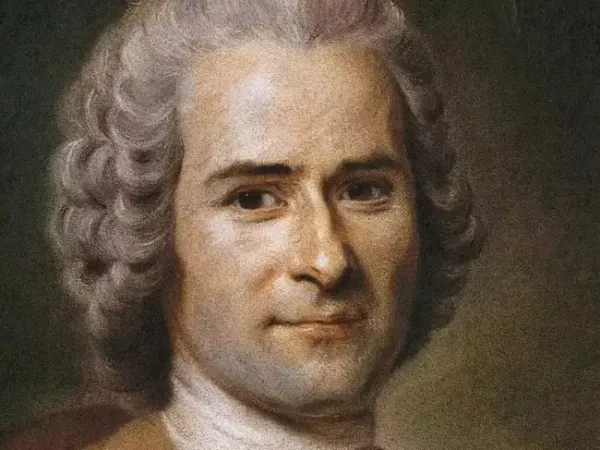
French-Swiss philosopher Jean-Jacques Rousseau was one of the most influential figures in the Age of Enlightenment. He dared to question people blindly following rules created by authority and power. Much of his writing focused on equality and liberty, including the role of the citizens in shaping the government. According to Rousseau, humans were born free, but social systems and inequality made them lose their freedom. The philosopher’s words and thoughts influenced educational reforms, democratic ideas and even political movements across Europe.
Today, let’s take a look at a quote by Jean-Jacques Rousseau that encapsulates his ideologies, perspectives, and beliefs about the world and humans in general. The thought-provoking statement is this: ‘To be sane in a world of madmen is in itself madness.’
The quote reflects the paradox of being rational in a society that prides itself on celebrating conformity rather than embracing the truth. An individual is always questioned when he steps out of the box and tries to think differently or critically, rather than following the quintessential path. Challenging popular beliefs is often perceived as rebellious or strange and sometimes even unacceptable. A majority of the human population has categorised what is normal and what is abnormal and those who do not belong in the socially acceptable list are often labelled incorrect or unreasonable, and even irrational. People do not pause to even understand whether a different perspective is logical or thoughtful.
A strict advocate of embracing individuality, Jean-Jacques Rousseau showcases how social pressure can distort the definition of what is actually meant by sanity. Even if a system or a habit might be flawed or harmful, just because no one has a problem with it, society makes it mandatory for everyone to adhere to the predefined set of rules. And for those who refuse to participate? They are generally treated as outsiders or perceived as outcasts. This makes the life of independent thinkers difficult and isolating as they often find themselves standing alone against collective opinion. But change in society only comes when a person is brave enough to appear different, challenge existing notions and bring new ideas to the world.
As per Jean-Jacques Rousseau, what society calls ‘madness’ is actually clear thinking in a world that is only confused and yet pretends to be sane. But the philosopher emphasises maintaining reason and integrity in such circumstances, as it is your strength and belief in oneself which can uproot the group mentality, exposing the fragile nature of widely accepted truths. Human communities set rules, traditions, and belief systems that become deeply ingrained over time. Once these systems are accepted by the majority, they begin to define what is considered reasonable, moral, or sensible.
These definitions are not always based on truth or justice but can be built on inequality, outdated ideas and prejudice, continuing simply because people are afraid to challenge them. But someone steps up, denying to accept these flawed norms, they may seem irrational to others, much like how women were dubbed as witches and burnt on pyres in the 17th century because they lived outside social expectations. Collective behaviour can sometimes drift so far from reason that the person who remains thoughtful and balanced appears abnormal. In other words, ‘madness’ is a socially constructed concept and Rousseau encourages individuals to constantly question widely accepted beliefs despite receiving backlash, as history is proof that society eventually considers an outsider right long after their ideas were dismissed.
Jean-Jacques Rousseau, born on June 28, 1712, in Geneva, Switzerland, rose to prominence in 1750 after winning an essay contest by the Academy of Dijon with A Discourse on the Sciences and Arts. In the essay, he controversially argued that progress in science and art had corrupted human virtue and morality. Two of his most important works are Émile (on education) and The Social Contract (on political philosophy), both published in 1762. The books sparked widespread controversy and were banned in France, forcing Rousseau into exile. His ideas, however, had a lasting impact on modern thought, influencing Immanuel Kant’s moral philosophy, shaping Romanticism, and inspiring political ideals that fueled the French Revolution.
Jean-Jacques Rousseau was a firm believer in stoicism, which made him a Stoic. Stoics believed that nature contained the divine, so it was perfectly ordered and rational. Therefore, to live a virtuous and well-lived life, an individual should master their own thoughts and feelings. Stoics beleived that humans are driven by 4 primary passions. They were: Justice, wisdom, temperance and courage.
Today, let’s take a look at a quote by Jean-Jacques Rousseau that encapsulates his ideologies, perspectives, and beliefs about the world and humans in general. The thought-provoking statement is this: ‘To be sane in a world of madmen is in itself madness.’
Quote of the day by Jean-Jacques Rousseau: Loneliness of independent thinking
The quote reflects the paradox of being rational in a society that prides itself on celebrating conformity rather than embracing the truth. An individual is always questioned when he steps out of the box and tries to think differently or critically, rather than following the quintessential path. Challenging popular beliefs is often perceived as rebellious or strange and sometimes even unacceptable. A majority of the human population has categorised what is normal and what is abnormal and those who do not belong in the socially acceptable list are often labelled incorrect or unreasonable, and even irrational. People do not pause to even understand whether a different perspective is logical or thoughtful.
A strict advocate of embracing individuality, Jean-Jacques Rousseau showcases how social pressure can distort the definition of what is actually meant by sanity. Even if a system or a habit might be flawed or harmful, just because no one has a problem with it, society makes it mandatory for everyone to adhere to the predefined set of rules. And for those who refuse to participate? They are generally treated as outsiders or perceived as outcasts. This makes the life of independent thinkers difficult and isolating as they often find themselves standing alone against collective opinion. But change in society only comes when a person is brave enough to appear different, challenge existing notions and bring new ideas to the world.
Jean-Jacques Rousseau quote of the day: Society’s power to redefine reality
As per Jean-Jacques Rousseau, what society calls ‘madness’ is actually clear thinking in a world that is only confused and yet pretends to be sane. But the philosopher emphasises maintaining reason and integrity in such circumstances, as it is your strength and belief in oneself which can uproot the group mentality, exposing the fragile nature of widely accepted truths. Human communities set rules, traditions, and belief systems that become deeply ingrained over time. Once these systems are accepted by the majority, they begin to define what is considered reasonable, moral, or sensible.
These definitions are not always based on truth or justice but can be built on inequality, outdated ideas and prejudice, continuing simply because people are afraid to challenge them. But someone steps up, denying to accept these flawed norms, they may seem irrational to others, much like how women were dubbed as witches and burnt on pyres in the 17th century because they lived outside social expectations. Collective behaviour can sometimes drift so far from reason that the person who remains thoughtful and balanced appears abnormal. In other words, ‘madness’ is a socially constructed concept and Rousseau encourages individuals to constantly question widely accepted beliefs despite receiving backlash, as history is proof that society eventually considers an outsider right long after their ideas were dismissed.
More about Jean-Jacques Rousseau
Jean-Jacques Rousseau, born on June 28, 1712, in Geneva, Switzerland, rose to prominence in 1750 after winning an essay contest by the Academy of Dijon with A Discourse on the Sciences and Arts. In the essay, he controversially argued that progress in science and art had corrupted human virtue and morality. Two of his most important works are Émile (on education) and The Social Contract (on political philosophy), both published in 1762. The books sparked widespread controversy and were banned in France, forcing Rousseau into exile. His ideas, however, had a lasting impact on modern thought, influencing Immanuel Kant’s moral philosophy, shaping Romanticism, and inspiring political ideals that fueled the French Revolution.
Jean-Jacques Rousseau was a firm believer in stoicism, which made him a Stoic. Stoics believed that nature contained the divine, so it was perfectly ordered and rational. Therefore, to live a virtuous and well-lived life, an individual should master their own thoughts and feelings. Stoics beleived that humans are driven by 4 primary passions. They were: Justice, wisdom, temperance and courage.
( Originally published on Mar 14, 2026 )