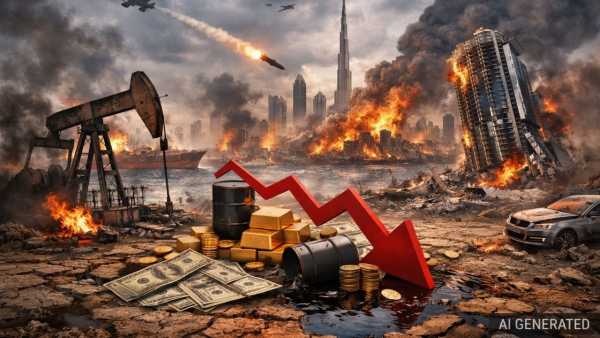
The ongoing war with Iran in the Middle East is no longer limited to just military conflict, but its impact is visible on the economy of the entire world. This situation is becoming very serious especially for the Gulf countries. Economists at global investment bank Goldman Sachs believe that if this war continues for a long time and traffic in the Strait of Hormuz remains closed, then the Gulf region may face the biggest economic recession since the 1990s.
Experts estimate that if the Strait of Hormuz remains closed for about two months, the economy of Qatar and Kuwait may suffer a major blow. The GDP of these two countries may decline by about 14 percent. This decline will be so great that it will be considered the most serious economic crisis since the Gulf War in the early 1990s. At that time, Iraq's attack on Kuwait had shaken the economy of the entire region. Goldman Sachs economist Farooq Sousa says that the war could have a deep impact on trade, energy exports and investment activities. This may weaken the oil-based economy of these countries.
Shock to Saudi Arabia and UAE also
Although, the situation of Saudi Arabia and United Arab Emirates is said to be slightly better than Qatar and Kuwait, but these countries also cannot be completely saved from economic losses. It is estimated that Saudi Arabia's GDP may decline by about 3 percent and UAE's GDP by about 5 percent. These countries may get some relief because they have the ability to export oil through routes other than the Strait of Hormuz. Besides, they may also get some economic benefit from the increase in oil prices.
Hormuz waterway becomes the biggest crisis
The center of this entire crisis is the Strait of Hormuz, which is one of the most important maritime trade routes in the world. About one-fifth of the world's total oil exports pass through this waterway. If traffic stops here, it impacts not only the Gulf countries but the energy market of the entire world. Due to obstruction in this route due to war, a sharp rise in oil prices has been seen. Recently the price of Brent crude crossed $ 103 per barrel. Due to this reason, instability in the global gas market has also increased.
Impact on gas and industry also
Qatar is one of the world's largest exporters of LNG i.e. liquefied natural gas. Due to the war, its gas exports have declined, which has also created a stir in the international gas market. Not only oil and gas, but other industries are also getting affected. For example, Bahrain's world's largest aluminum smelter has had to reduce production due to disruptions in raw material and energy supplies.
Crisis in non-oil sector also
The economy of Gulf countries is no longer dependent only on oil. In the last few years, these countries have made huge expansion in sectors like tourism, real estate and foreign investment, but due to war, uncertainty is increasing in these sectors also. If the conflict continues for a long time, investor confidence may decrease, tourism may decline and big projects may also be affected.
What could happen next?
Many economists believe that if the situation becomes normal soon, then the Gulf countries can gradually recover from this crisis. But if the war continues for a long time, its impact on economic growth and investment can be felt for many years. There is definitely nervousness in the markets at the moment, but bond investors have not yet expressed much concern about the financial condition of the sector. Experts say that this concern can become serious only if the war drags on for much longer.
-
I will play in all positions and show now’: Tilak Varma’s World Cup redemption — and the coach behind every step

-
Rajya Sabha polls: BJP’s Sanjay Bhatia, Congress’s Karamvir Boudh elected

-
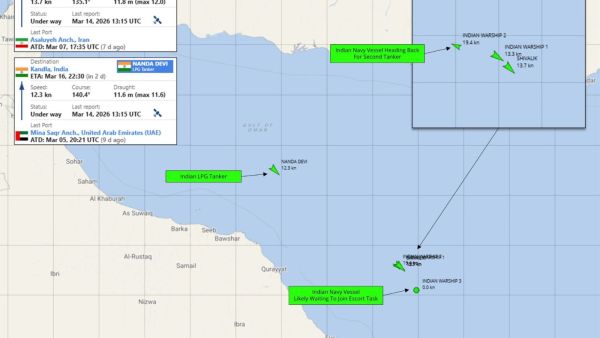
Indian LPG vessel ‘Nanda Devi’ to arrive at Kandla Port today
-
SP leader booked for claim on Azam Khan’s Eid remark regarding West Asia

-
'Can Do Anything': Trump Warns US Could ‘Take’ Cuba Amid Blackout Crisis After Venezuela Takeover