Afghanistan cricketers have reacted strongly after a reported Pakistani airstrike on the 28th night of Ramadan at the Omid drug rehabilitation hospital in Kabul allegedly killed at least 400 people and injured around 250.
Pakistan rejected the claims as false and misleading, stating that it targeted military installations and terrorist support infrastructure of the Afghan Taliban and Pakistani Taliban militants in Kabul and Nangarhar. Islamabad said the hospital claim was a deliberate misrepresentation aimed at stirring sentiments and covering up support for cross-border terrorism, adding that its targeting was precise and undertaken to avoid collateral damage. The Afghan Taliban government said large parts of the hospital were destroyed and rescue teams were still recovering bodies as of Tuesday morning. Independent verification has not been possible.
Reaction of Afghanistan players on Pakistan's strike on hospital
Mohammad Nabi
Former Afghanistan captain Mohammad Nabi was among the first to react. He said hope was extinguished at a hospital that night, that young men seeking treatment were killed, and that mothers waited at the gates calling their sons’ names. “On the 28th night of Ramadan, their lives were cut short,” he wrote.Rashid Khan
Leg-spinner Rashid Khan described the reported strike as a war crime. “I am deeply saddened by the latest reports of civilian casualties as a result of Pakistani airstrikes in Kabul,” he said. “Targeting civilian homes, educational facilities or medical infrastructure, either intentional or by mistake, is a war crime. The sheer disregard for human lives, especially during the holy month of Ramadan, is deeply concerning. It will only fuel division and hatred.” He also called on the UN and human rights agencies to investigate the incident.Naveen-ul-Haq
Afghanistan cricketer Naveen-ul-Haq drew a comparison between the reported attack on the rehabilitation centre in Kabul and Israel’s military campaign in Gaza. In a social media post, he said it was “hard to find any difference” between Israel’s actions and what he described as the Pakistani regime’s conduct.Wafadar Momand
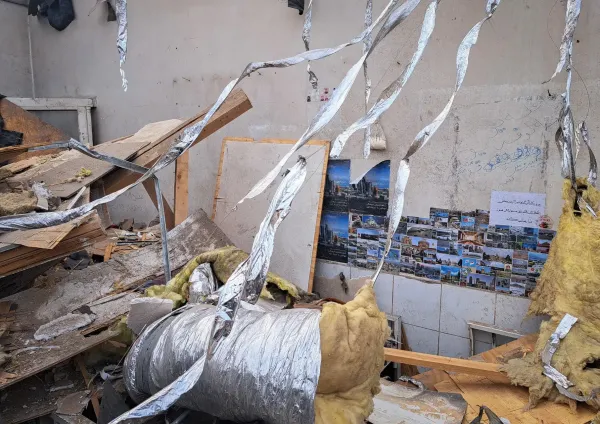
Afghanistan cricketer Wafadar Momand also condemned the reported strikes. He wrote in a social media post that a hospital is meant to save human lives and blood should not be shed there.Debris lies in a room of a drug users rehabilitation hospital destroyed in what the Taliban said was a Pakistani air strike in Kabul, Afghanistan.
Pakistan's strike killed 400 in Afghanistan's 2000 bed hospital
The Omid hospital is a 2,000-bed state-run facility established in 2016. In addition to medical treatment, it offers vocational training in tailoring and carpentry. The reported strike took place at around 9 p.m. local time and destroyed large parts of the building. “When I arrived last night, I saw that everything was burning, people were burning,” ambulance driver Haji Fahim told Reuters. “Early in the morning they called me again and told me to come back because there are still bodies under the rubble.”Pakistan rejected the claims as false and misleading, stating that it targeted military installations and terrorist support infrastructure of the Afghan Taliban and Pakistani Taliban militants in Kabul and Nangarhar. Islamabad said the hospital claim was a deliberate misrepresentation aimed at stirring sentiments and covering up support for cross-border terrorism, adding that its targeting was precise and undertaken to avoid collateral damage. The Afghan Taliban government said large parts of the hospital were destroyed and rescue teams were still recovering bodies as of Tuesday morning. Independent verification has not been possible.