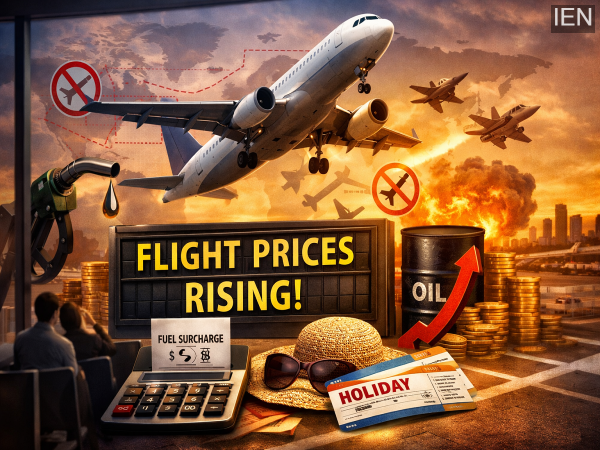
Air travel could become significantly more expensive this summer as multiple global factors begin to impact airline operations. Rising crude oil prices, ongoing geopolitical tensions in the Middle East, and restricted airspace routes are collectively increasing operational costs for airlines. As a result, passengers may face higher ticket prices during the peak holiday season.
Industry experts warn that if current conditions persist, travelers planning summer vacations—especially international trips—should be prepared for steeper airfares and limited seat availability.
Rising Fuel Costs Driving Ticket Price Hikes
One of the primary reasons behind the surge in airfares is the sharp increase in crude oil prices. Aviation turbine fuel (ATF), which is derived from crude oil, forms a major portion of airline operating expenses.
According to aviation analysts, ATF typically accounts for nearly 30% to 40% of an airline’s total costs. With global crude oil prices jumping from around $70–$72 per barrel to over $100 per barrel in a short span, airlines are facing a substantial rise in expenses.
To offset these costs, several carriers have begun passing the burden onto passengers through increased fares and additional charges.
Airlines Introduce Fuel Surcharges
Major airlines, including IndiGo and Air India, have already started implementing fuel surcharges.
-
IndiGo introduced a fuel charge from March 14, citing a sharp rise in jet fuel prices based on industry data.
-
Air India has announced a phased rollout of fuel surcharges across its network. Charges begin at around ₹399 for domestic and regional routes and can go up to $200 for long-haul international flights, including routes to North America and Australia.
Similarly, Akasa Air has introduced a fuel surcharge ranging between ₹199 and ₹1,300, depending on the route and distance.
Airlines say these adjustments are necessary to sustain operations amid rising costs. Without such measures, certain routes could become financially unviable.
Airspace Restrictions Increasing Flight Duration
Apart from fuel prices, restricted airspace is another major challenge for airlines. Due to geopolitical tensions, Indian carriers are unable to use certain air corridors, including Pakistani airspace. Additionally, parts of the Middle East region are facing operational limitations.
This has forced airlines to take longer routes for several international flights, especially those heading to Europe and North America. Longer routes mean:
-
Increased flight duration
-
Higher fuel consumption
-
Additional operational costs
For instance, flights from Mumbai to London are now taking significantly longer, sometimes extending beyond 10 hours due to detours.
Impact on Connectivity and Seat Availability
The Middle East serves as a crucial transit hub for Indian travelers flying to Europe, Africa, and North America. Cities like Dubai, Doha, and Abu Dhabi handle nearly 40% of such passenger traffic.
However, disruptions in the region have forced airlines to reduce capacity on several routes. This has led to:
-
Fewer available seats
-
Increased demand pressure
-
Rapid rise in ticket prices
The impact is particularly severe for destinations without direct flights from India, such as Madrid and Barcelona, where travelers rely heavily on connecting flights through Gulf hubs.
Summer Travel May Become Costlier
Experts believe that if geopolitical tensions continue into the summer months, airfare inflation could intensify further. Reduced connectivity via Middle Eastern hubs may push travelers to explore alternative transit points like Singapore, Hong Kong, or Frankfurt.
Additionally, destinations such as Colombo and Thailand may see increased demand as travelers look for more accessible and affordable options.
Limited Gains for Indian Airlines
Despite rising ticket prices, Indian airlines may not benefit significantly. The primary reason is the limited availability of wide-body aircraft required for long-haul international routes.
Experts suggest that prolonged disruption in the Middle East could even negatively impact Indian carriers, as the region is one of their most profitable markets.
What Lies Ahead for the Aviation Sector
The future of the aviation industry largely depends on how global crude oil prices and geopolitical tensions evolve. If fuel prices remain high and airfares continue to rise, passenger demand could weaken.
For now, the sector remains in a phase of uncertainty. A quick resolution in geopolitical conflicts could stabilize prices, but prolonged disruptions may lead to sustained high fares and travel challenges for passengers worldwide.
Final Takeaway
With multiple cost pressures mounting on airlines, air travel this summer is likely to become more expensive than usual. Travelers are advised to plan early, compare fares, and stay updated on route changes to avoid last-minute surprises.
As the situation unfolds, both airlines and passengers will need to adapt to a rapidly changing travel landscape shaped by global economic and geopolitical factors.
-
KVS Admission 2026: Preparations Begin for Kendriya Vidyalaya Admissions 2026; Class 1 Selection via Lottery—Know the Full Process

-
Post Office: Your Parcel Will Now Arrive Within 24 Hours; Government Set to Launch a Special Scheme..

-
What Are White, Red, and pink-collar jobs? Learn the Differences Between Them

-
Banking: Up to four nominees can now be added to bank accounts; this will help reduce unclaimed deposits..
-
Focus on Student Health: UGC Issues New Guidelines for Colleges and Universities