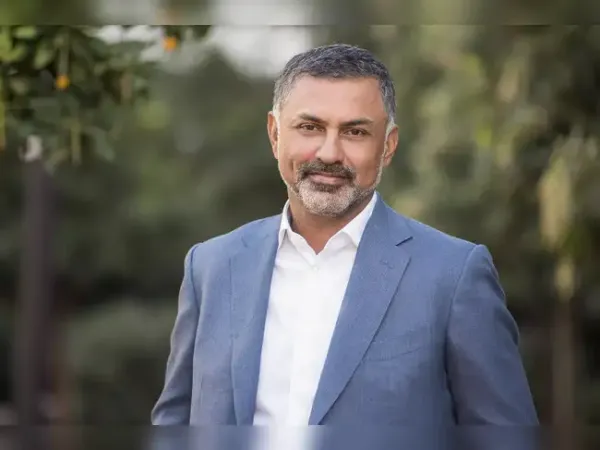
In Silicon Valley, where billion-dollar acquisitions are the order of the day in the AI age, Nikesh Arora, CEO of cybersecurity provider Palo Alto Networks, said most companies get mergers and acquisitions (M&A) wrong, not because of what they buy but because of how they execute after the deal.
“I don't think many tech companies execute M&A well,” Arora said, appearing on a podcast, stressing his approach to integration and leadership.
For Arora, the purchase price of a deal is merely an “irrelevant artifact”, and what matters more is what the acquirer can build from it. “If it's going to work, it's going to work phenomenally well, or you're going to screw it up. It's not what you paid; it's what you're able to do with it,” he said, citing Facebook’s Instagram and Google’s YouTube as examples of expensive acquisitions that paid off in a huge way.
Arora described Palo Alto’s M&A philosophy as founder-led and execution-driven. “In tech, when you buy a company, you buy a team, you buy an existing product, and you buy a roadmap for the future,” he said, adding, “The question is: can you deliver on that roadmap? Can you accelerate it?”
Also Read: Palo Alto Networks plans dual listing in Tel Aviv after closing $25 billion CyberArk deal
Before any deal closes, Palo Alto Networks runs what Arora calls a “roadmap redesign” process. “We sign a term sheet, and we ask the founders to sit with our team and redesign the product roadmap so we like it and they like it. If we can’t align, we don’t buy the company.”
Once acquired, founders don’t lose power. “We make them in charge,” Arora said. “My teams have to work for them, which makes them really unhappy. But I tell them: these guys went out there, raised money, kicked your ass in your category, and you want them to work for you? That makes no sense.”
When Arora took over Palo Alto Networks in 2018, the cybersecurity industry was still in its infancy. “Cybersecurity was one of the youngest tech subsectors. It emerged alongside connectivity, and as connectivity expanded, so did the threat surface," he had told ET earlier this year in an interaction.
Arora said the market was fragmented back then — some companies focused on network protection, others on endpoints or cloud infrastructure. “Palo Alto was in one of those lanes. But in other tech sectors, we saw functionality consolidating into platforms rather than fragmented slivers. So, we asked, where is technology headed next? Cloud was clearly coming, and even AI was being discussed.”
That helped the company shape its acquisition strategy. "Over the last seven years, we’ve delivered roughly 120-130 new products, of which about 25-30% were acquisitions, with the remaining being in-house. We expanded into multiple product categories within security. That breadth allowed us to land more customers," Arora told ET.
“I don't think many tech companies execute M&A well,” Arora said, appearing on a podcast, stressing his approach to integration and leadership.
For Arora, the purchase price of a deal is merely an “irrelevant artifact”, and what matters more is what the acquirer can build from it. “If it's going to work, it's going to work phenomenally well, or you're going to screw it up. It's not what you paid; it's what you're able to do with it,” he said, citing Facebook’s Instagram and Google’s YouTube as examples of expensive acquisitions that paid off in a huge way.
Arora described Palo Alto’s M&A philosophy as founder-led and execution-driven. “In tech, when you buy a company, you buy a team, you buy an existing product, and you buy a roadmap for the future,” he said, adding, “The question is: can you deliver on that roadmap? Can you accelerate it?”
Also Read: Palo Alto Networks plans dual listing in Tel Aviv after closing $25 billion CyberArk deal
Before any deal closes, Palo Alto Networks runs what Arora calls a “roadmap redesign” process. “We sign a term sheet, and we ask the founders to sit with our team and redesign the product roadmap so we like it and they like it. If we can’t align, we don’t buy the company.”
Once acquired, founders don’t lose power. “We make them in charge,” Arora said. “My teams have to work for them, which makes them really unhappy. But I tell them: these guys went out there, raised money, kicked your ass in your category, and you want them to work for you? That makes no sense.”
When Arora took over Palo Alto Networks in 2018, the cybersecurity industry was still in its infancy. “Cybersecurity was one of the youngest tech subsectors. It emerged alongside connectivity, and as connectivity expanded, so did the threat surface," he had told ET earlier this year in an interaction.
Arora said the market was fragmented back then — some companies focused on network protection, others on endpoints or cloud infrastructure. “Palo Alto was in one of those lanes. But in other tech sectors, we saw functionality consolidating into platforms rather than fragmented slivers. So, we asked, where is technology headed next? Cloud was clearly coming, and even AI was being discussed.”
That helped the company shape its acquisition strategy. "Over the last seven years, we’ve delivered roughly 120-130 new products, of which about 25-30% were acquisitions, with the remaining being in-house. We expanded into multiple product categories within security. That breadth allowed us to land more customers," Arora told ET.