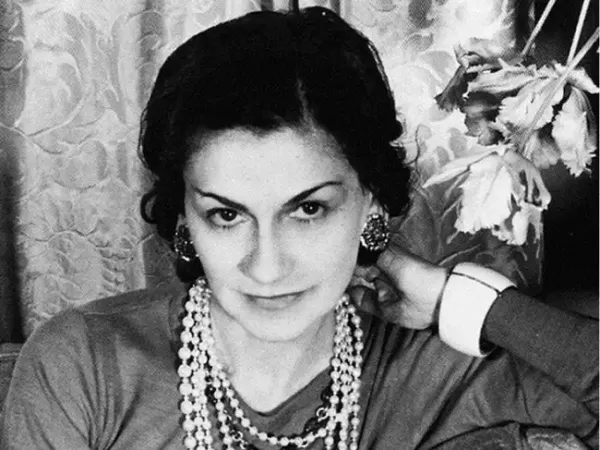
Beauty, like life is transient. Fashion icon Coco Chanel once reminisced on beauty and youth being ephemeral and how our life and individual experiences shape our appearances. For the unversed, Chanel was a celebrated fashion designer and entrepreneur, who introduced the now classic 'casual chic' fashion. Her signature scent Chanel No 5 is still a bestseller today and has been represented by various evergreen divas such as Marilyn Monroe, Nicole Kidman, Brad Pitt and Marion Cotillard.
Chanel No. 5, introduced in 1921 by Coco Chanel, marked her debut fragrance. Created by Ernest Beaux, its distinctive scent became iconic. Equally significant, the perfume’s minimalist bottle design played a crucial role in shaping its identity and enduring global recognition.
Quote Of The Day By Coco Chanel On How Beauty Changes Through Ages
The fashion designer once stated: “Nature gives you the face you have at twenty. Life shapes the face you have at thirty. But at fifty you get the face you deserve."Deeper Meaning Behind This Quote
The quote by Coco Chanel reflects a powerful truth about personal responsibility and inner growth. It suggests that while youth is largely shaped by biology and genetics, the years that follow are influenced by choices, experiences, and emotional patterns. By thirty, life’s struggles, habits, and attitudes begin to leave visible marks—stress, joy, resilience, or bitterness subtly shape one’s expression.By fifty, however, the “face you deserve” symbolizes the cumulative result of how you have lived. It is not about physical beauty, but about character revealed through presence—kindness softens features, while negativity hardens them. The quote emphasizes accountability: your mindset, actions, and emotional responses sculpt not just your life, but your very appearance.
Ultimately, it highlights that true beauty is not inherited—it is built over time through self-awareness, compassion, and the way one chooses to live.
Relevance Of Her Observation
The words of Coco Chanel remain deeply relevant in today’s fast-paced, image-conscious world. The quote highlights how, beyond youth, our lives are shaped less by appearance and more by attitude, choices, and emotional experiences. In an age dominated by social media filters and cosmetic enhancements, it serves as a reminder that true expression cannot be altered artificially forever.By thirty, stress, ambition, kindness, or negativity begin to reflect subtly in how one carries oneself. By fifty, these inner qualities become unmistakable, revealing a person’s character more than their features. The quote emphasizes accountability—how we think, act, and treat others ultimately defines our presence.
Its relevance lies in encouraging self-awareness and emotional well-being over superficial beauty. It suggests that investing in kindness, resilience, and authenticity is what truly shapes a lasting and meaningful identity over time.
Early Life and Rise of a Fashion Visionary
Coco Chanel, born Gabrielle Bonheur Chanel on 19 August 1883, emerged as one of the most influential figures in modern fashion. A pioneering French designer and entrepreneur, she established the globally renowned Chanel label, transforming it into a symbol of elegance and innovation. In the years following World War I, she revolutionised women’s style by introducing relaxed, practical clothing that replaced rigid and uncomfortable designs. Her vision redefined femininity, blending comfort with understated sophistication.Recognised for her far-reaching impact, Chanel earned a place on Time magazine’s list of the 100 most influential individuals of the twentieth century. Her creativity extended beyond garments into accessories and luxury products, including jewellery, handbags, and perfumes. One of her most enduring creations, Chanel No. 5, became a timeless fragrance recognised worldwide. She also introduced the iconic interlocking “CC” emblem, which has represented the brand since the 1920s.
War Years and Controversial Associations
The outbreak of World War II forced the closure of her couture operations in 1939. During the German occupation of France, Chanel remained in the country and became entangled in controversy due to her associations with occupying forces and the Vichy administration. Later-released records indicated links between her and the Sicherheitsdienst, raising serious questions about her wartime activities.During this period, she was involved with Baron Hans Günther von Dincklage, a German diplomat and intelligence operative she had known before the conflict. Reports suggest she was even connected to a diplomatic initiative aimed at conveying a peace proposal to Winston Churchill in 1943. Following the war’s conclusion, she was questioned regarding her associations but avoided prosecution, reportedly aided by Churchill’s influence. She then relocated to Switzerland for several years.
Comeback and Legacy
In 1954, Chanel returned to Paris and relaunched her fashion house with financial backing from businessman Pierre Wertheimer, despite their earlier disputes over perfume rights. Her comeback collection initially faced scepticism in France due to lingering wartime controversies. However, critics in the United States and Britain embraced her designs, praising their fresh approach that harmonised youthful energy with refined fashion.Chanel continued to shape the fashion world until her death on 10 January 1971 at the Hôtel Ritz Paris, where she had lived for more than three decades. Her legacy remains deeply embedded in global style, reflecting both groundbreaking creativity and a complex personal history.