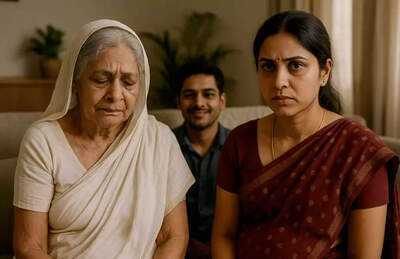
For decades, India's judiciary has faced a troubling moral boundary: when does medical intervention that prolongs life cease to respect a patient's interests and dignity? The issue resurfaced after Supreme Court allowed the withdrawal of life-sustaining treatment for Harish Rana, who has remained in a permanent vegetative state for over a decade. The decision earlier this month offers relief to his family. But its broader significance lies in reinforcing a structured legal and medical process for emotionally and ethically fraught choices. At its core, the judgment recognises a humane principle: dignity lies not only in how people live, but also in how they are allowed to die.
The ruling applies a framework the court has gradually developed on 'passive euthanasia' - withdrawal of life-support - and advance medical directives. It allows doctors - after review by medical boards and with family consent - to discontinue artificial life-support when recovery is no longer realistic. Crucially, the court has put in place safeguards - multiple medical opinions, documentation and procedural scrutiny to prevent misuse.
The next step is to ensure the framework doesn't remain confined to judicial orders. Parliament should move toward a law on euthanasia that codifies these principles. Operational changes are equally important. Hospitals need protocols, ethics committees and documentation practices. In the Netherlands and Belgium, strict reporting rules, second medical opinions and post-procedure review committees scrutinise each case. As India moves forward to take a decision, compassion and caution must evolve together - protecting vulnerable patients while allowing families and doctors a humane, regulated path when medicine has little left to offer.
The ruling applies a framework the court has gradually developed on 'passive euthanasia' - withdrawal of life-support - and advance medical directives. It allows doctors - after review by medical boards and with family consent - to discontinue artificial life-support when recovery is no longer realistic. Crucially, the court has put in place safeguards - multiple medical opinions, documentation and procedural scrutiny to prevent misuse.
The next step is to ensure the framework doesn't remain confined to judicial orders. Parliament should move toward a law on euthanasia that codifies these principles. Operational changes are equally important. Hospitals need protocols, ethics committees and documentation practices. In the Netherlands and Belgium, strict reporting rules, second medical opinions and post-procedure review committees scrutinise each case. As India moves forward to take a decision, compassion and caution must evolve together - protecting vulnerable patients while allowing families and doctors a humane, regulated path when medicine has little left to offer.